
Overview
Engaging others in conversations about strengths, from a strengths perspective is central to this kind of conversation. It creates the space for everyone to take responsibility for their success, the success of the team, their critical part in that and the success of the LAA Case Management Team as a whole, not just for their own jobs or area of work.
This contrasts with traditional approaches to development and change, which have focused on developing individual capability while neglecting the need for developing collective capability or embedding the development of strengths within the context of the organisation they are working in.
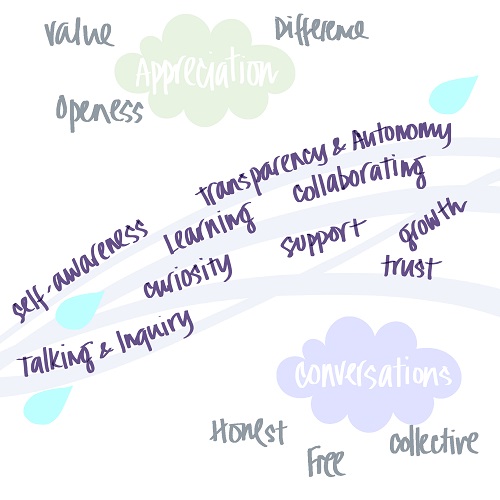
This strengths culture is characterised by everyone focussing on continual learning and, through this, on the improvement of the service provided to customers. This requires high levels of inquiry and conversation to achieve a shared understanding about how things can change and improve from a strength’s perspective as well as how opportunities for personal and team growth begin from that appreciative space.
In this space leaders need to ensure that people adopt a strengths mentality in their roles and take individual and collective responsibility in delivering for team members and people who use services. Achieving this requires proactive and intentional engagement, careful planning, persistent commitment, and a constant focus on distributed leadership and culture.
This part of the toolbox will support you to put the theory into practice and as always it is the quality of the space that you create for people to think that will make the difference.
Creating Thinking Environments
As already discussed, the role and structure of leadership is changing. Part of this is the responsibility of delivering transformational change and improved staff engagement. The story of organisations and what works has changed dramatically in the last thirty years, and cognitively there is an understanding that taking time to think, share ideas and involve people is a good idea.
However, this is rarely translated into practice as mechanistic models, hierarchical power and influence from the old world are still very visible and their impact felt. This links with the earlier thinking about “the organisation as a machine”. The impact of electronic communication, flexible working, and a consistent demand to do more with less and do it better mean there seems to be little space to embrace thinking in a new way to get new decisions, new engagement and real transformation.
At the heart of this approach is the creation of time and space to think and a belief that people can and will do that when the environment and pattern of inquiry are designed as enablers to great thinking. This differs from meetings with agendas, team plans and performance conversations. It is a space and time that gets to the heart of thinking and feeling within the organisation and discovers how this can be harnessed to deliver real transformational change.
We plan for lots of things in life, from paying our bills on time to supporting friends and family. We come to work, make lists, reply to emails, and engage with others. However, we often don’t think about the conditions that we want to create to be able to be as effective and influential as we want to be. This section of the toolbox introduces the idea of creating Thinking Space and Thinking Environments. You can hear Fiona introduce this below.
Strengths Conversations
At the heart of this approach is the creation of time and space to think about strengths and a belief that people can do that when the conditions are set to encourage independent thinking. This differs from meetings with agendas, team plans and performance conversations. It is a space and time that gets to the heart of thinking and feeling and discovers how strengths can be harnessed to deliver real transformational change.
In the video below, I’m in conversation with a new member of my team Wilma Paton, asking her to reflect on what it meant to her to discover her strengths. Wilma first completed the Clifton Strengths Finder in 2021 and since then has used her strengths to support changes in her life and subsequently in her role as a facilitator with lived experience.
These conversations do not need to be complex or overthought, free up the mind in front of you and go where the thinking takes you.