Purpose of the Strengths Accumulator
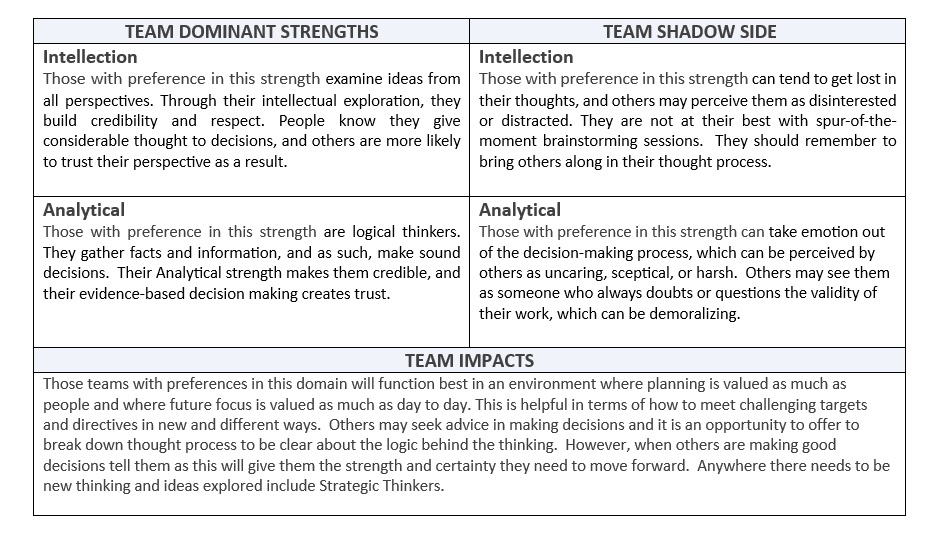
The Strengths Accumulator creates the opportunity for all leaders with the LAA Case Management Function to see the pattern of strengths across their team, other teams, and the overall function. This is helpful for a variety of reasons including:
- Understanding your strengths in an explicit way is different than just on an implicit feeling level.
- When you understand your strengths you can flex and grow them, to be the best version of yourself.
- This can be the conversation starter for 1-1s, reviews, development, and performance conversations.
- When you understand your strengths, you can use them to navigate situations and areas of work you find more challenging.
- When you see the pattern of the strengths in your leadership team you can plan more effectively using all of the strengths and be intentional about how specific strengths get specific results.
- When you see the pattern of strengths across your leadership team you can identify areas where you may need support from another team and where you can support them.
- When you see the pattern of strengths across the wider leadership team you can untap potential and see connections between projects and strengths, change and strengths and strategy and strengths.
It’s a whole new lens through which to view the system that you are part of and provide a new language, a new set of questions which will in turn change the conversation. Big picture: change the conversation and you can change the culture. Small picture: each person understands their strengths and can use this knowledge to embark on development areas, career opportunities and challenges in a different way.
ACCUMULATOR RESULTS
STRATEGIC OVERVIEW
OVERVIEW CLIFTON STRENGTHS FINDER
The Clifton StrengthsFinder identifies three keys to being an effective leader: knowing your strengths and investing in others’ strengths, getting people with the right strengths on your team, and understanding and meeting the needs of those who look to you for leadership.
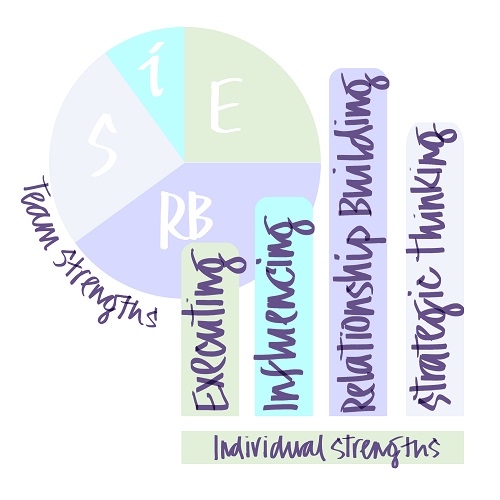
There are four domains, with 34 signature strengths presented and analysed for each team which will help to establish a universal ‘strengths’ language across the Legal Aid Case Management Function.
OVERVIEW TO STRENGTHS DOMAINS
- Executing: Teams that have a dominant strengths profile in this key domain know how to rally around a goal and get things done. Differing strengths might dictate the style of getting to the goal, but teams who have strengths in this area make a massive contribution to things happening.
- Influencing: Teams that have a dominant strengths profile in this key domain know how to share and embed the ideas both inside and outside the organisation. These teams are natural persuaders, inspire others to adopt their ideas and are vital to moving forward in communities.
- Relationship Building: Teams that have a dominant strengths profile in this key domain tend to keep the team and wider stakeholder groups together. They’re the social glue: the mortar between the foundation building blocks. They know how to create and maintain groups such that the whole is much greater than its parts.
- Strategic Thinking: Teams that have a dominant strengths profile in this key domain tend to force the team/organisation to look at the big picture and toward the future – what might be. Always reviewing the data and applying what they learn, strategic thinkers move the organisation forward – stretching its members to think beyond the here and now, to the possibilities of the future.
BIG PICTURE RESULTS
Within the LAA Case Management Function 165 leaders from all levels, across all teams, submitted their strengths to the accumulator.
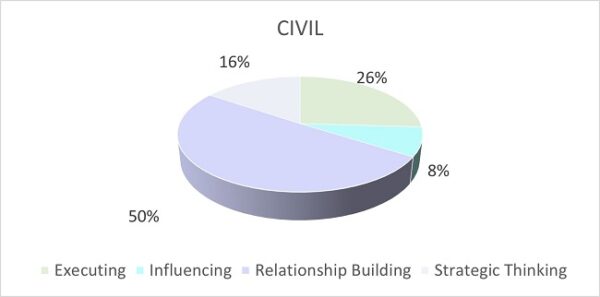
CIVIL CASE MANAGEMENT
84 people submitted their strengths to the accumulator for this team.
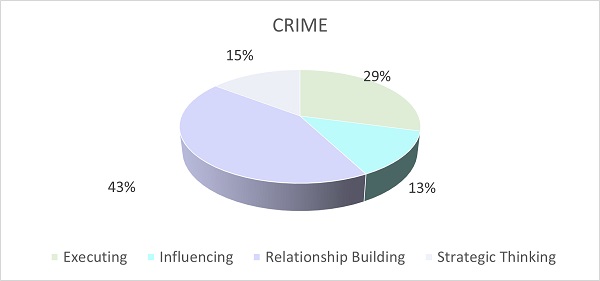
CRIME CASE MANAGEMENT
52 people submitted their strengths to the accumulator for this team.
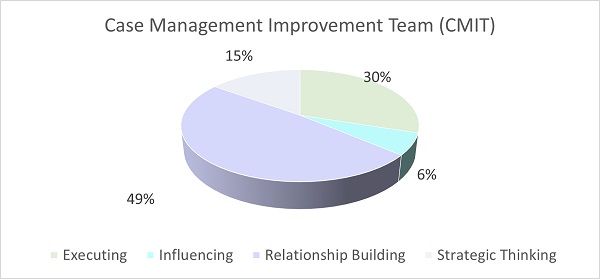
CASE MANAGEMENT IMPROVEMENT TEAM (CMIT)
16 people submitted their strengths to the accumulator for this team.
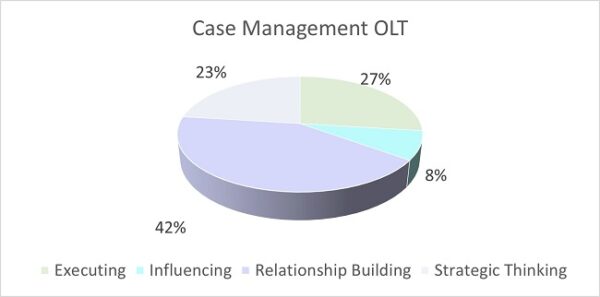
CASE MANAGEMENT OPERATIONAL LEADERSHIP TEAM
26 people submitted their strengths to the accumulator for this team.
EXECUTIVE SUMMARY
- There is no statistically significant difference between the strength’s profiles of the three large core teams, or the Operational Leadership Team.
- Each team has 40%-50% representation in Relationship Building.
- Within the Relationship Building Domain five out of nine strengths are covered: Empathy/Harmony/Developer/Relator and Positivity.
- In the Relationship Building Domain, all teams have Developer, with 43% of people across the 157 people reporting this strength.
- In the Relationship Building Domain, all teams have either Empathy or Harmony (with CMIT having both) with 77% of people across the 157 people reporting one or both of these strengths.
- This dominance is visible in all the smaller teams that also have their dominant representation in Relationship Building.
- Influencing has the lowest representation across the three large core teams and the Operational Leadership Team. This is in line with results observed across public sector teams at all levels within UK public sector organisations.
- Executing is around 30% across all of the three core teams and the Operational Leadership Team, unsurprising given the process driven nature of the work.
- Strategic Thinking is highest in the Operational Leadership Team and is otherwise comparable across the three large core teams.
WHAT DOES IT MEAN FOR LAA CASE MANAGEMENT AS A FUNCTION
- Extreme talent for building relationships, internally and externally with customers and stakeholders.
- A propensity to ‘not rock the boat’ impeding important conversations, assertiveness and clarity around expectations across the board, likely to be impacting culture, accountability and autonomy.
- Consistent and accountable in how the work is done which may be at a cost to personal reflection, restorative practice, and learning.
- Influence likely to be coming from the relationship building strengths, building trust, listening and caring.
- Opportunities may be being missed to shout a bit more explicitly about what is being achieved, and to be more radical around change.
- Strategically aware within each of core large areas. Potentially this strategic awareness is not across the wider whole function, missing opportunities for cross team development and relationship building.
OBSERVATIONS AND QUESTIONS: SEEK FIRST TO UNDERSTAND AND THEN BE UNDERSTOOD
- Clear is kind. Unassertive feedback and challenge does not help anyone.
- How might you ensure that you use the Relationship Building strengths to have the conversations that are being avoided?
- Task drives behaviour.
- How might you ensure that the Executing strengths, are aligned to the Developer strengths from Relationship Building (getting it done and learning as part of the process)?
- Influencers spread energy.
- How might you ensure that the people that have this preference are invited into spaces they currently may not be?
- Culture eats strategy for breakfast.
- How might you use your dominant relational culture to effectively make strategy meaningful at all levels?
IN SOME DETAIL
165 LEADERS FROM LAA CASE MANAGEMENT FUNCTION
EXECUTING DOMAIN
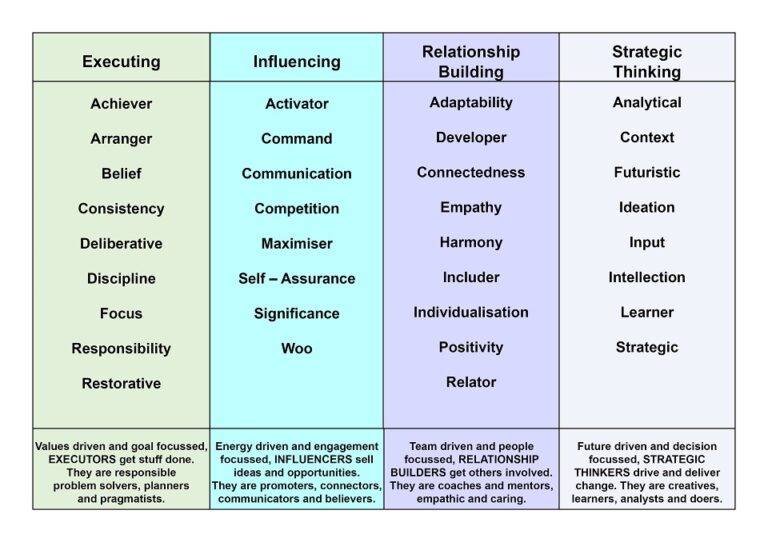
People with these signature strengths like to make things happen. They stay focussed on the goal and turn ideas into actions. 27% of the strengths reported are in this domain.
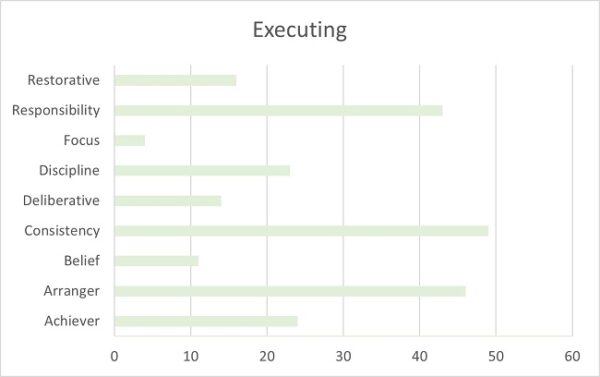
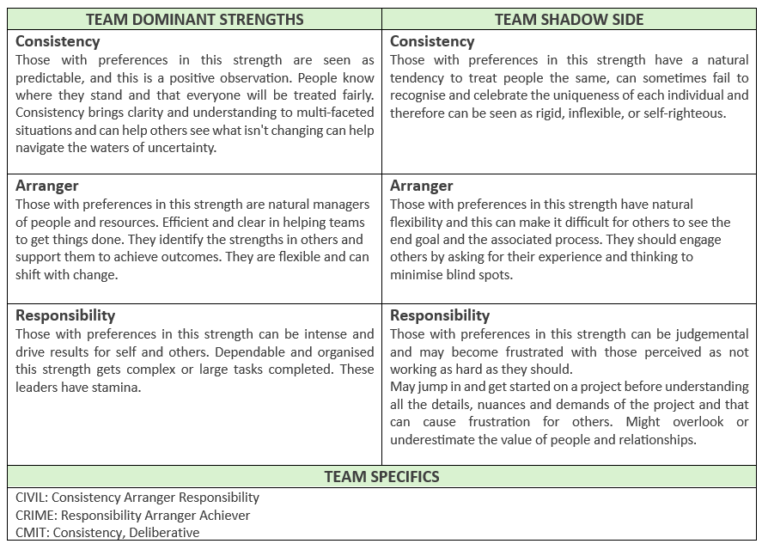
The team profile demonstrates a spread across the domain, Consistency, Arranger and Responsibility the dominant signature strengths.
INFLUENCING DOMAIN
People with these signature strengths like to sell ideas and get people enthused and motivated. They are confident and will willingly take charge and speak up. They are generally creative and energetic and love to work with and through people. 10% of the strengths reported are in this domain.
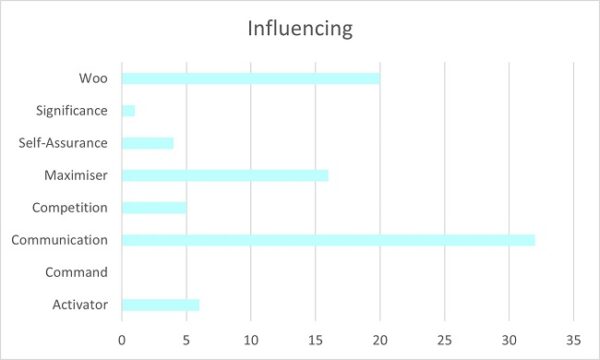
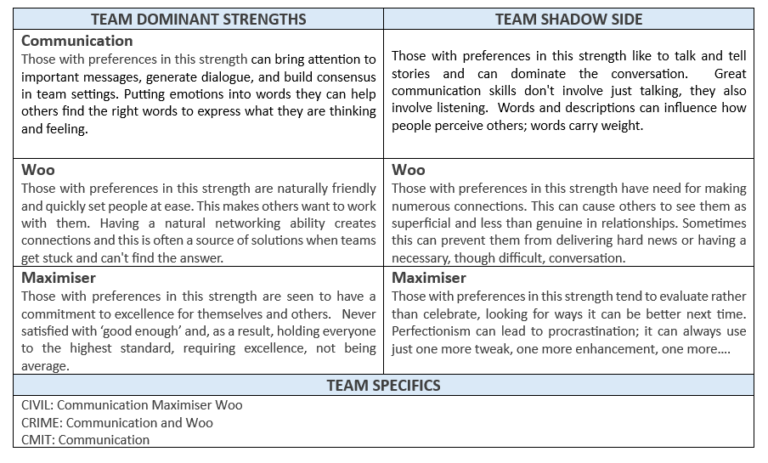
The team profile demonstrates some preference within this domain, Communication, Woo and Maximiser the dominant signature strengths. The majority of influencing will be carried out from the other three domains.
RELATIONSHIP BUILDING DOMAIN
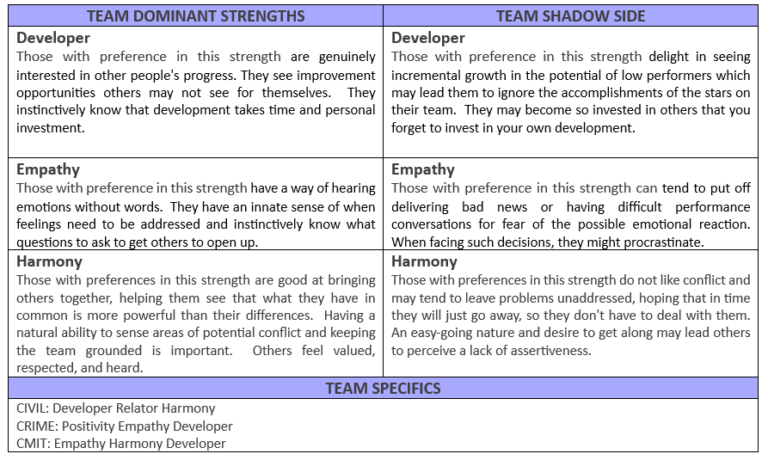
People with these signature strengths like to make sure the team is working and care about the team wellbeing. They are driven and people focussed and like to get others involved. 47% of the strengths reported are in this domain.
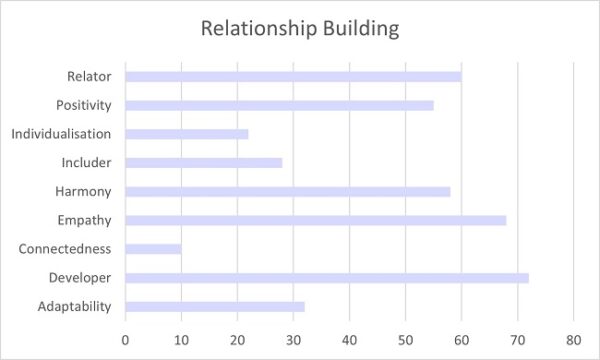
The team profile demonstrates a strong preference within this domain, Developer, Empathy, and Harmony the dominant signature strengths.
STRATEGIC THINKING DOMAIN
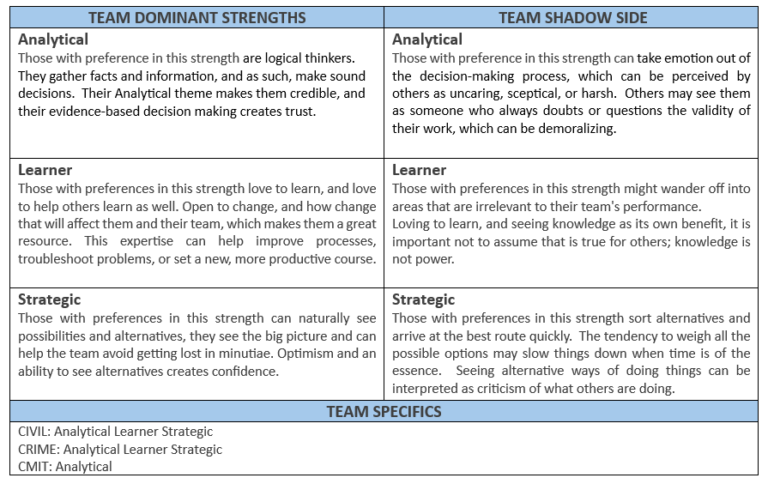
People strong in these signature strengths are future focussed, decision makers, and opportunists who are always reviewing information and data and applying what they learn. 16% of the strengths reported are in this domain.
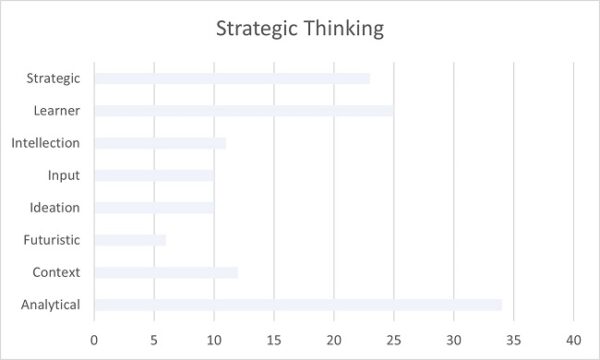
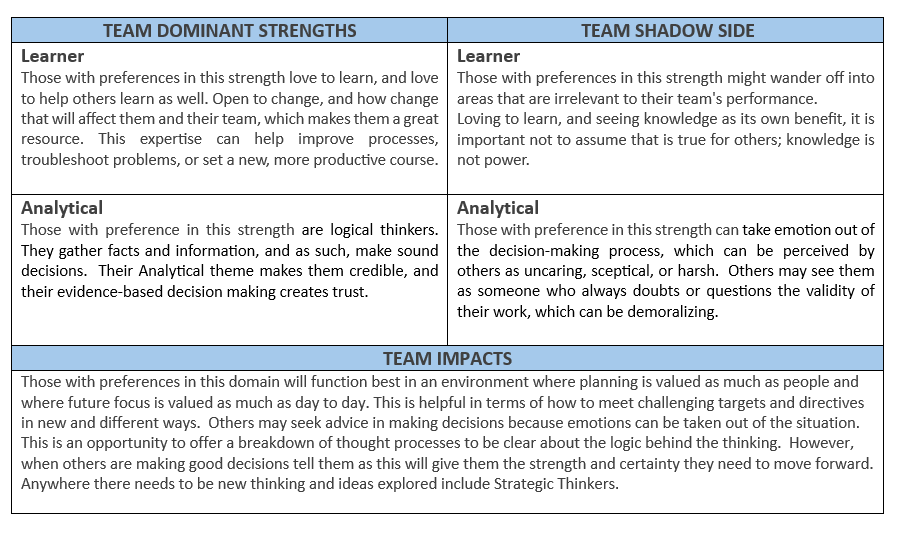
The team profile demonstrates a spread across this domain, Analytical, Learner and Strategic the dominant signature strengths.
COMING NEXT
Information and analysis on every team follows this overview. As leaders you can use this to help you to think about how you collectively impact each piece of work that you do. There will be an opportunity for each team to attend a workshop to look at their specific strengths pattern, how to maximise the impact and minimise the shadow side of these.
TEAM ANALYSES
Operational Leadership Team
26 people submitted their strengths to the accumulator for this team.
Overview
The Clifton StrengthsFinder identifies three keys to being an effective leader: knowing your strengths and investing in others’ strengths, getting people with the right strengths on your team, and understanding and meeting the needs of those who look to you for leadership.
There are four domains, with 34 signature strengths presented and analysed for your team which will help to establish a universal ‘strengths’ language across the Legal Aid Case Management Function.
The Strengths profiles provides visibility to individual and team strengths. It is a helpful starting point to facilitate meaningful conversations around naturally occurring talents, discovering your individual strengths, sharing with others and feeling supported in a trusting environment.
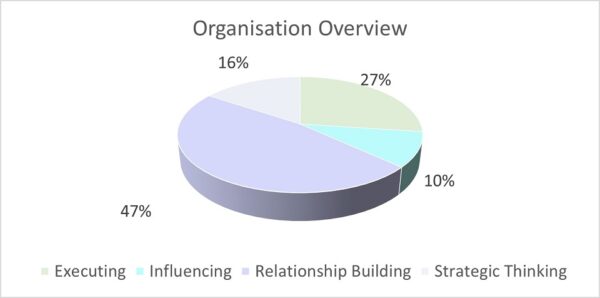
The team is dominant in Relationship Building, with an even spread between Executing and Strategic Thinking, with less dominance in Influencing. This team profile suggests that the members of the team pride themselves in building and maintaining healthy working relationships, with a particular emphasis on caring, compassion and avoiding conflict. The Strategic Thinking domain has an emphasis on reflection and introspection, learning and gathering information. The team will have a reputation for being efficient and effective.
EXECUTING DOMAIN
People with these signature strengths like to make things happen. They stay focussed on the goal and turn ideas into actions. Within this domain, 27% of the team have a dominance.
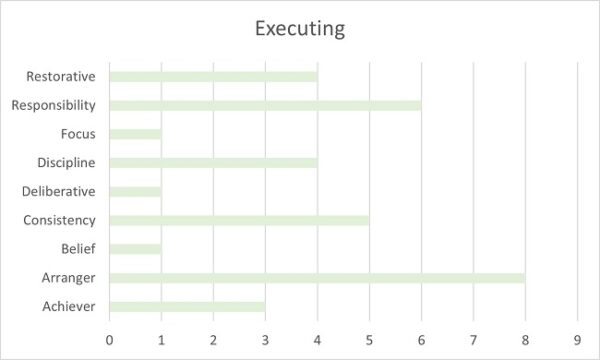
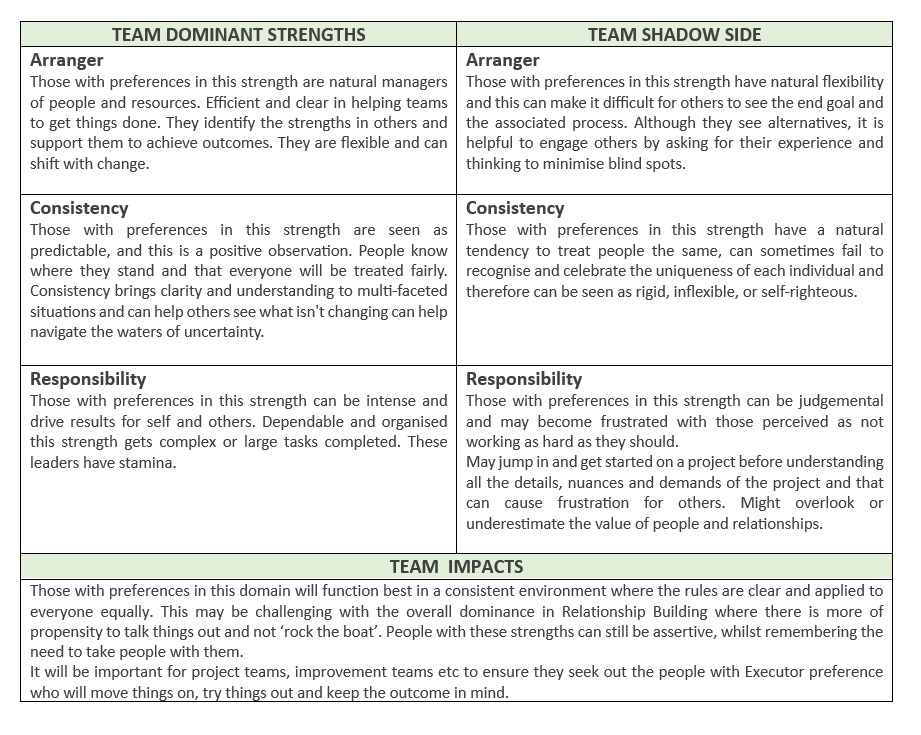
The team profile demonstrates a spread across the domain, with Arranger, Consistency and Responsibility being the dominant signature strengths.
INFLUENCING DOMAIN
People with these signature strengths like to sell ideas and get people enthused and motivated. They are confident and will willingly take charge and speak up. They are generally creative and energetic and love to work with and through people. Within this domain 8% of the team have a dominance.
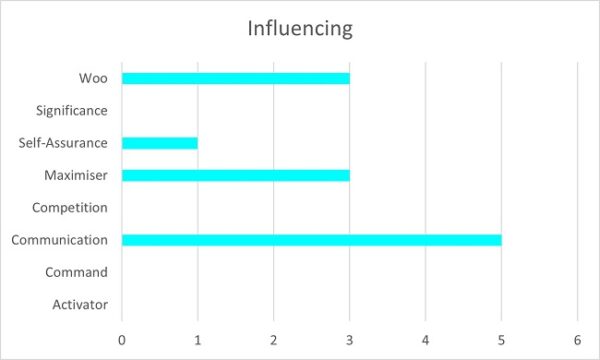
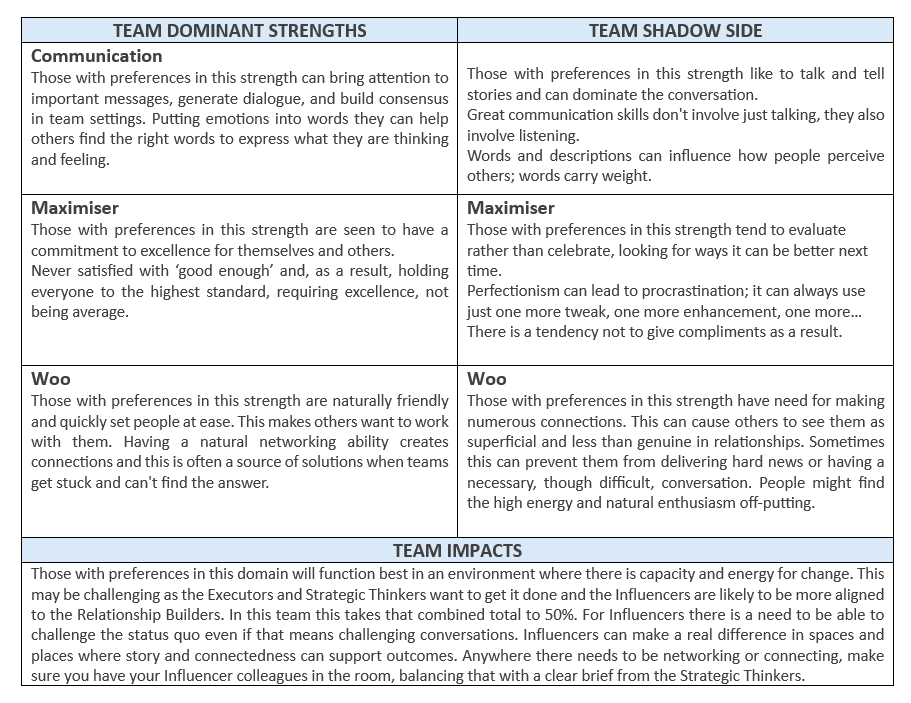
The team profile demonstrates a limited preference within this domain, with Communication, Maximiser and Woo being the dominant signature strengths. The majority of influencing will be carried out from the other three domains.
RELATIONSHIP BUILDING DOMAIN
People with these signature strengths like to make sure the team is working and care about the team wellbeing. They are driven and people focussed and like to get others involved. Within this domain 42% of the team have a dominance.
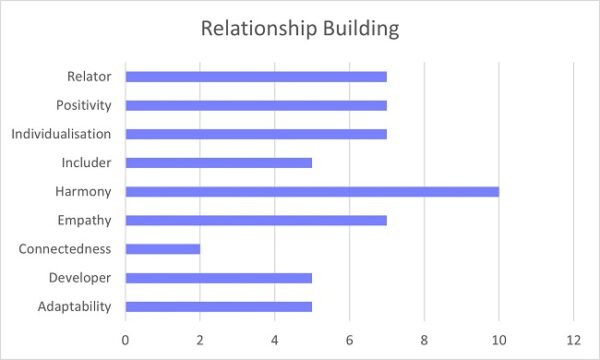
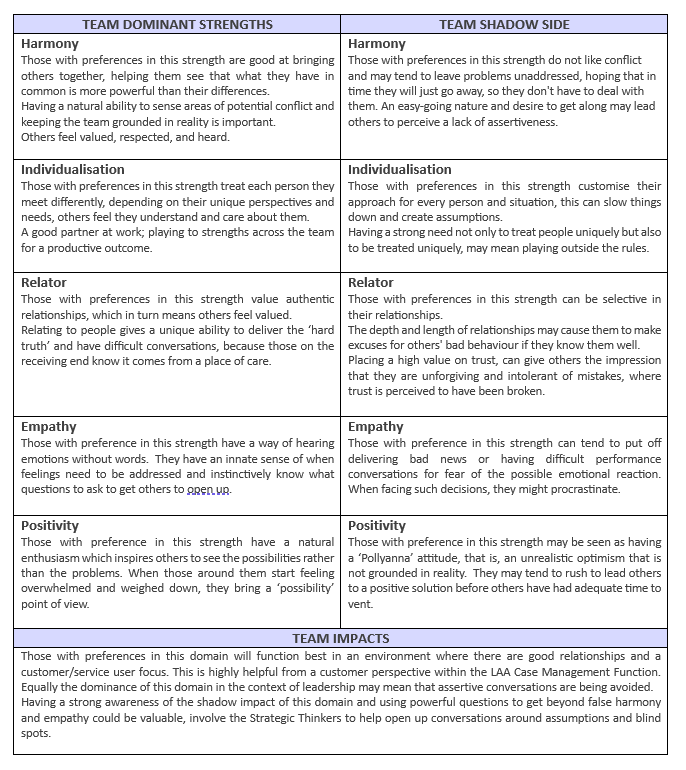
The team profile demonstrates a strong preference within this domain, with Harmony, Empathy Individualisation, Positivity and Relator being the dominant signature strengths.
STRATEGIC THINKING DOMAIN
People strong in these signature strengths are future focussed, decision makers, and opportunists who are always reviewing information and data and applying what they learn. Within this domain 23% of the team have a dominance.
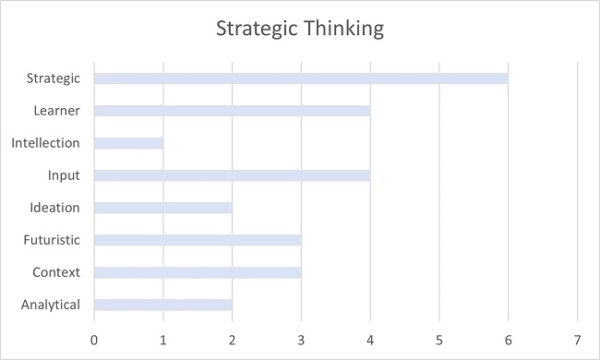
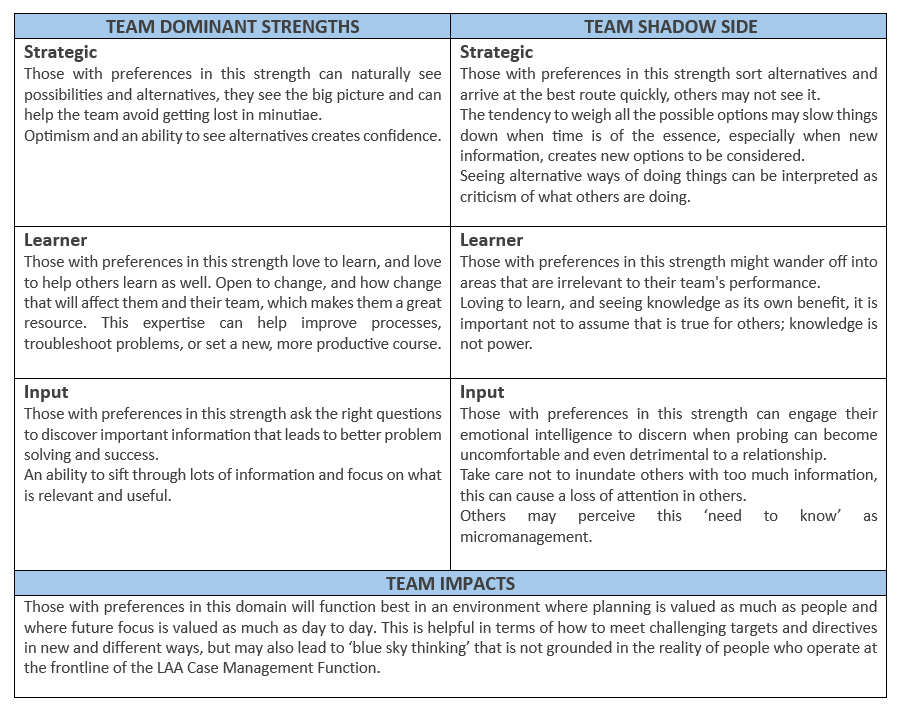
The team profile demonstrates a spread across this domain, with Strategic, Learner and Input being the dominant signature strengths.
Case Management Improvement Team
16 people submitted their strengths to the accumulator for this team.
Overview
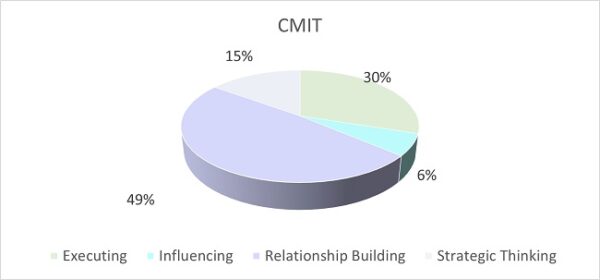
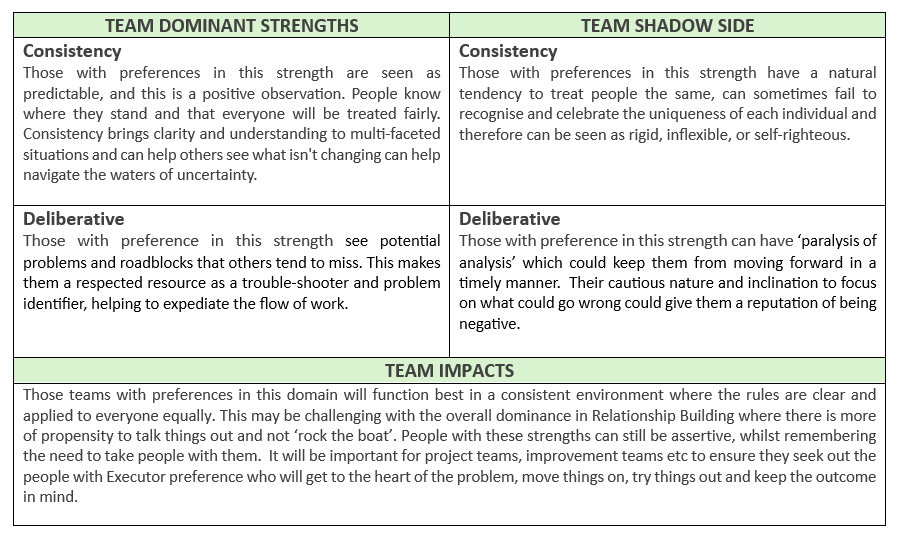
The team is dominant in Relationship Building and to a lesser extent, Executing. There is less dominance in Strategic Thinking and Influencing. This team profile suggests that the members of the team pride themselves in building and maintaining healthy working relationships, with a particular emphasis on caring, compassion and avoiding conflict. The Executing domain has an emphasis consistency and problem solving ensuring that project challenges are identified whilst making sure everyone is treated the same. Within the Strategic Thinking domain there is a focus on logic and analysis of data to make decisions around new thinking and ideas.
EXECUTING DOMAIN
People with these signature strengths like to make things happen. They stay focussed on the goal and turn ideas into actions. 30% of the strengths reported are in this domain.
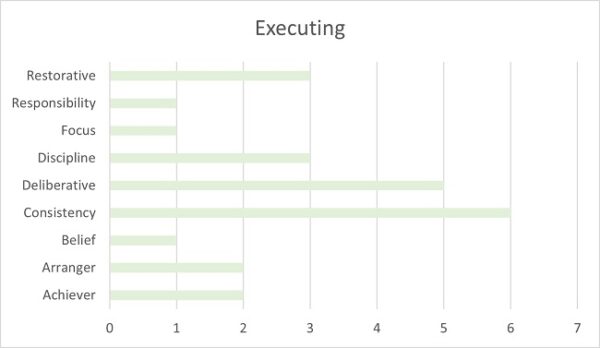
The team profile demonstrates a spread across the domain, Consistency and Deliberative the dominant signature strengths.
INFLUENCING DOMAIN
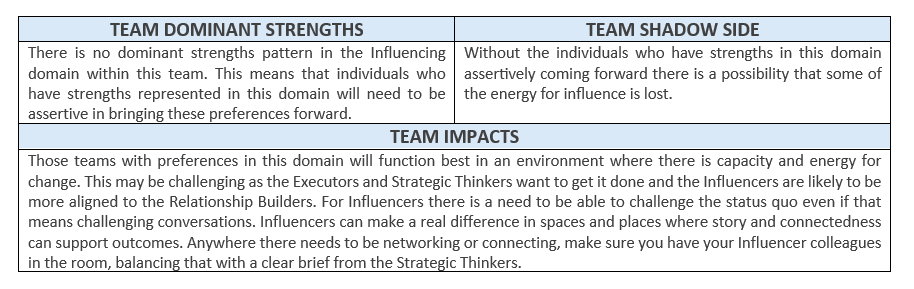
People with these signature strengths like to sell ideas and get people enthused and motivated. They are confident and will willingly take charge and speak up. They are generally creative and energetic and love to work with and through people. 6% of the strengths reported are in this domain.
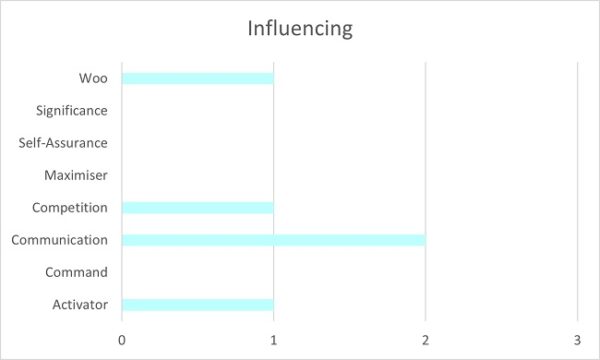
The team profile demonstrates a limited preference within this domain. The majority of influencing will be carried out from the other three domains.
RELATIONSHIP BUILDING DOMAIN
People with these signature strengths like to make sure the team is working and care about the team wellbeing. They are driven and people focussed and like to get others involved. 49% of the strengths reported are in this domain.
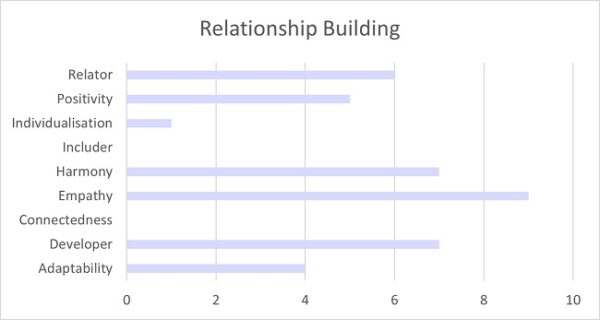
The team profile demonstrates a spread across this domain, Analytical the dominant signature strength.
STRATEGIC THINKING DOMAIN
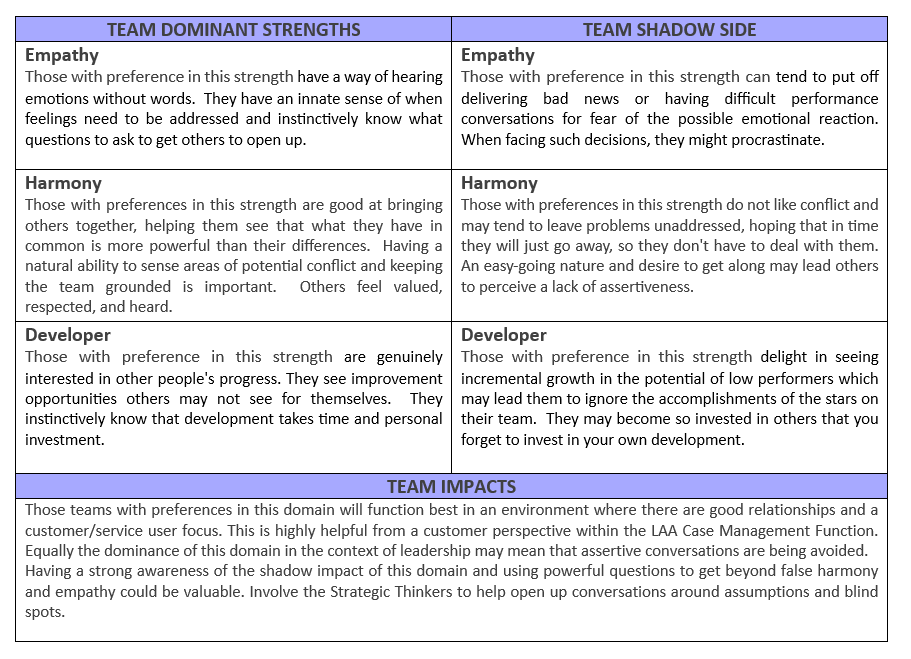
People strong in these signature strengths are future focussed, decision makers, and opportunists who are always reviewing information and data and applying what they learn. 15% of the strengths reported are in this domain.
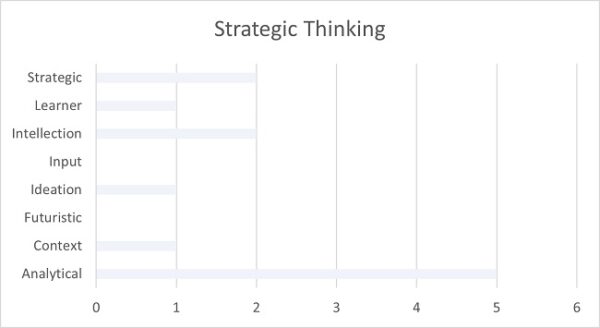
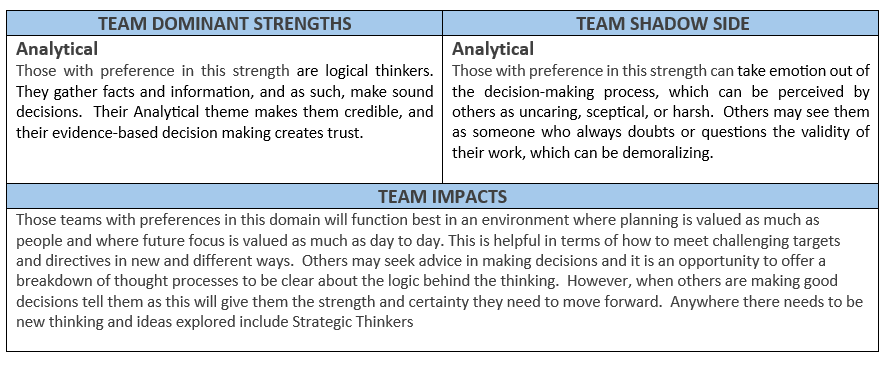
The team profile demonstrates a spread across this domain, Analytical the dominant signature strength.
Civil Team Overview
84 people submitted their strengths to the accumulator for this team.
Overview
The Civil team is dominant in Relationship Building and to a lesser extent, Executing and Strategic Thinking. There is less dominance in Influencing. This team profile suggests that the members of the team pride themselves in building and maintaining healthy working relationships, with a particular emphasis on individual growth and harmony. The Executing domain has an emphasis consistency and responsibility ensuring that there is order and structure whilst ensuring that everyone is treated fairly. Within the Strategic Thinking domain there is a focus on using analysis and learning to understand the ‘big picture’.
EXECUTING DOMAIN
People with these signature strengths like to make things happen. They stay focussed on the goal and turn ideas into actions. 26% of the strengths reported are in this domain.
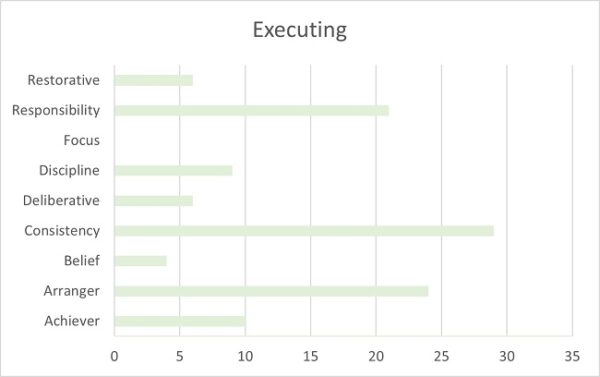
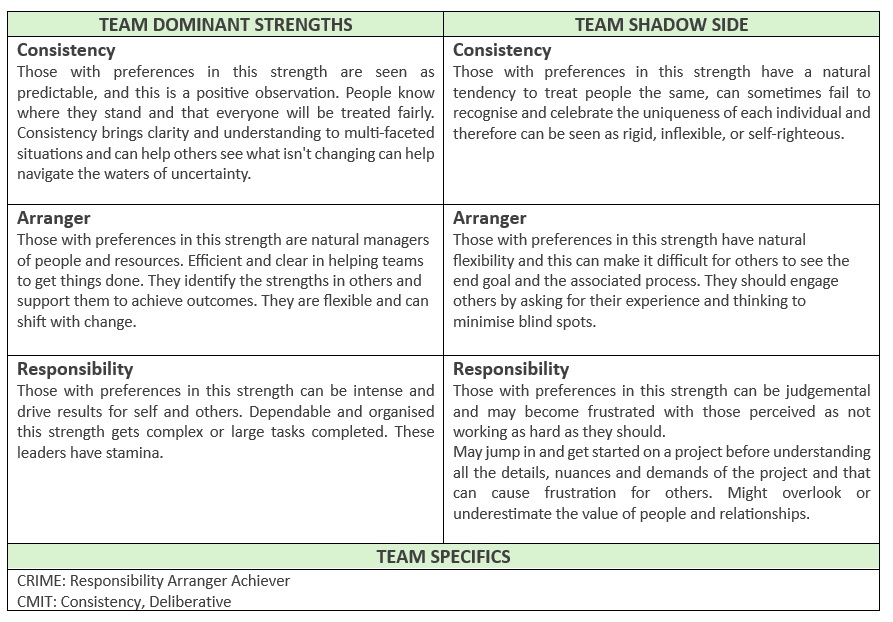
The team profile demonstrates a spread across the domain, Consistency, Responsibility and Arranger the dominant signature strengths.
INFLUENCING DOMAIN
People with these signature strengths like to sell ideas and get people enthused and motivated. They are confident and will willingly take charge and speak up. They are generally creative and energetic and love to work with and through people. 8% of the strengths reported are in this domain.
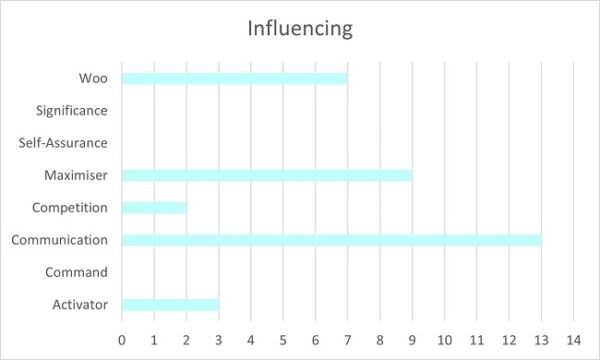
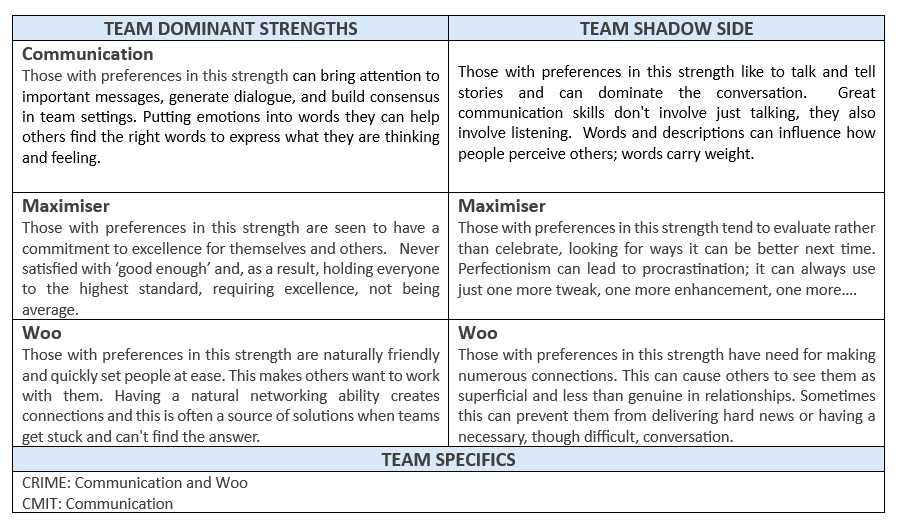
The team profile demonstrates some preference within this domain, Communication, Maximiser and Woo the dominant signature strengths. The majority of influencing will be carried out from the other three domains.
RELATIONSHIP BUILDING DOMAIN
People with these signature strengths like to make sure the team is working and care about the team wellbeing. They are driven and people focussed and like to get others involved. 50% of the strengths reported are in this domain.
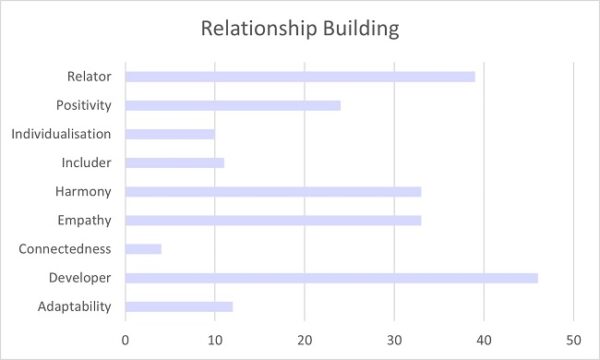
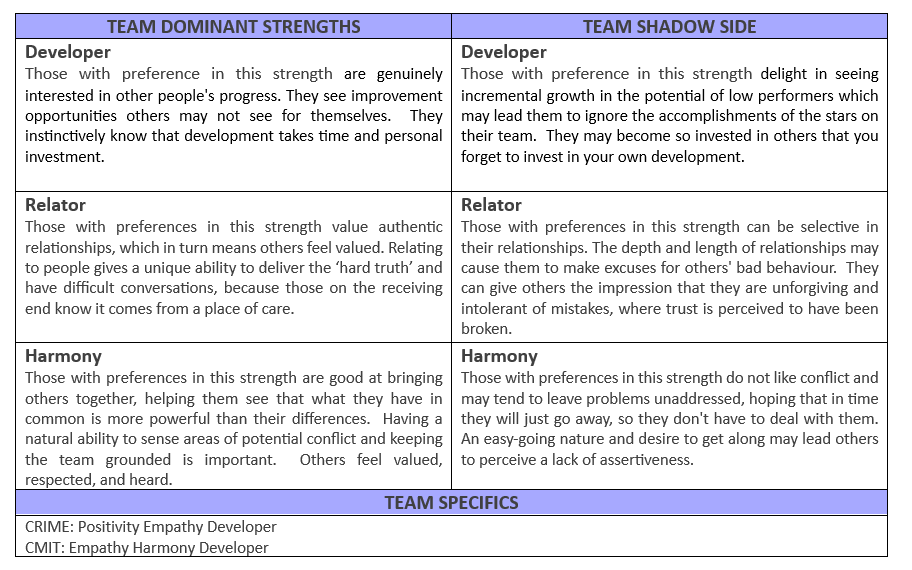
The team profile demonstrates a strong preference within this domain, Developer, Relator, and Harmony the dominant signature strengths.
STRATEGIC THINKING DOMAIN
People strong in these signature strengths are future focussed, decision makers, and opportunists who are always reviewing information and data and applying what they learn. 16% of the strengths reported are in this domain.
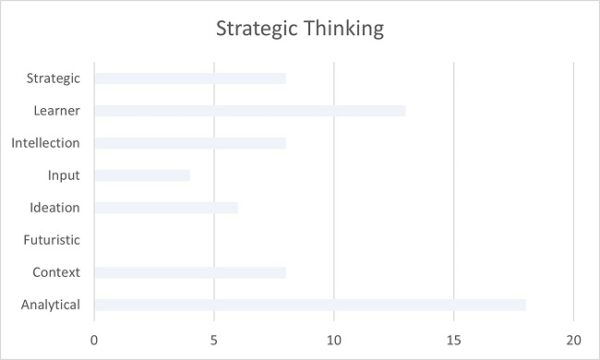
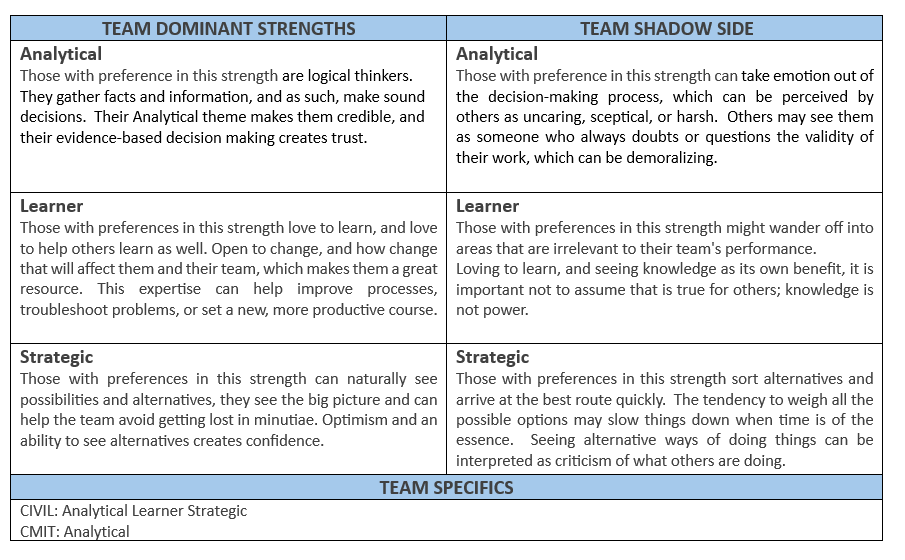
The team profile demonstrates a spread across this domain, Analytical, Learner and Strategic the dominant signature strengths.
Civil CST
10 people submitted their strengths to the accumulator for this team.
Overview
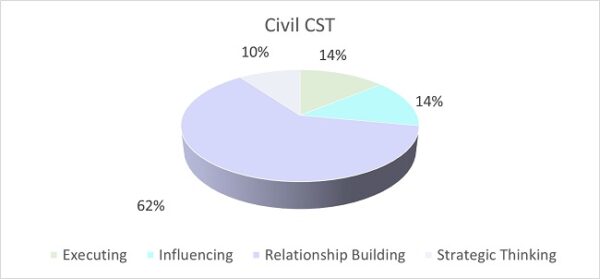
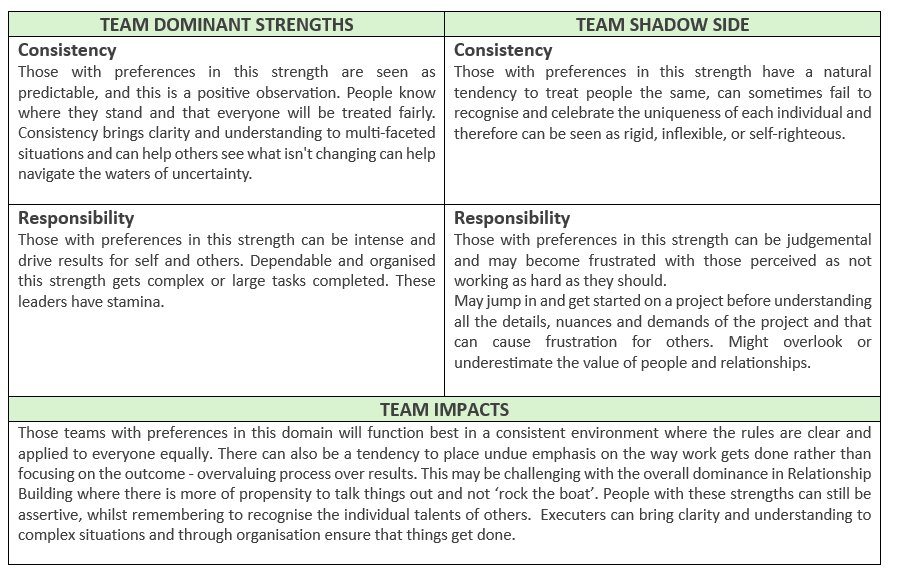
The team is dominant in Relationship Building, with an even spread between Executing and Influencing with less dominance in Strategic Thinking. This team profile suggests that the members of the team pride themselves in building and maintaining healthy working relationships, with a particular emphasis on developing team member and trust. The Executing domain has an emphasis on consistency and responsibility ensuring that work is done whilst ensuring that everyone is treated the fairly. Within the Influencing domain the strengths lie in communication and how this is used to enthuse others and bring consensus.
EXECUTING DOMAIN
People with these signature strengths like to make things happen. They stay focussed on the goal and turn ideas into actions. 14% of the strengths reported are in this domain.
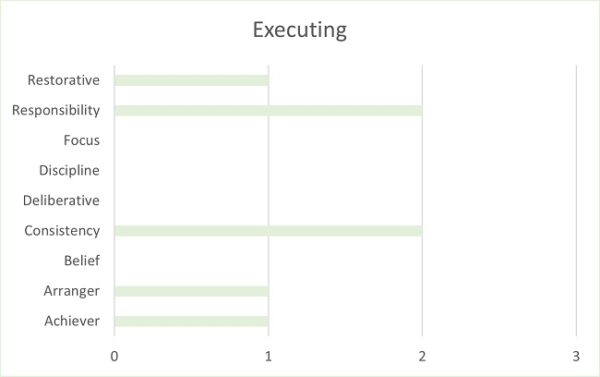
The team profile demonstrates a spread across the domain, with Consistency and Responsibility being the dominant signature strengths.
INFLUENCING DOMAIN
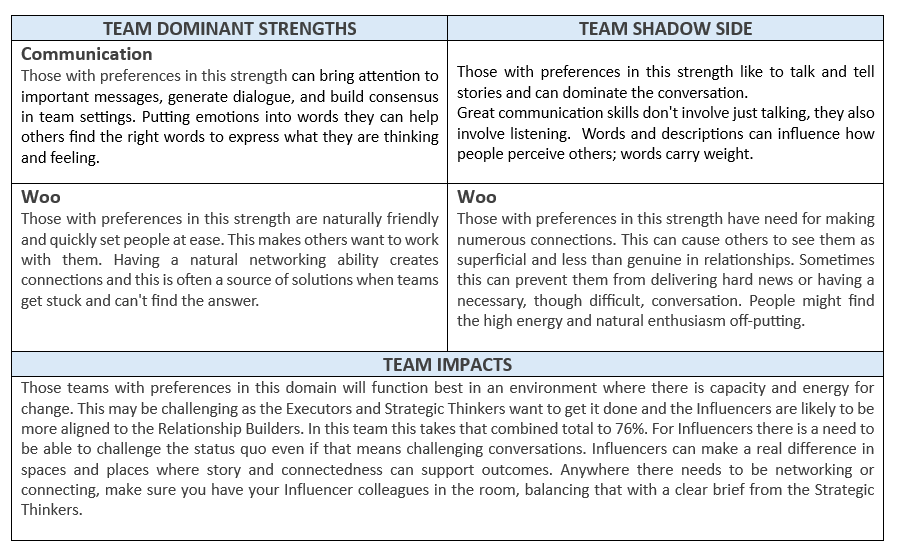
People with these signature strengths like to sell ideas and get people enthused and motivated. They are confident and will willingly take charge and speak up. They are generally creative and energetic and love to work with and through people. 14% of the strengths reported are in this domain.
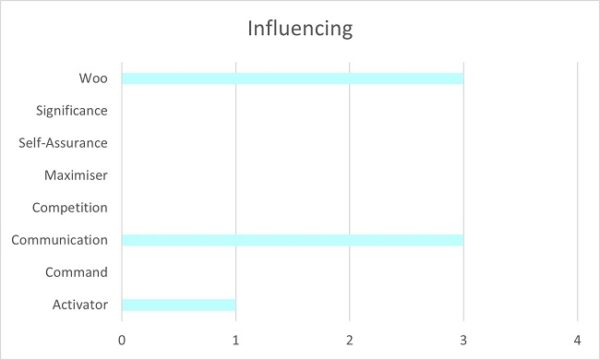
Woo and Communication are the dominant signature strengths in the Influencing domain.
RELATIONSHIP BUILDING DOMAIN
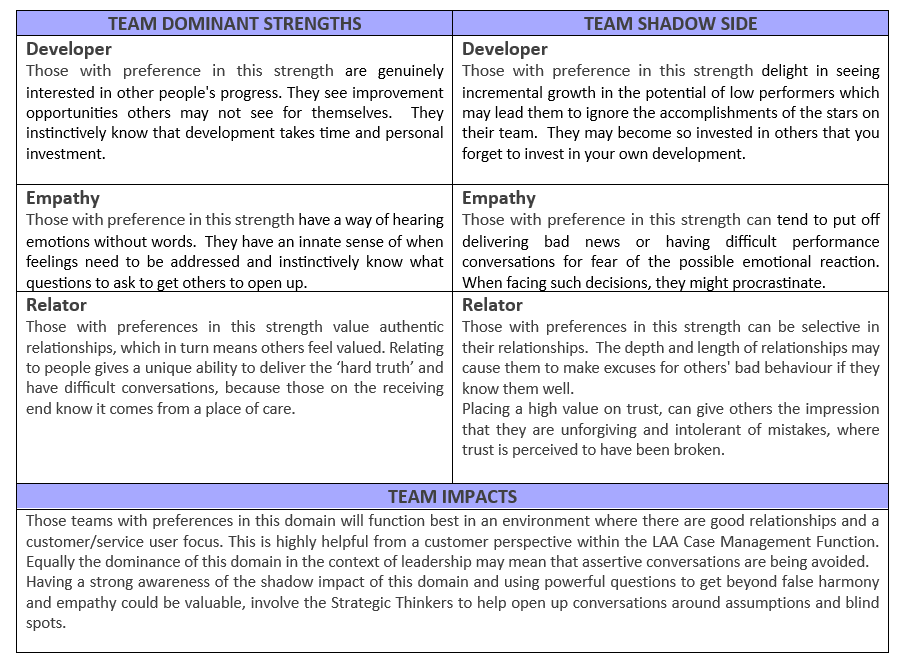
People with these signature strengths like to make sure the team is working and care about the team wellbeing. They are driven and people focussed and like to get others involved. 62% of the strengths reported are in this domain.
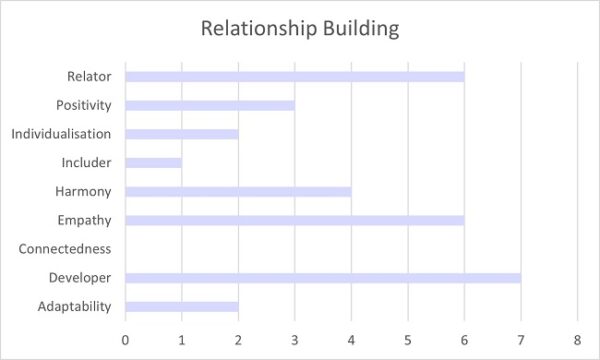
The team profile demonstrates a strong preference within this domain, Developer, Empathy and Relator the dominant signature strengths.
STRATEGIC THINKING DOMAIN
People strong in these signature strengths are future focussed, decision makers, and opportunists who are always reviewing information and data and applying what they learn. 10% of the strengths reported are in this domain.
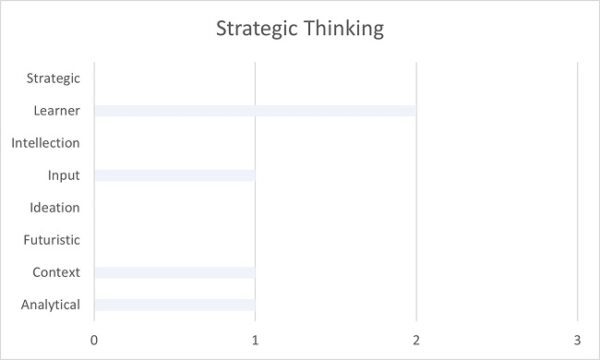
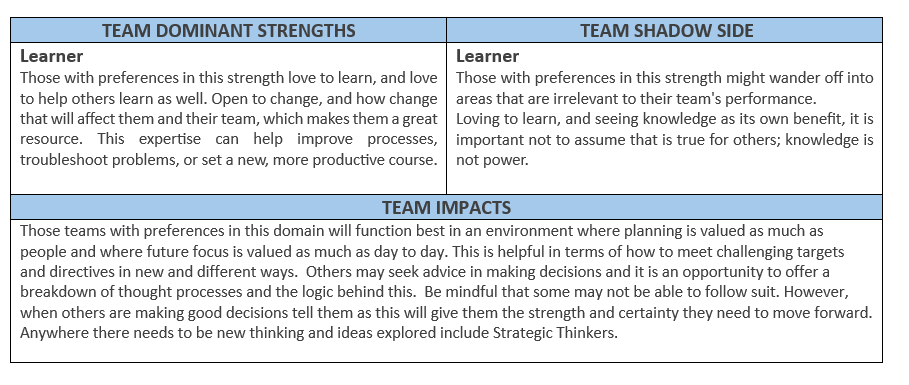
The team profile demonstrates a preference within this domain, Learner the dominant signature strength.
Civil Billing
25 people submitted their strengths to the accumulator for this team.
Overview
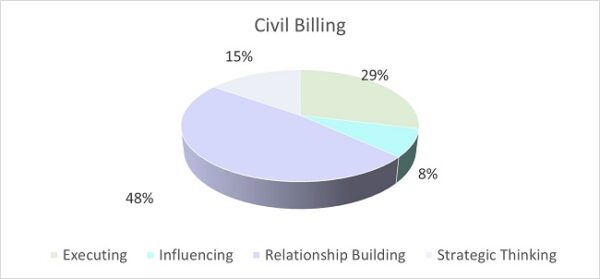
The team is dominant in Relationship Building and to a lesser extent, Executing. There is less dominance in Strategic Thinking and Influencing. This team profile suggests that the members of the team pride themselves in building and maintaining healthy working relationships, with a particular emphasis on compassion and avoiding conflict. The Executing domain has an emphasis on consistency and getting things done ensuring that there is order and structure whilst making sure that everyone is treated fairly. Within the Strategic Thinking domain there is a focus on using analysis to understand the ‘big picture’.
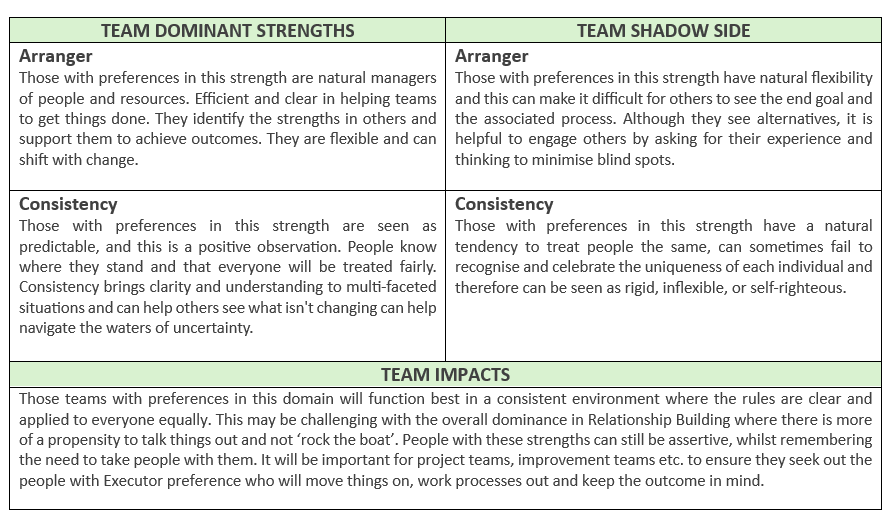
EXECUTING DOMAIN
People with these signature strengths like to make things happen. They stay focussed on the goal and turn ideas into actions. 29% of the strengths reported are in this domain.
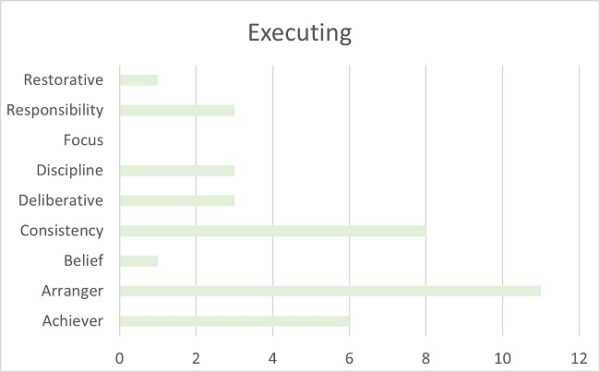
The team profile demonstrates a spread across the domain, Arranger and Consistency the dominant signature strengths.
INFLUENCING DOMAIN
People with these signature strengths like to sell ideas and get people enthused and motivated. They are confident and will willingly take charge and speak up. They are generally creative and energetic and love to work with and through people. 8% of the strengths reported are in this domain.
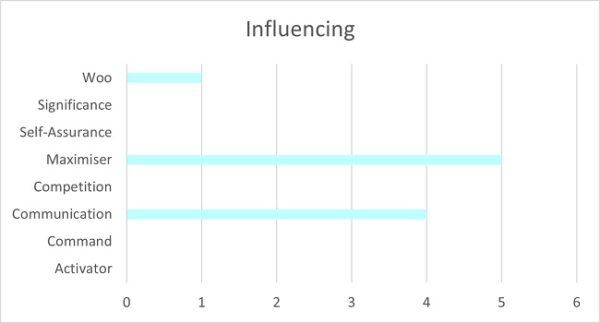
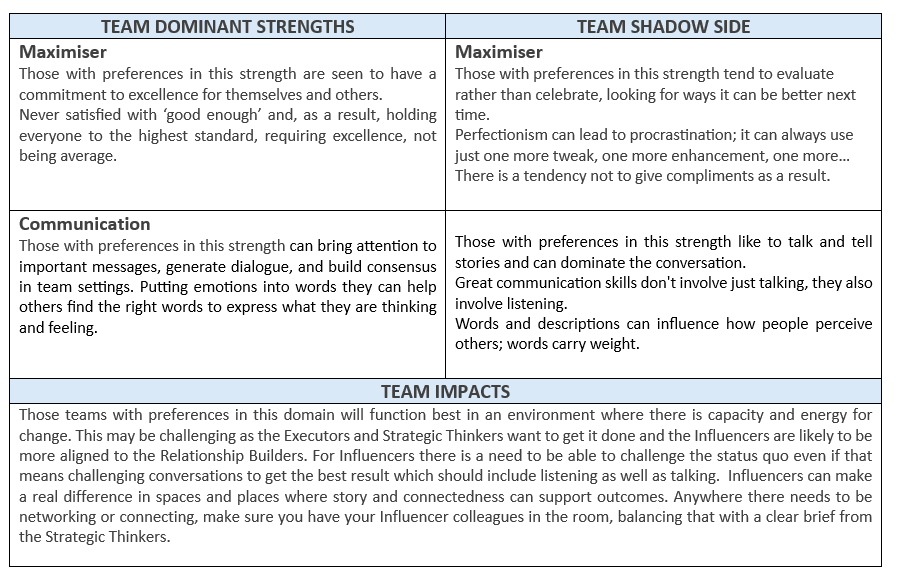
The team profile demonstrates a limited preference within this domain, Communication and Maximiser the dominant signature strengths. The majority of influencing will be carried out from the other three domains.
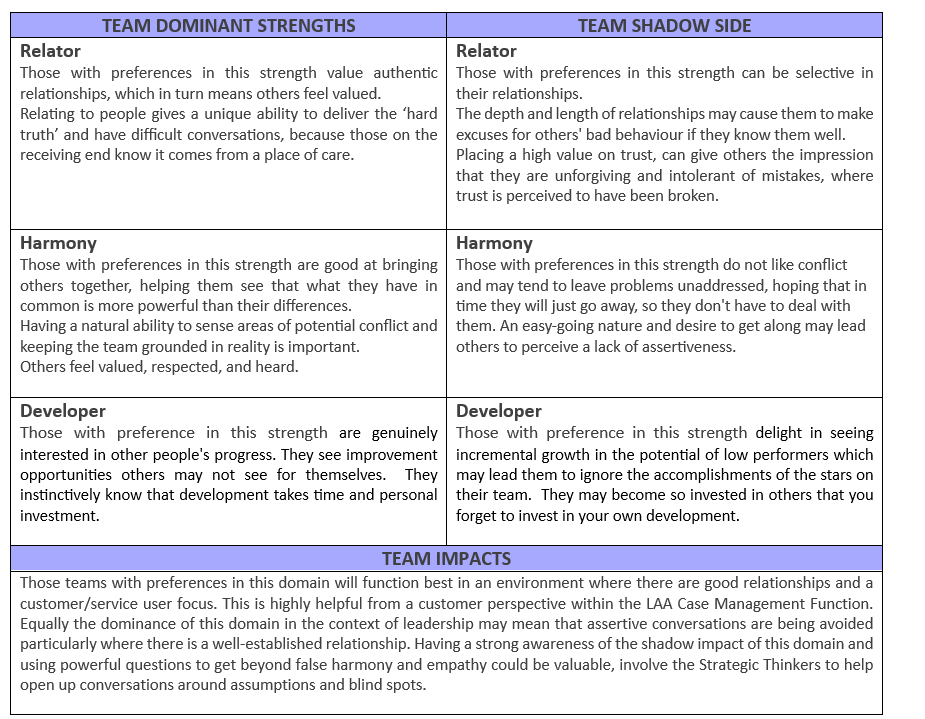
RELATIONSHIP BUILDING DOMAIN
People with these signature strengths like to make sure the team is working and care about the team wellbeing. They are driven and people focussed and like to get others involved. 48% of the strengths reported are in this domain.
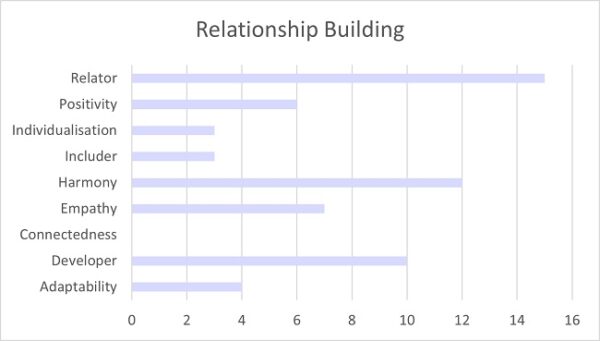
The team profile demonstrates a strong preference within this domain, Relator, Harmony and Developer the dominant signature strengths.
STRATEGIC THINKING DOMAIN
People strong in these signature strengths are future focussed, decision makers, and opportunists who are always reviewing information and data and applying what they learn. 15% of the strengths reported are in this domain.
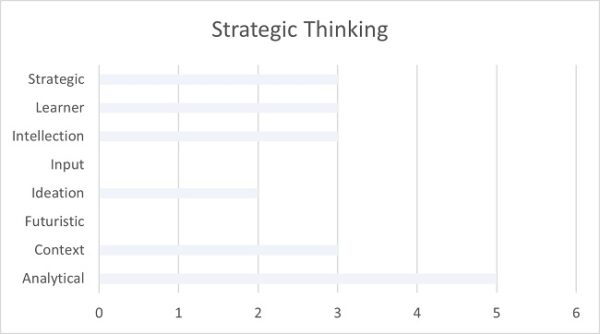
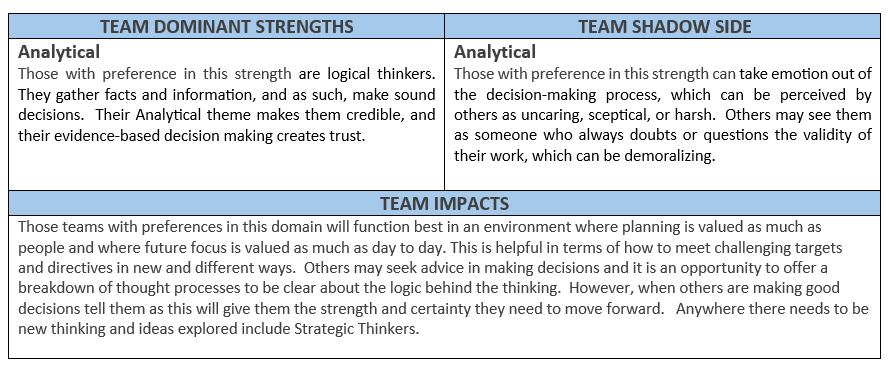
The team profile demonstrates some spread across this domain, Analytical being the dominant signature strength.
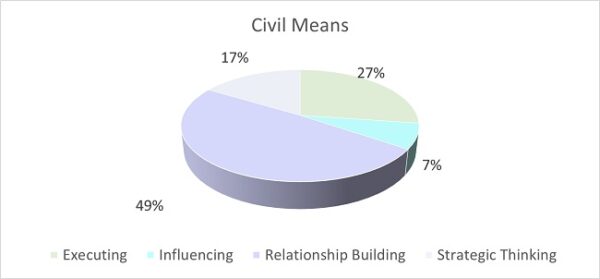
Civil Means
11 people submitted their strengths to the accumulator for this team.
Overview
The team is dominant in Relationship Building and to a lesser extent, Executing and Strategic Thinking. There is less dominance in Influencing. This team profile suggests that the members of the team pride themselves in building and maintaining healthy working relationships, with a particular emphasis on individual growth, compassion and avoiding conflict. The Executing domain has an emphasis consistency and discipline ensuring that there is order and structure whilst making sure that everyone is treated the same. This order and structure are also reflected within the Strategic Thinking domain where there is a focus on logic and analysis of data to make decisions around new thinking and ideas.
EXECUTING DOMAIN
People with these signature strengths like to make things happen. They stay focussed on the goal and turn ideas into actions. 26% of the strengths reported are in this domain.
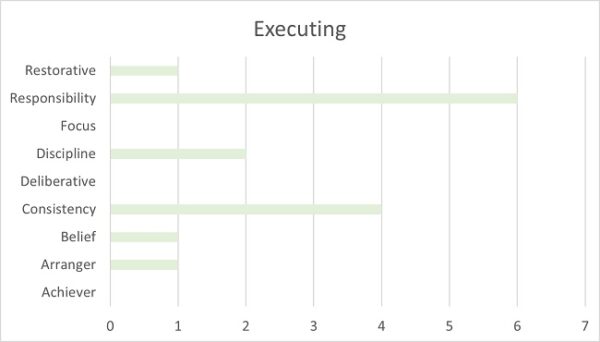
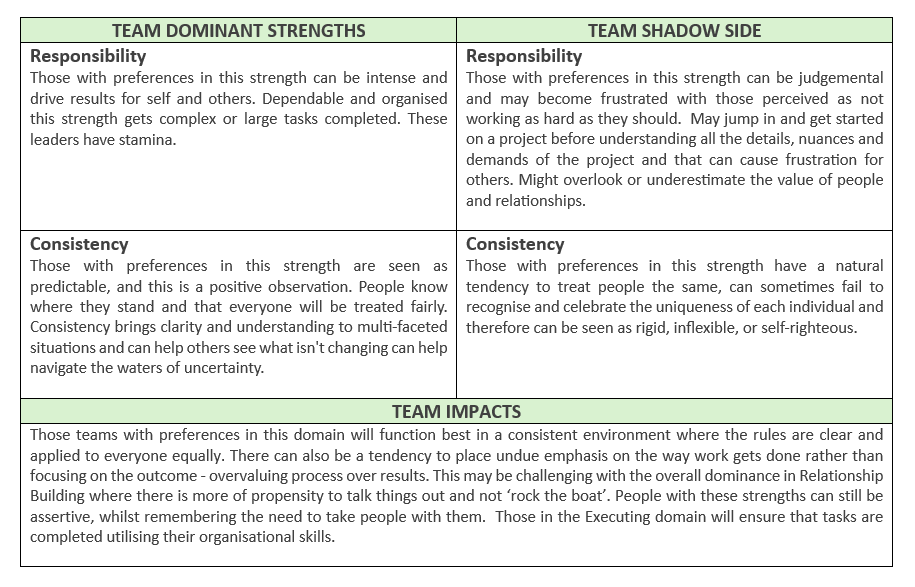
The team profile demonstrates a some spread across the domain, Responsibility and Consistency the dominant signature strengths.
INFLUENCING DOMAIN
People with these signature strengths like to sell ideas and get people enthused and motivated. They are confident and will willingly take charge and speak up. They are generally creative and energetic and love to work with and through people. 7% of the strengths reported are in this domain.
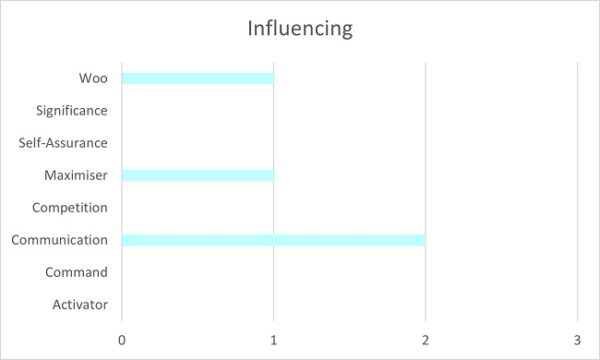
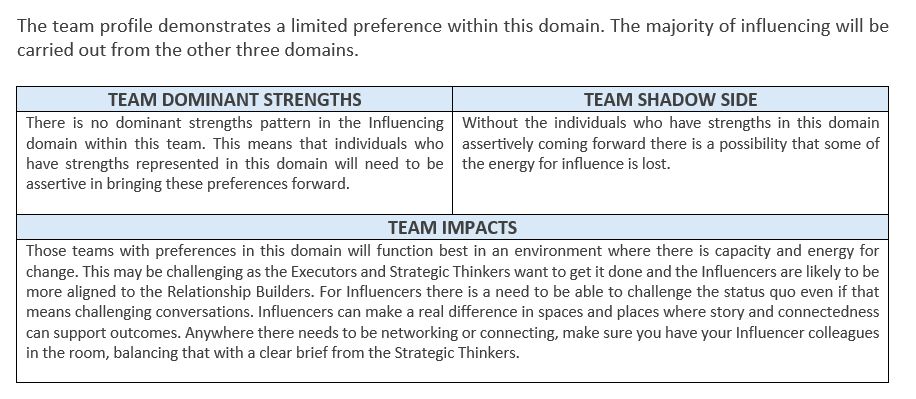
The team profile demonstrates a limited preference within this domain. The majority of influencing will be carried out from the other three domains.
RELATIONSHIP BUILDING DOMAIN
People with these signature strengths like to make sure the team is working and care about the team wellbeing. They are driven and people focussed and like to get others involved. 49% of the strengths reported are in this domain.
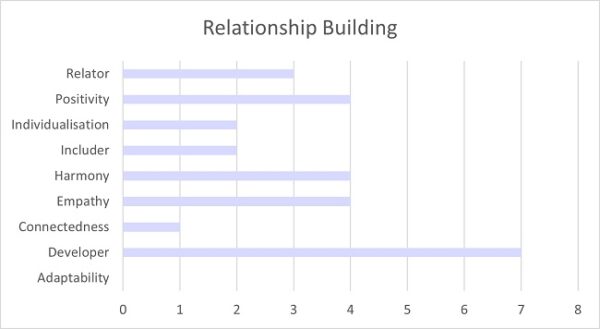
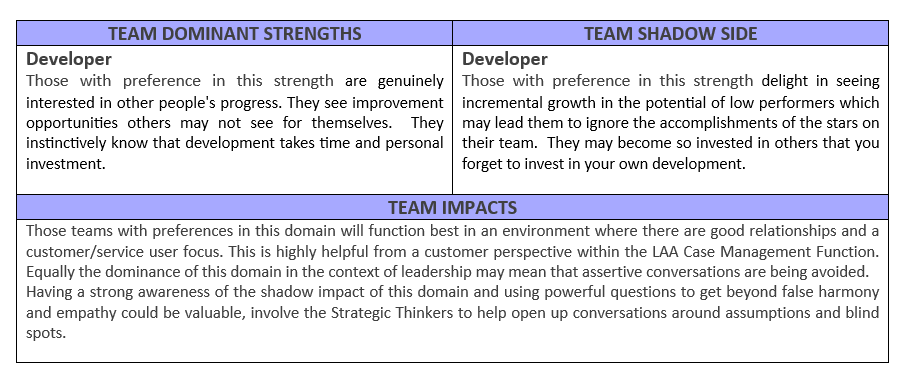
The team profile demonstrates a strong preference within this domain, Developer the dominant signature strength.
STRATEGIC THINKING DOMAIN
People strong in these signature strengths are future focussed, decision makers, and opportunists who are always reviewing information and data and applying what they learn. 18% of the strengths reported are in this domain.
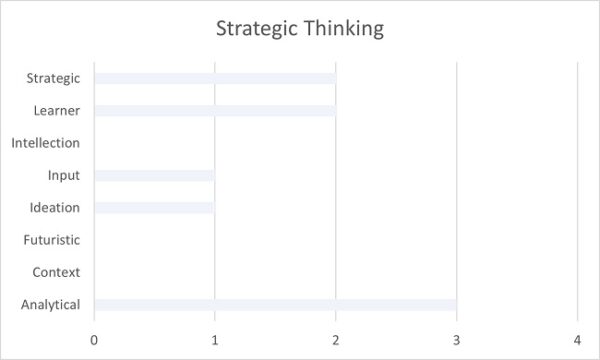
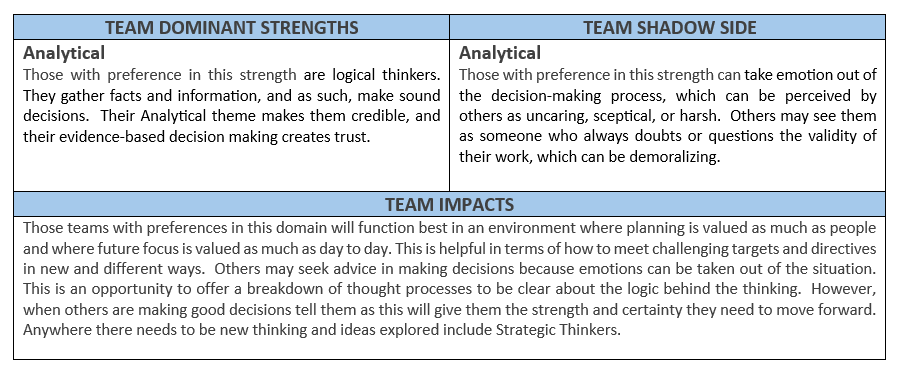
The team profile demonstrates some spread across this domain, Analytical the dominant signature strength.
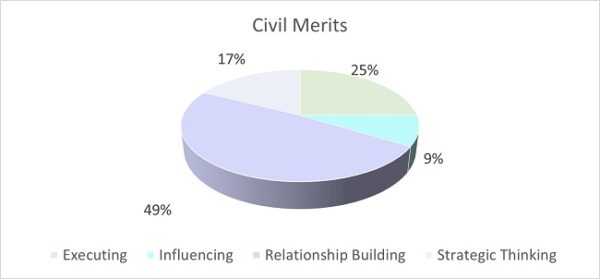
Civil Merits
16 people submitted their strengths to the accumulator for this team.
Overview
The team is dominant in Relationship Building and to a lesser extent, Executing and Strategic Thinking. There is less dominance in Influencing. This team profile suggests that the members of the team pride themselves in building and maintaining healthy working relationships, with a particular emphasis on individual growth and positivity. The Executing domain has an emphasis consistency and responsibility ensuring that there is order and structure whilst ensuring that everyone is treated fairly. Within the Strategic Thinking domain there is a focus on using analysis and learning to understand the ‘big picture’.
EXECUTING DOMAIN
People with these signature strengths like to make things happen. They stay focussed on the goal and turn ideas into actions. 25% of the strengths reported are in this domain.
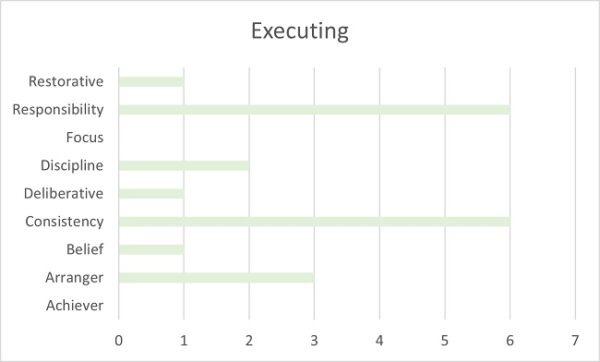
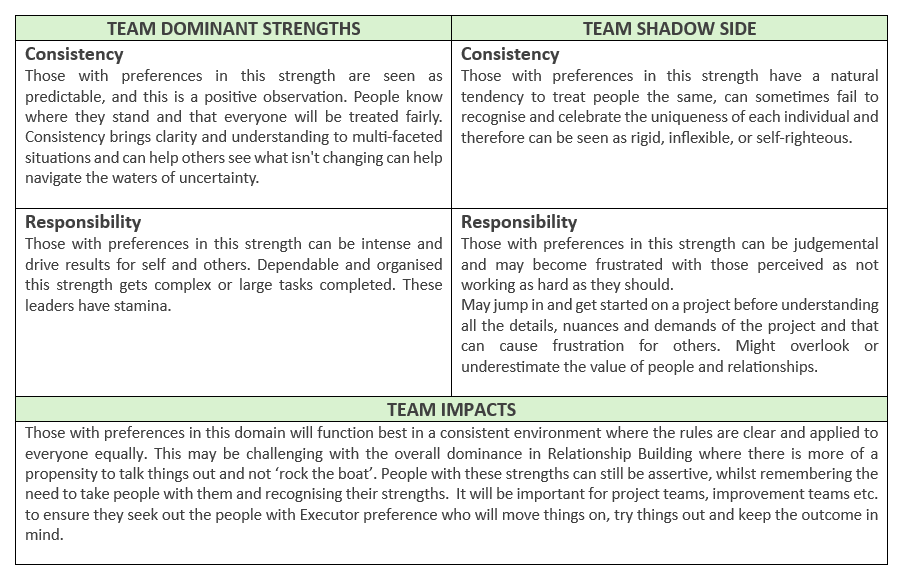
The team profile demonstrates a spread across the domain, Responsibility and Consistency the dominant signature strengths.
INFLUENCING DOMAIN
People with these signature strengths like to sell ideas and get people enthused and motivated. They are confident and will willingly take charge and speak up. They are generally creative and energetic and love to work with and through people. 9% of the strengths reported are in this domain.
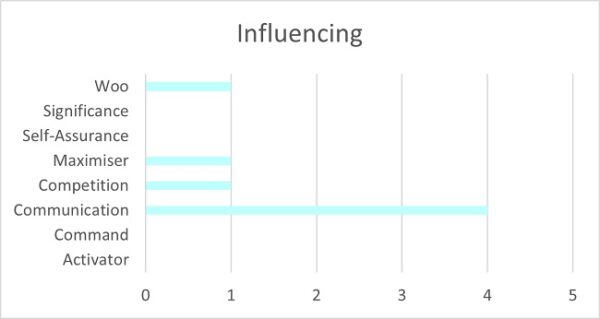
The team profile demonstrates some preference within this domain, Communication the dominant signature strength. The majority of influencing will be carried out from the other three domains.
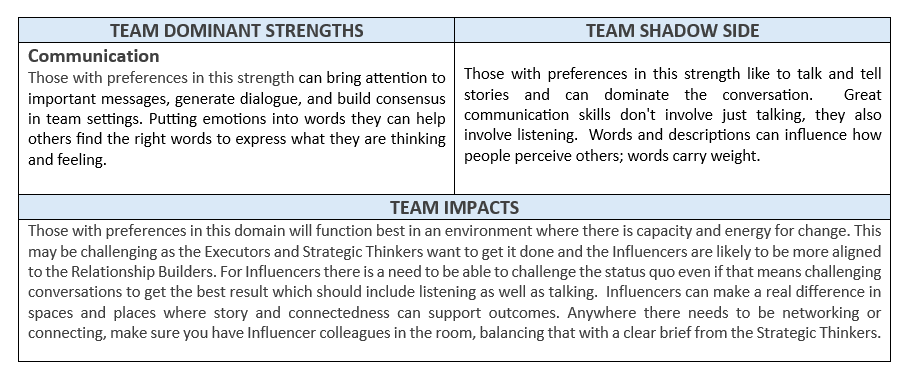
RELATIONSHIP BUILDING DOMAIN
People with these signature strengths like to make sure the team is working and care about the team wellbeing. They are driven and people focussed and like to get others involved. 49% of the strengths reported are in this domain.
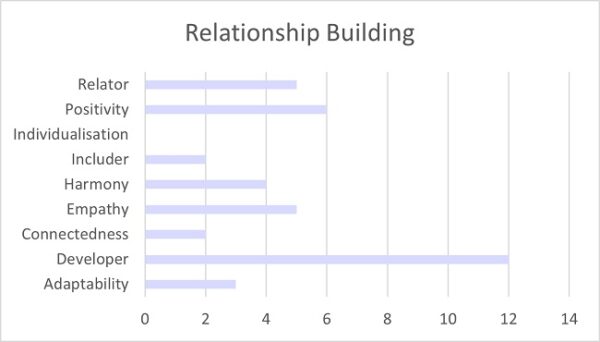
The team profile demonstrates a strong preference within this domain, Developer the dominant signature strength.
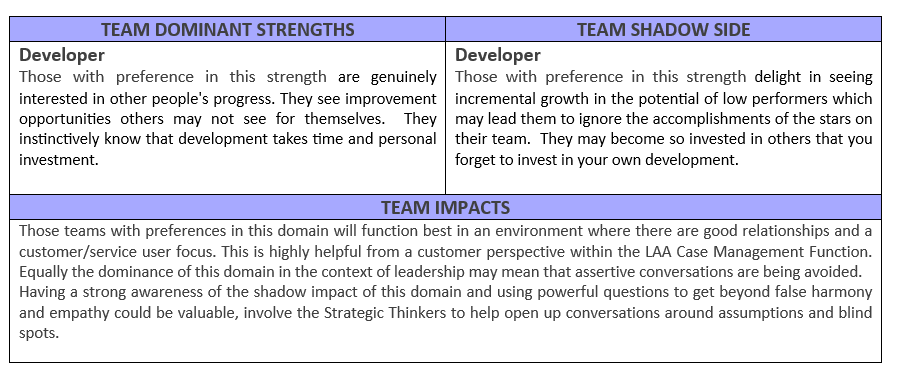
STRATEGIC THINKING DOMAIN
People strong in these signature strengths are future focussed, decision makers, and opportunists who are always reviewing information and data and applying what they learn. 17% of the strengths reported are in this domain.
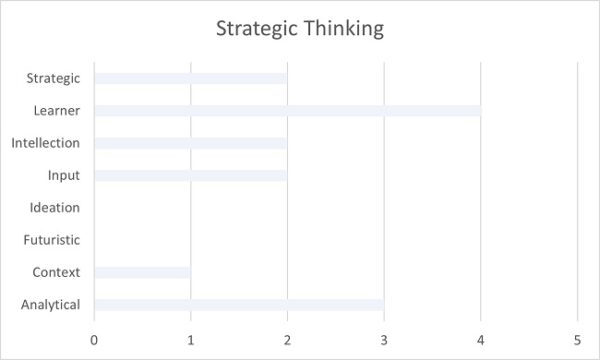
The team profile demonstrates some spread across this domain, with Learner and Analytical being the dominant signature strengths.
Escaped Cases
7 people submitted their strengths to the accumulator for this team.
Overview
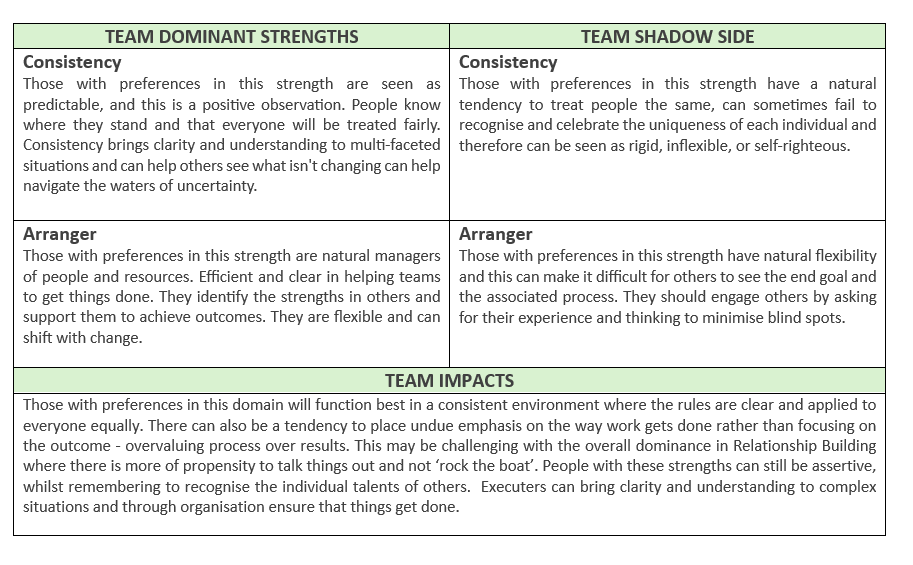
The team is dominant in Relationship Building and to a lesser extent, Executing. There is less dominance in Strategic Thinking and Influencing. This team profile suggests that the members of the team pride themselves in building and maintaining healthy working relationships, with a particular emphasis on treating everyone fairly. The Executing domain has an emphasis on consistency and arranging ensuring that there is order structure and drive to get things done.
EXECUTING DOMAIN
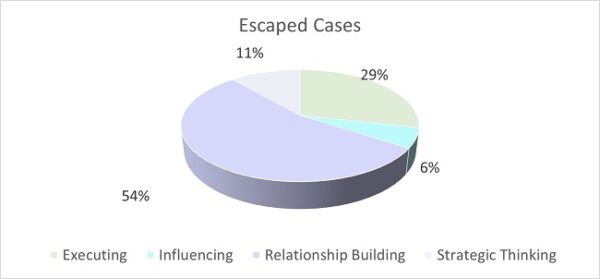
People with these signature strengths like to make things happen. They stay focussed on the goal and turn ideas into actions. 29% of the strengths reported are in this domain.
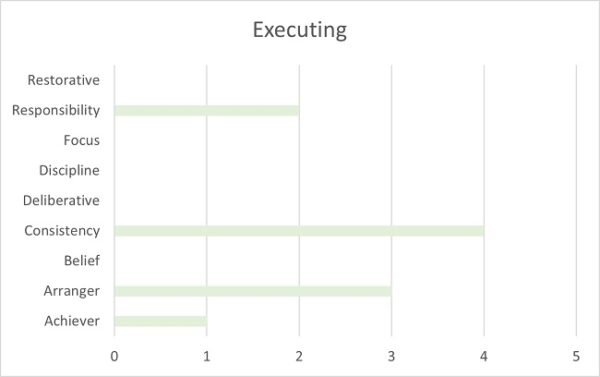
The team profile demonstrates a some spread across the domain, with, Consistency and Arranger being the dominant signature strengths.
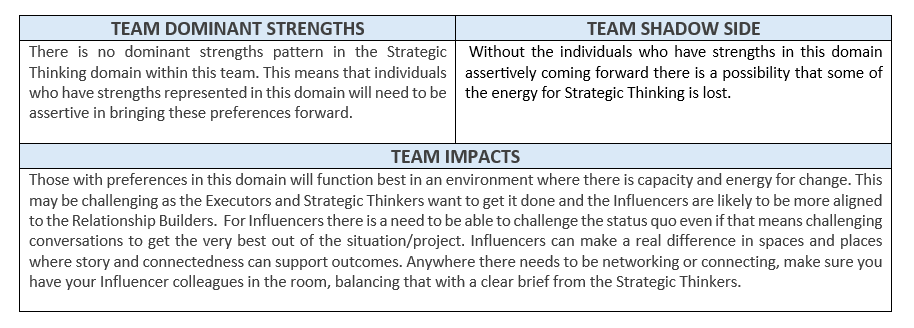
INFLUENCING DOMAIN
People with these signature strengths like to sell ideas and get people enthused and motivated. They are confident and will willingly take charge and speak up. They are generally creative and energetic and love to work with and through people. 6% of the strengths reported are in this domain.
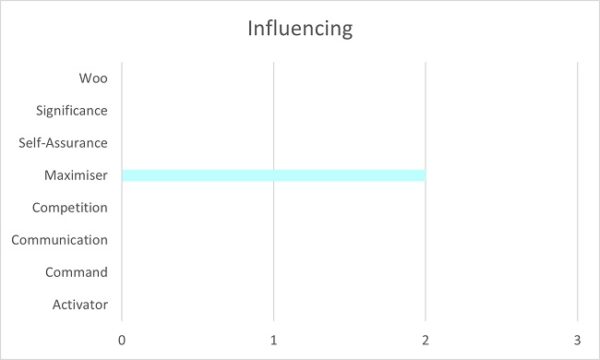
The team profile demonstrates a limited preference within this domain. The majority of influencing will be carried out from the other two domains.
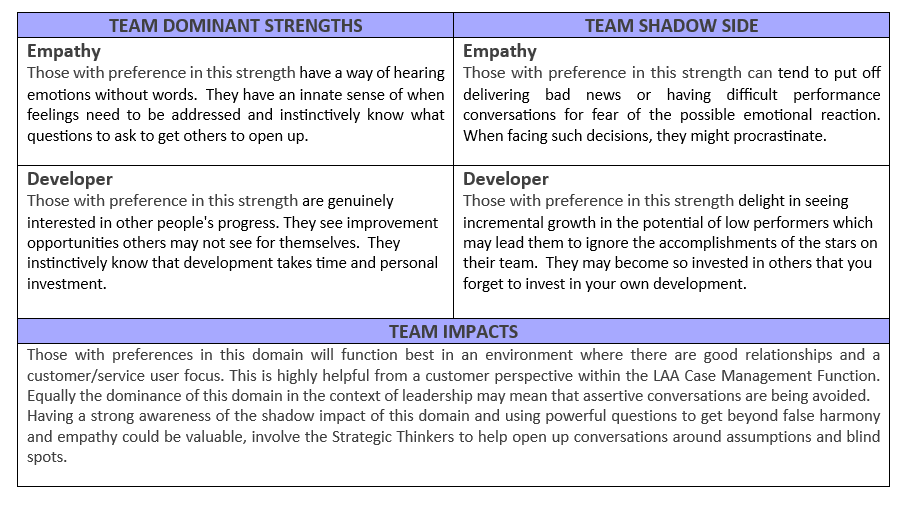
RELATIONSHIP BUILDING DOMAIN
People with these signature strengths like to make sure the team is working and care about the team wellbeing. They are driven and people focussed and like to get others involved. 54% of the strengths reported are in this domain.
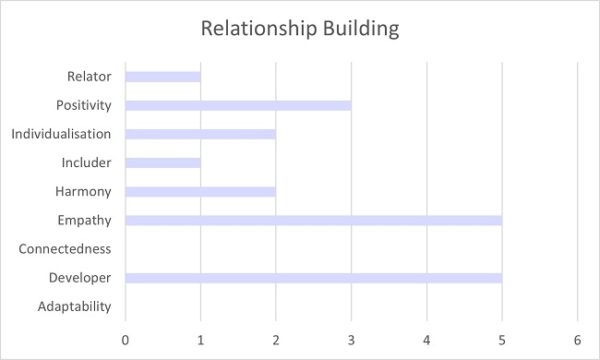
The team profile demonstrates a strong preference within this domain, with Empathy and Developer being the dominant signature strengths.
STRATEGIC THINKING DOMAIN
People strong in these signature strengths are future focussed, decision makers, and opportunists who are always reviewing information and data and applying what they learn. 11% of the strengths reported are in this domain.
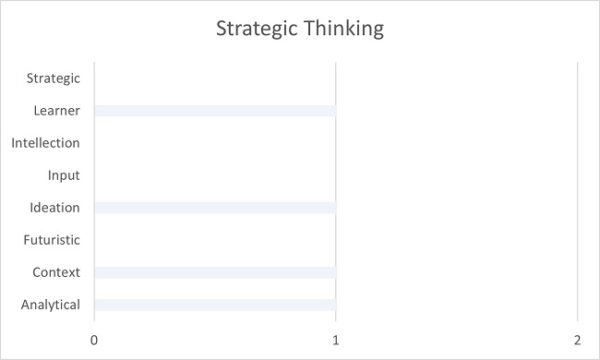
The team profile demonstrates a limited preference within this domain. The majority of influencing will be carried out from the other two domains.
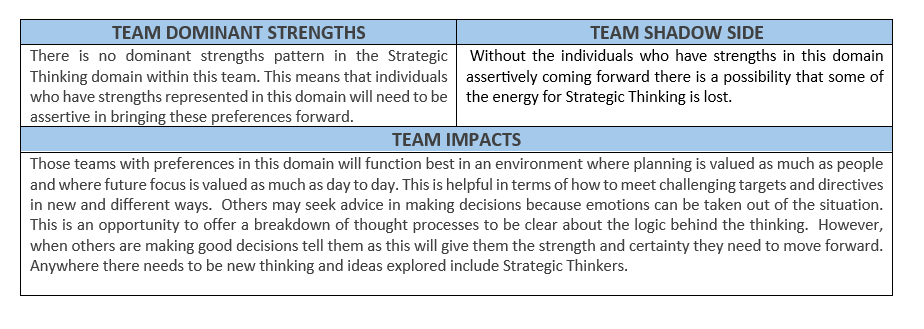
Finance, Performance & Governance
7 people submitted their strengths to the accumulator for this team.
Overview
The team is dominant in Relationship Building and to a lesser extent, Executing. There is less dominance in Strategic Thinking and Influencing. This team profile suggests that the members of the team pride themselves in building and maintaining healthy working relationships, with a particular emphasis on understanding one another, working as a team and avoiding conflict. The Executing domain has an emphasis on consistency and discipline ensuring that there is order and structure whilst making sure things get done. Within the Strategic Thinking domain there is a strategic focus which can provide creative, alternative ways to proceed when new ideas are required.
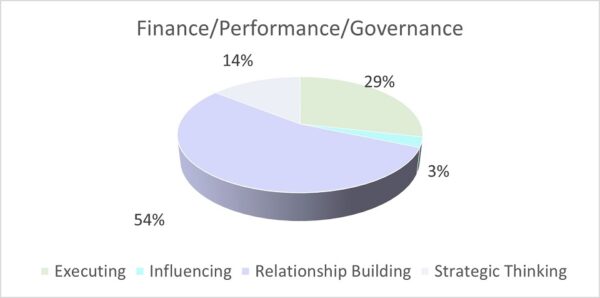
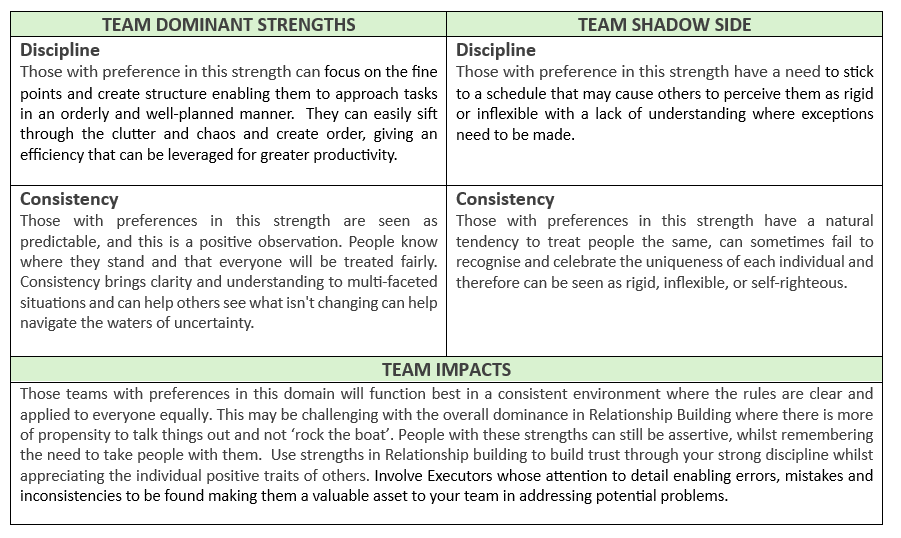
EXECUTING DOMAIN
People with these signature strengths like to make things happen. They stay focussed on the goal and turn ideas into actions. 36% of the strengths reported are in this domain.
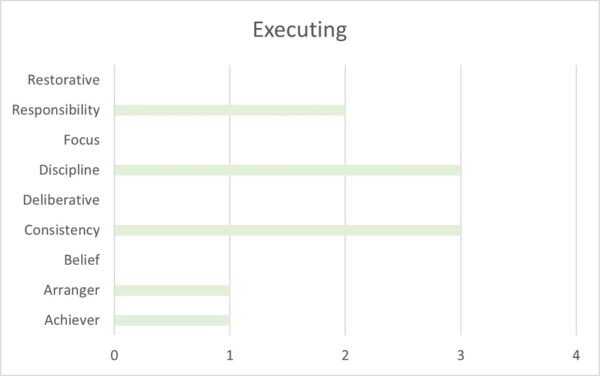
The team profile demonstrates a spread across the domain, with Consistency and Discipline being the dominant signature strengths.
INFLUENCING DOMAIN
People with these signature strengths like to sell ideas and get people enthused and motivated. They are confident and will willingly take charge and speak up. They are generally creative and energetic and love to work with and through people. 4% of the strengths reported are in this domain.
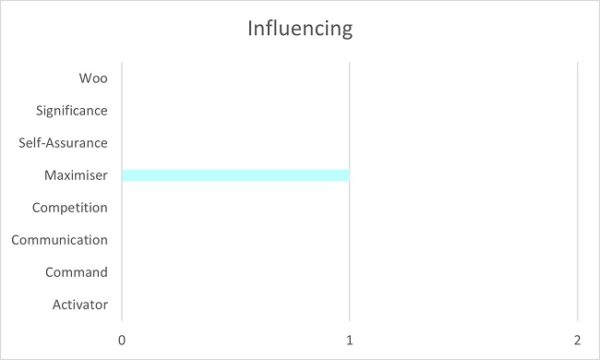
The team profile demonstrates a limited preference within this domain. The majority of influencing will be carried out from the other three domains.
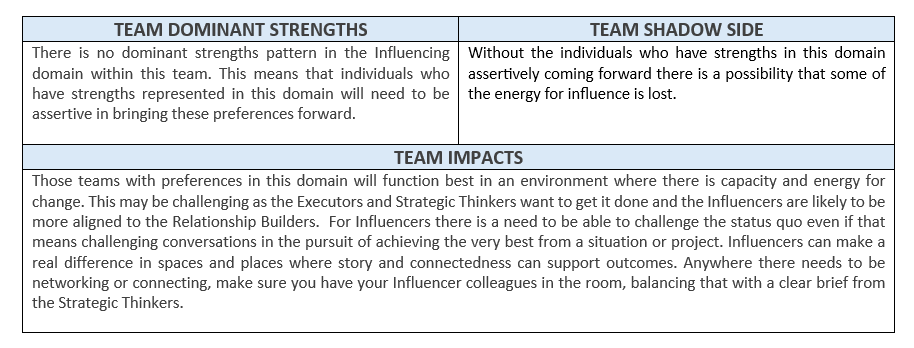
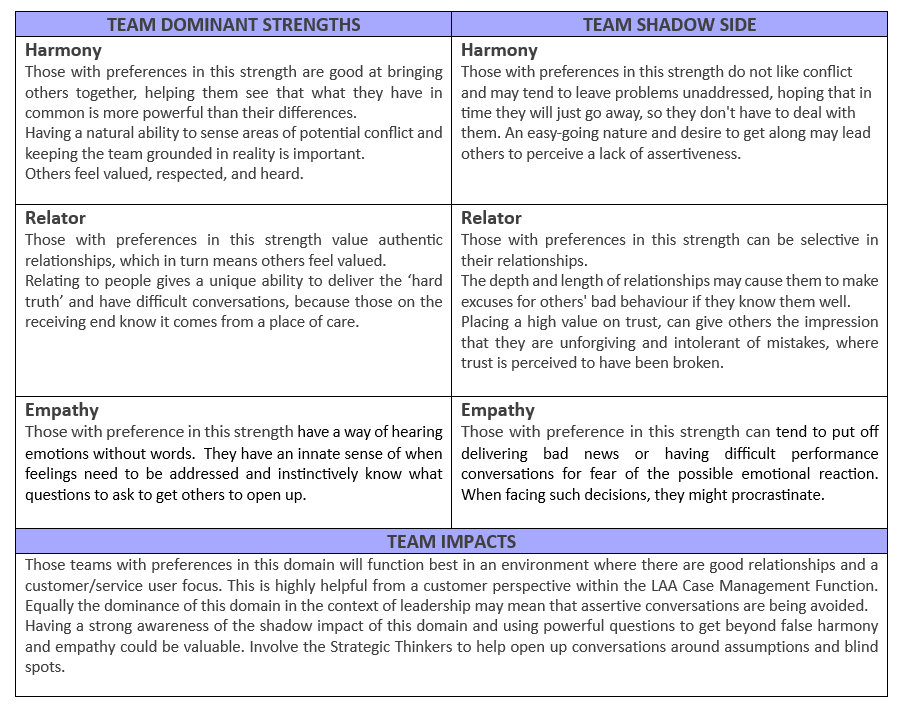
RELATIONSHIP BUILDING DOMAIN
People with these signature strengths like to make sure the team is working and care about the team wellbeing. They are driven and people focussed and like to get others involved. 48% of the strengths reported are in this domain.
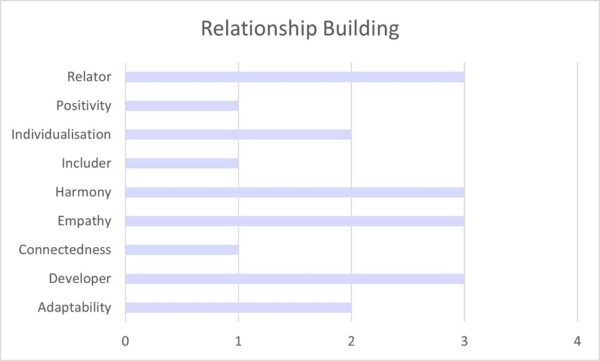
The team profile demonstrates a strong preference within this domain, with Harmony, Empathy and Relator being the dominant signature strengths.
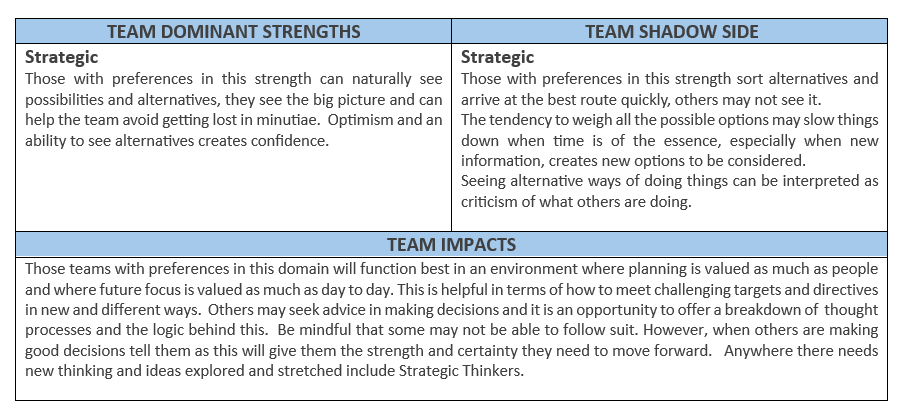
STRATEGIC THINKING DOMAIN
People strong in these signature strengths are future focussed, decision makers, and opportunists who are always reviewing information and data and applying what they learn. 12% of the strengths reported are in this domain.
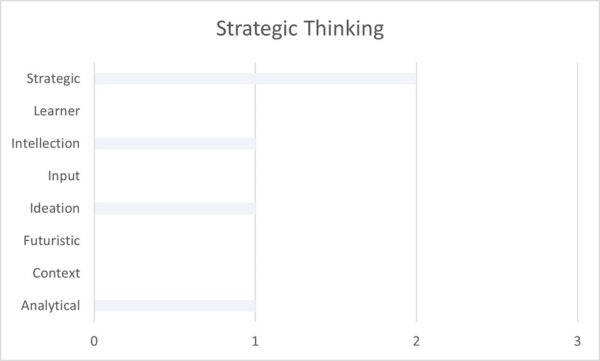
The team profile demonstrates a limited preference within this domain. Although Strategic is more dominant.
High Cost Family
6 people submitted their strengths to the accumulator for this team.
Overview
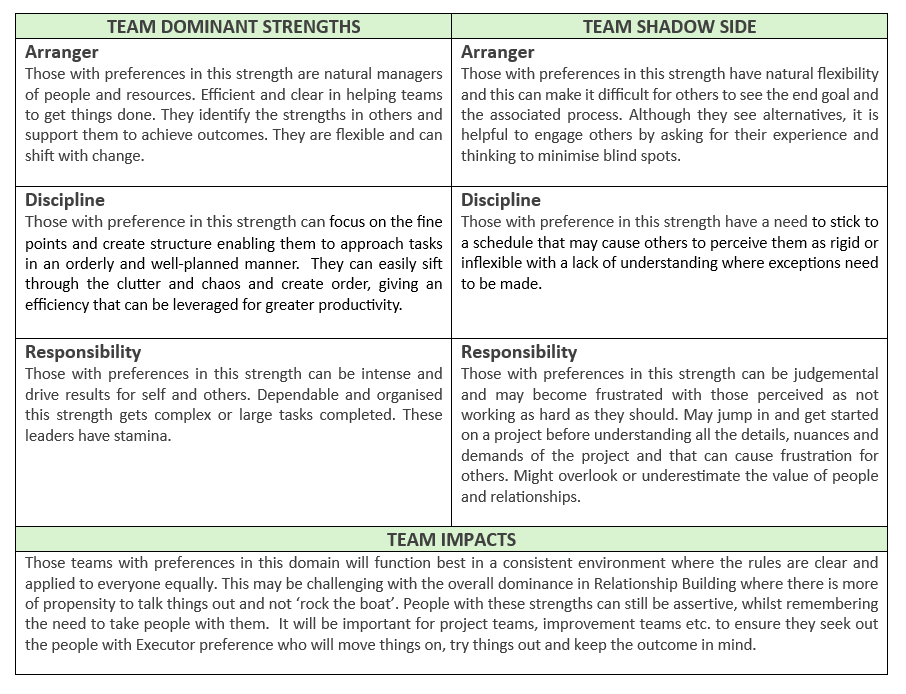
The team is dominant in Relationship Building and to a lesser extent, Executing and Strategic Thinking. There is less dominance in Influencing. This team profile suggests that the members of the team pride themselves in building and maintaining healthy working relationships, with a particular emphasis on individual growth. The Executing domain has an emphasis on responsibility ensuring that there is order and structure whilst making sure things get done. Within the Strategic Thinking domain there is a strategic focus which can provide creative alternative ways to proceed when new ideas are required.
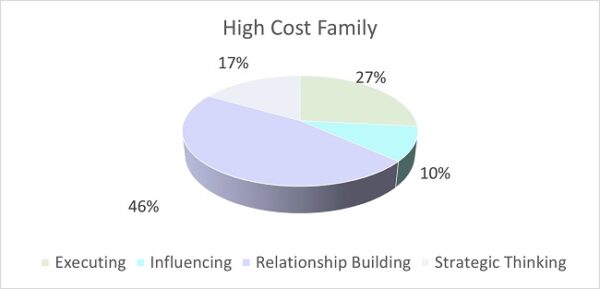
EXECUTING DOMAIN
People with these signature strengths like to make things happen. They stay focussed on the goal and turn ideas into actions. 27% of the strengths reported are in this domain.
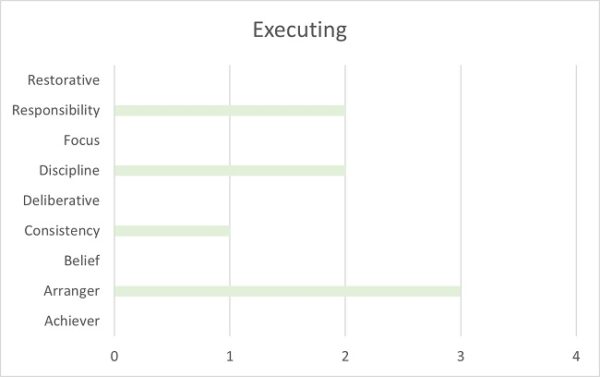
The team profile demonstrates a spread across the domain, with Arranger being the dominant signature strength.
INFLUENCING DOMAIN
People with these signature strengths like to sell ideas and get people enthused and motivated. They are confident and will willingly take charge and speak up. They are generally creative and energetic and love to work with and through people. 10% of the strengths reported are in this domain.
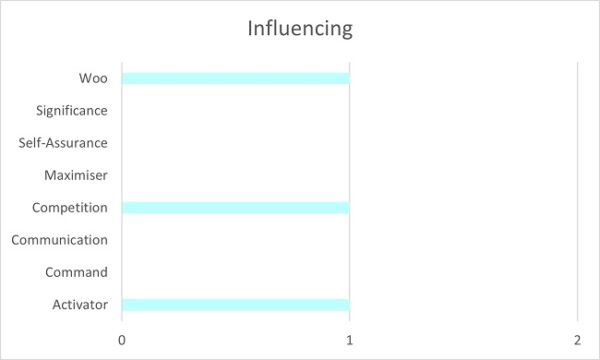
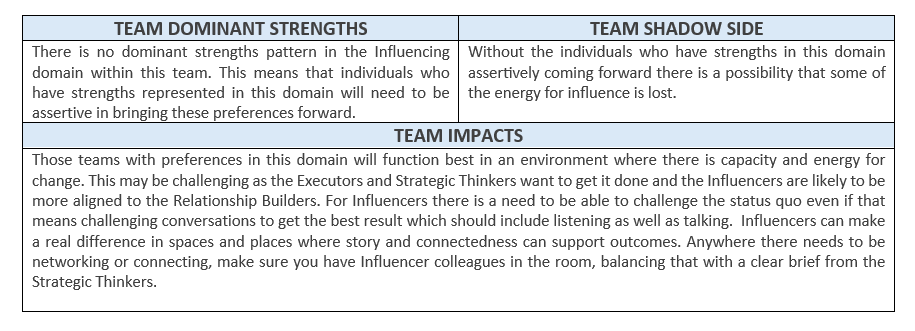
The team profile demonstrates a limited preference within this domain. The majority of influencing will be carried out from the other three domains.
RELATIONSHIP BUILDING DOMAIN
People with these signature strengths like to make sure the team is working and care about the team wellbeing. They are driven and people focussed and like to get others involved. 46% of the strengths reported are in this domain.
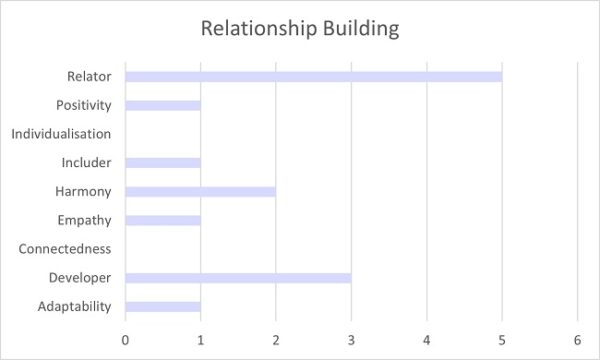
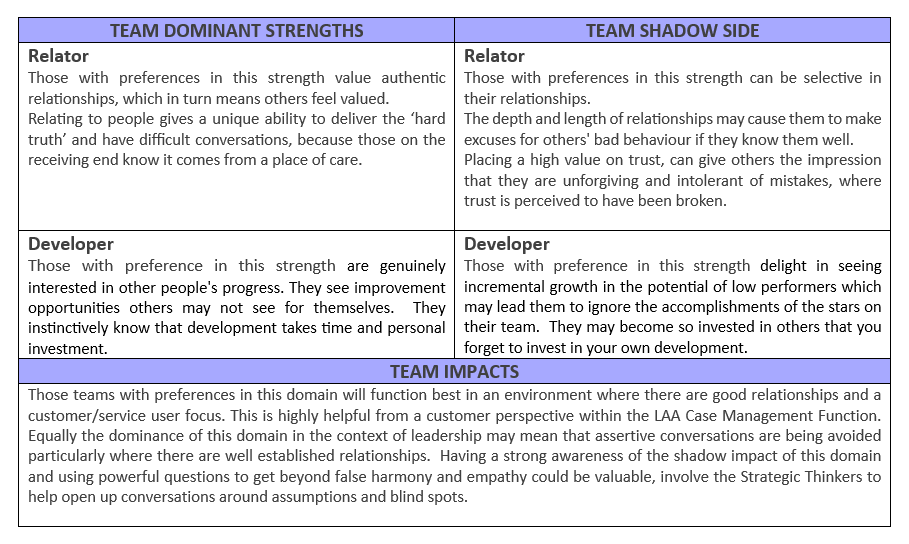
The team profile demonstrates a strong preference within this domain, with Relator and Developer being the dominant signature strengths.
STRATEGIC THINKING DOMAIN
People strong in these signature strengths are future focussed, decision makers, and opportunists who are always reviewing information and data and applying what they learn. 17% of the strengths reported are in this domain.
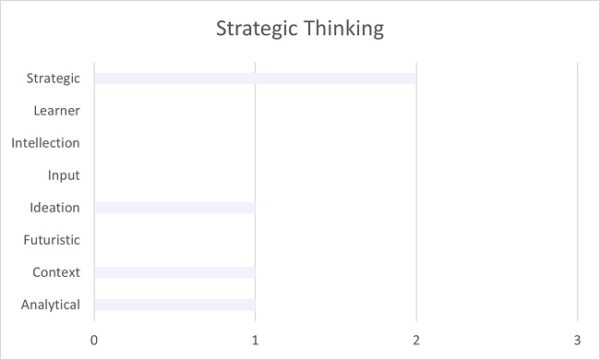
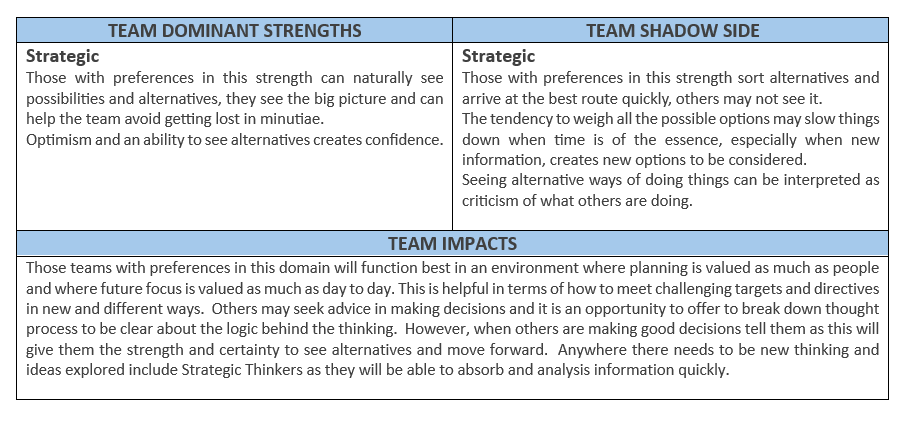
The team profile demonstrates some spread across this domain, with Strategic, the dominant signature strength.
Crime Team Overview
52 people submitted their strengths to the accumulator for this team.
Overview
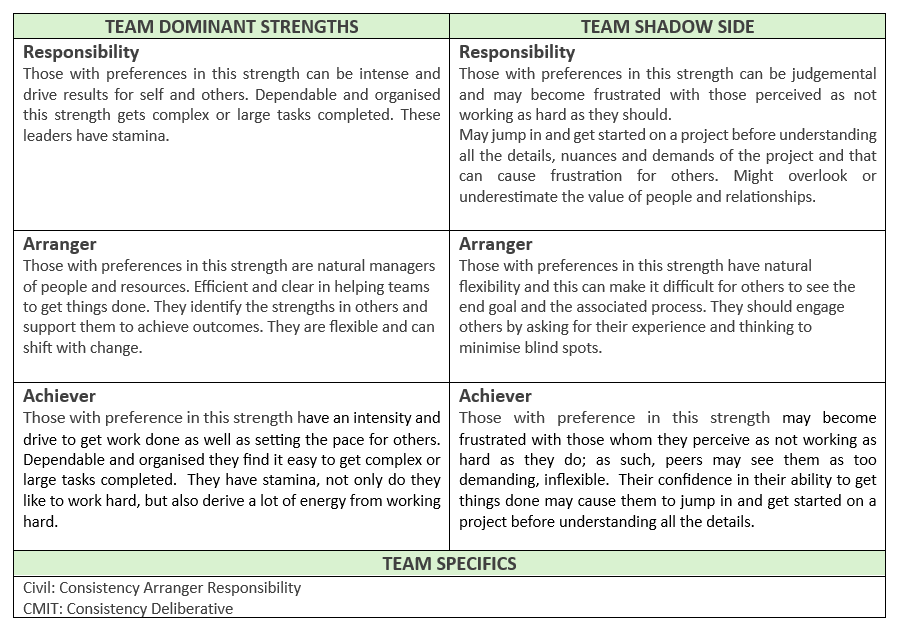
The Crime team is dominant in Relationship Building and to a lesser extent, Executing and Strategic Thinking. There is less dominance in Influencing. This team profile suggests that the members of the team pride themselves in building and maintaining healthy working relationships, with a particular emphasis on individual growth and positivity. The Executing domain has an emphasis consistency and responsibility ensuring that there is order and structure whilst ensuring that everyone is treated fairly. Within the Strategic Thinking domain there is a focus on using analysis and learning to understand the ‘big picture’.
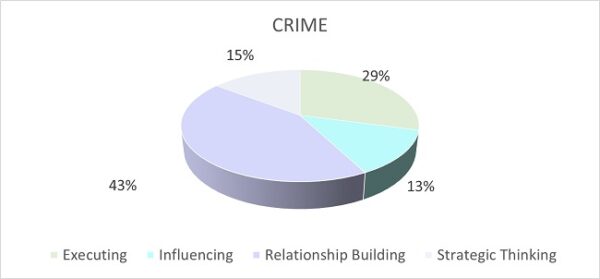
EXECUTING DOMAIN
People with these signature strengths like to make things happen. They stay focussed on the goal and turn ideas into actions. 29% of the strengths reported are in this domain.
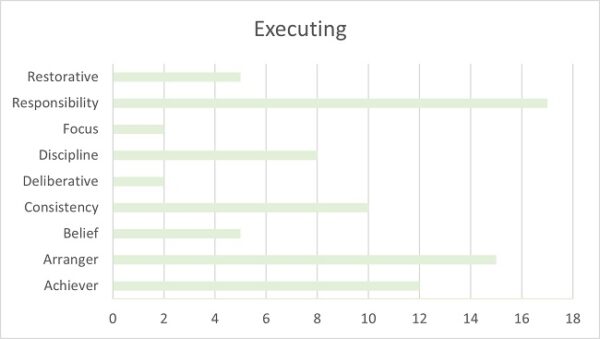
The team profile demonstrates a spread across the domain, Responsibility, Arranger and Achiever the dominant signature strengths.
INFLUENCING DOMAIN
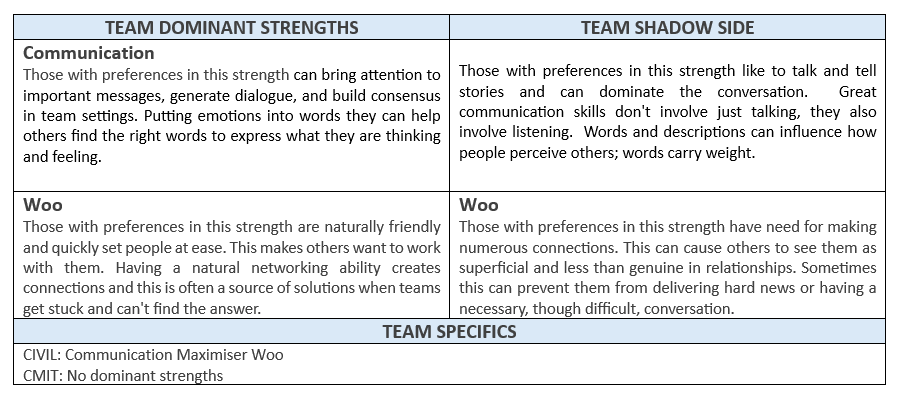
People with these signature strengths like to sell ideas and get people enthused and motivated. They are confident and will willingly take charge and speak up. They are generally creative and energetic and love to work with and through people. 13% of the strengths reported are in this domain.
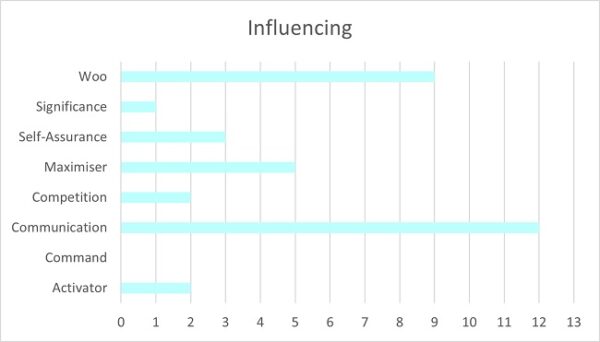
The team profile demonstrates some preference within this domain, Communication and Woo the dominant signature strength. The majority of influencing will be carried out from the other three domains.
RELATIONSHIP BUILDING DOMAIN
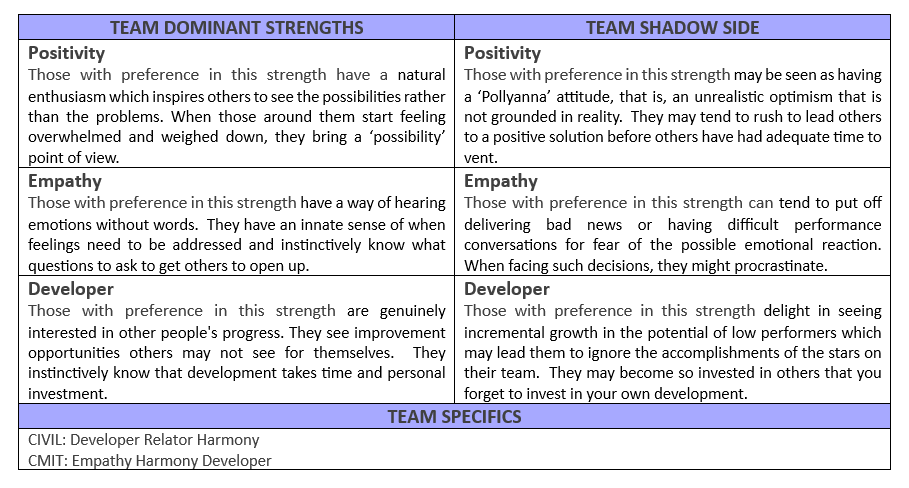
People with these signature strengths like to make sure the team is working and care about the team wellbeing. They are driven and people focussed and like to get others involved. 43% of the strengths reported are in this domain.
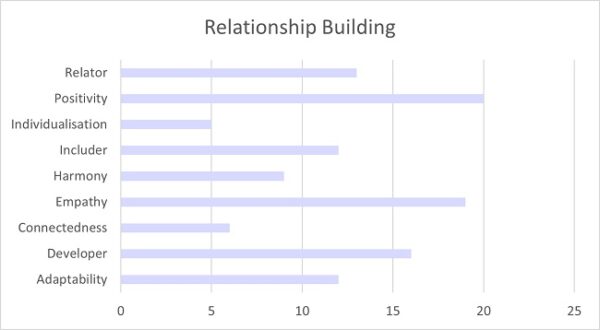
The team profile demonstrates a strong preference within this domain, Positivity, Empathy and Developer the dominant signature strengths.
STRATEGIC THINKING DOMAIN
People strong in these signature strengths are future focussed, decision makers, and opportunists who are always reviewing information and data and applying what they learn. 15% of the strengths reported are in this domain.
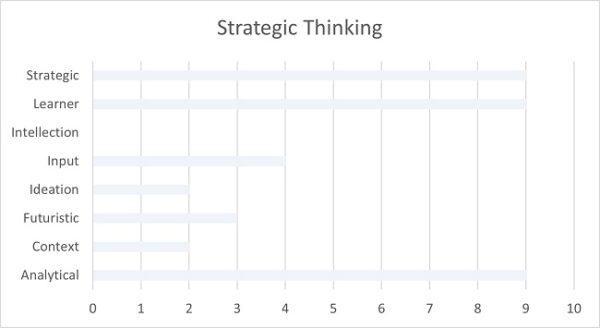
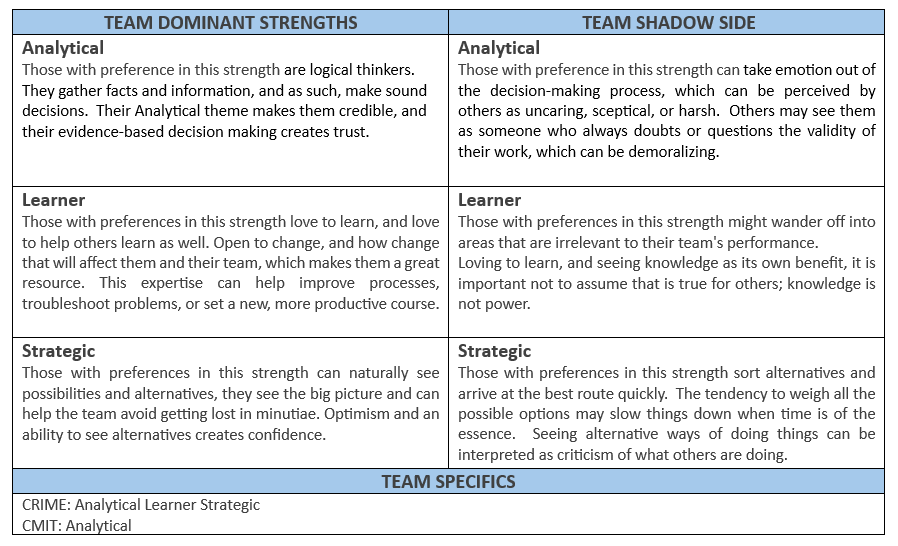
The team profile demonstrates a spread across this domain, Analytical, Learner and Strategic the dominant signature strengths.
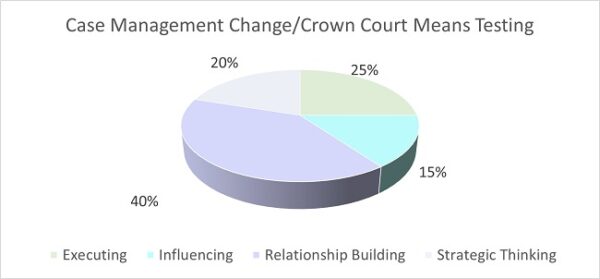
Case Management Change/Crown Court Means Testing
5 people submitted their strengths to the accumulator for this team.
Overview
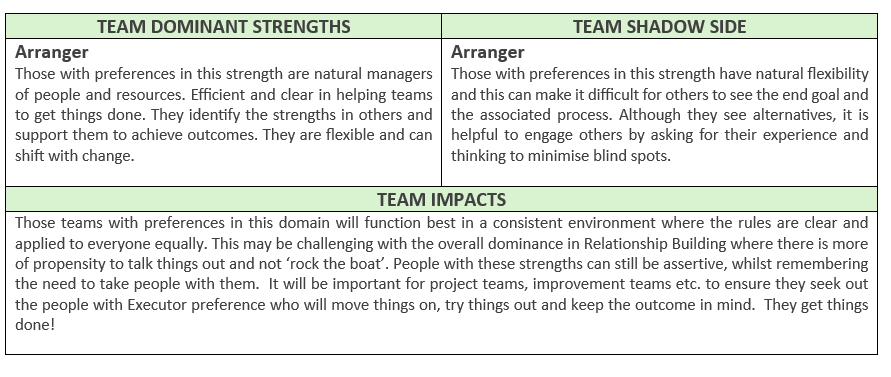
The team is dominant in Relationship Building and to a lesser extent, Executing. There is less dominance in Strategic Thinking and Influencing. This team profile suggests that the members of the team pride themselves in building and maintaining healthy working relationships, with a particular emphasis on inclusion and compassion. The Executing domain has an emphasis on arranging people and resources ensuring that there is order and structure to get things done. Within the Strategic Thinking domain there is a focus on asking the right questions and exploring data in order to effectively solve problems.
EXECUTING DOMAIN
People with these signature strengths like to make things happen. They stay focussed on the goal and turn ideas into actions. 25% of the strengths reported are in this domain.
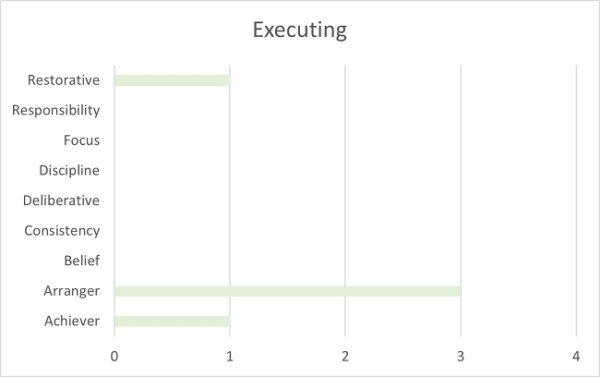
The dominant signature strength in this domain are Arranger with Restorative and Achiever also featuring.
INFLUENCING DOMAIN
People with these signature strengths like to sell ideas and get people enthused and motivated. They are confident and will willingly take charge and speak up. They are generally creative and energetic and love to work with and through people. 15% of the strengths reported are in this domain.
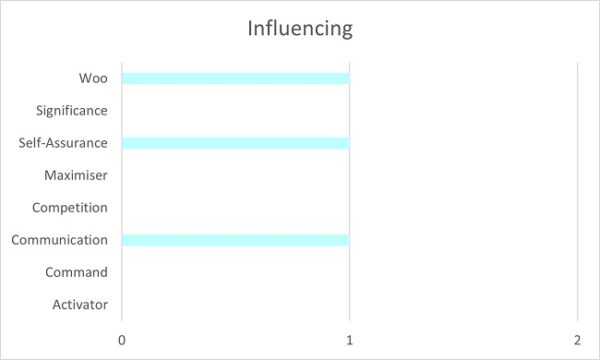
The team profile demonstrates a limited preference within this domain. The majority of influencing will be carried out from the other three domains.
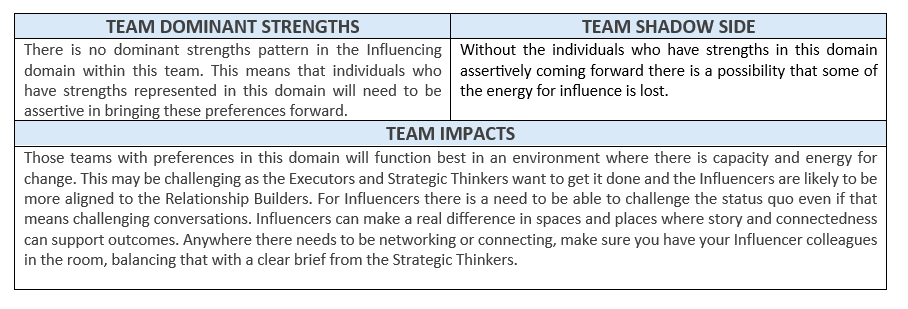
RELATIONSHIP BUILDING DOMAIN
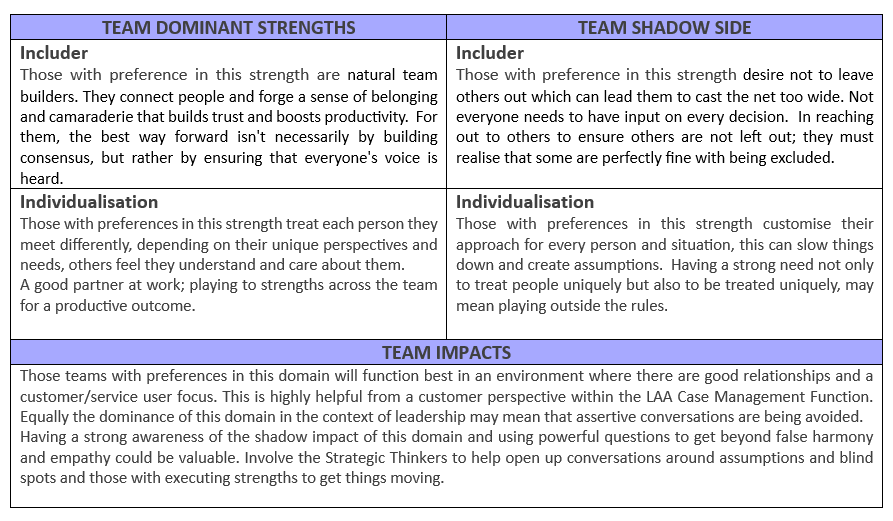
People with these signature strengths like to make sure the team is working and care about the team wellbeing. They are driven and people focussed and like to get others involved. 40% of the strengths reported are in this domain.
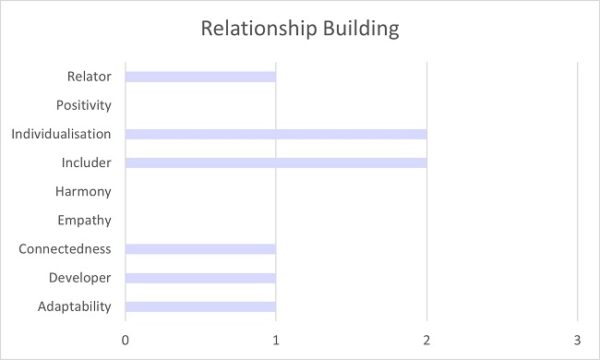
The team profile demonstrates a strong preference within this domain, with Individualisation and Includer being the dominant signature strengths.
STRATEGIC THINKING DOMAIN
People strong in these signature strengths are future focussed, decision makers, and opportunists who are always reviewing information and data and applying what they learn. 20% of the strengths reported are in this domain.
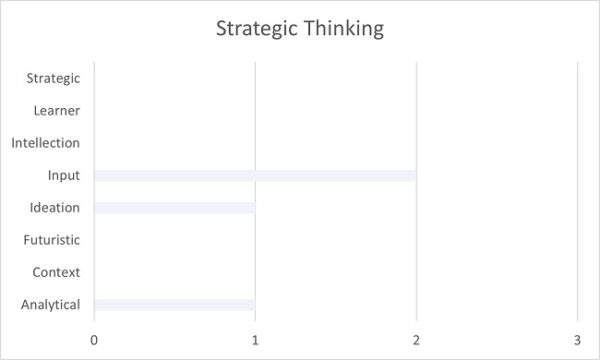
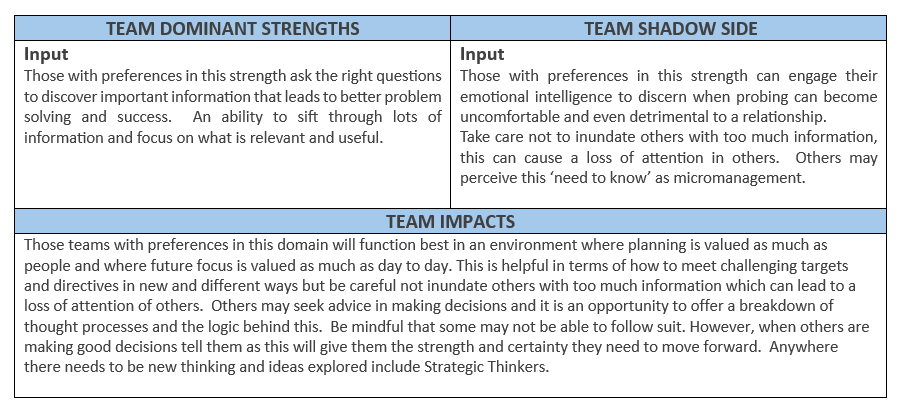
The team profile demonstrates some spread across this domain, with Input being the dominant signature strength.
Birmingham NCAT
10 people submitted their strengths to the accumulator for this team.
Overview
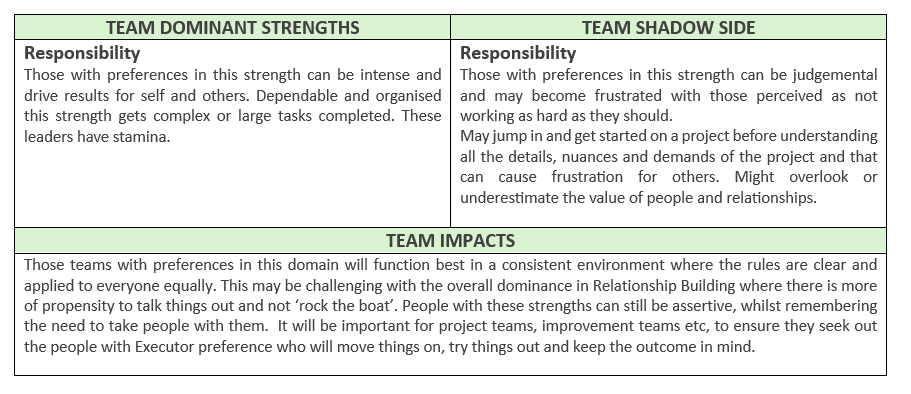
The team is dominant in Relationship Building and to a lesser extent, Executing. There is less dominance in Strategic Thinking and Influencing. This team profile suggests that the members of the team pride themselves in building and maintaining healthy working relationships, with a particular emphasis on positivity, compassion and avoiding conflict. The Executing domain has an emphasis on responsibility, ensuring that there is order and structure which ensures things get done. Within the Strategic Thinking domain there is a focus on using analysis and learning understand the ‘big picture’.
EXECUTING DOMAIN
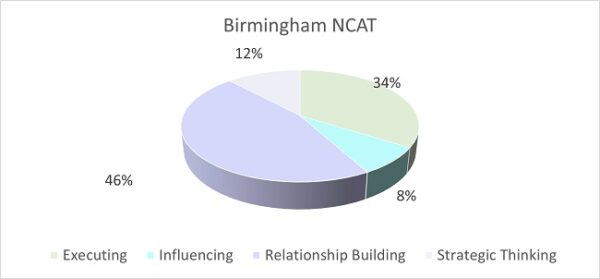
People with these signature strengths like to make things happen. They stay focussed on the goal and turn ideas into actions. 34% of the strengths reported are in this domain.
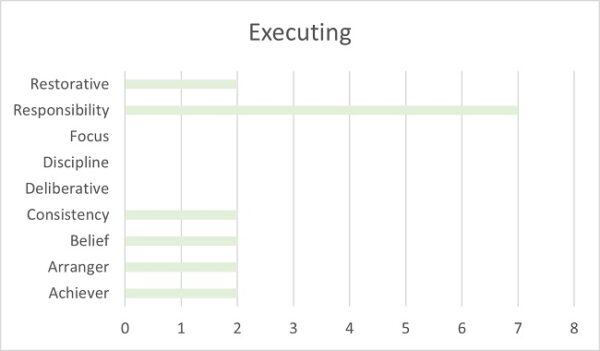
The team profile demonstrates some spread across the domains, Responsibility the dominant signature strength.
INFLUENCING DOMAIN
People with these signature strengths like to sell ideas and get people enthused and motivated. They are confident and will willingly take charge and speak up. They are generally creative and energetic and love to work with and through people. 8% of the strengths reported are in this domain.
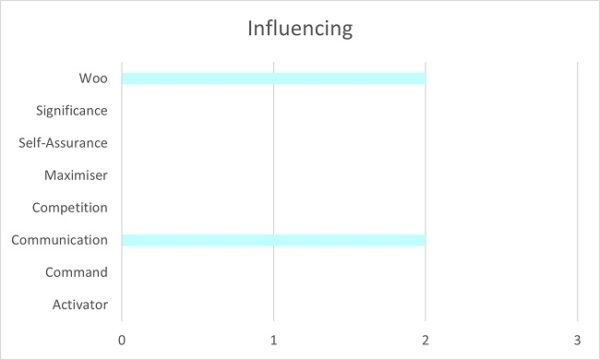
The team profile demonstrates, Communication and Woo the dominant signature strength.
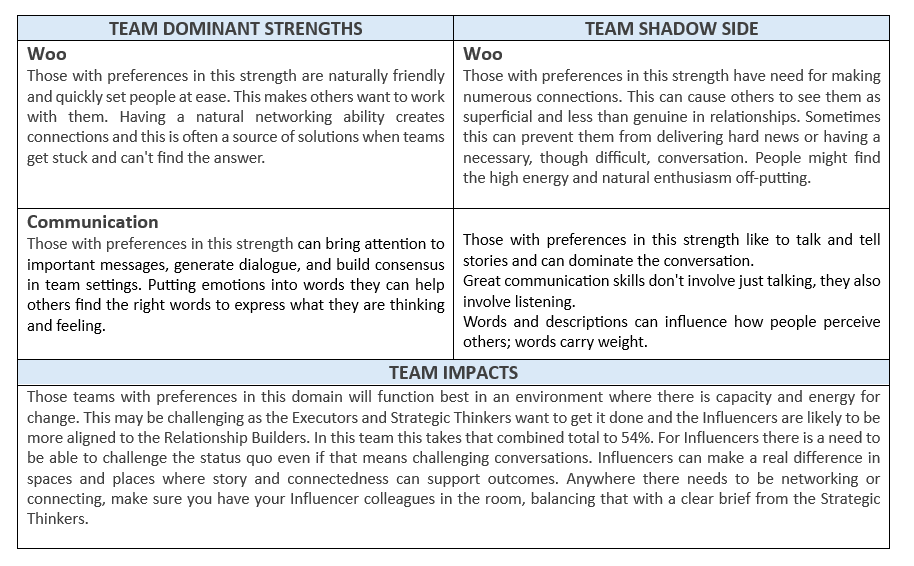
RELATIONSHIP BUILDING DOMAIN
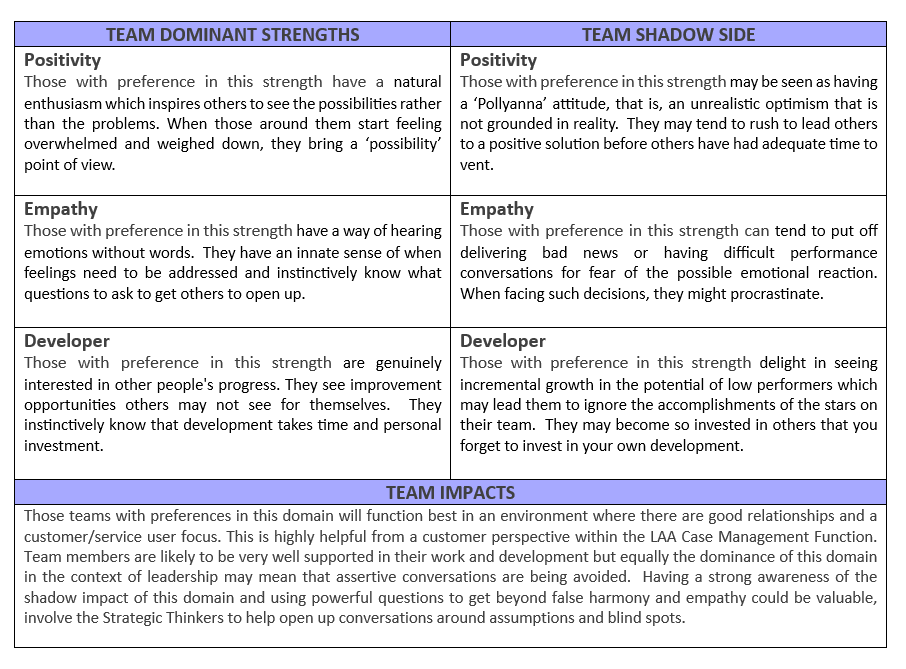
People with these signature strengths like to make sure the team is working and care about the team wellbeing. They are driven and people focussed and like to get others involved. 46% of the strengths reported are in this domain.
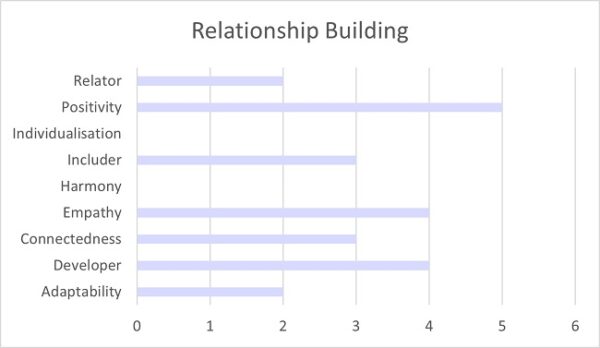
The team profile demonstrates a strong preference within this domain, Positivity, Empathy and Developer the dominant signature strengths.
STRATEGIC THINKING DOMAIN
People strong in these signature strengths are future focussed, decision makers, and opportunists who are always reviewing information and data and applying what they learn. 23% of the strengths reported are in this domain.
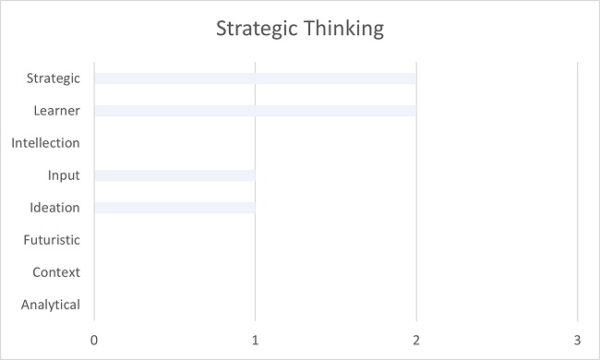
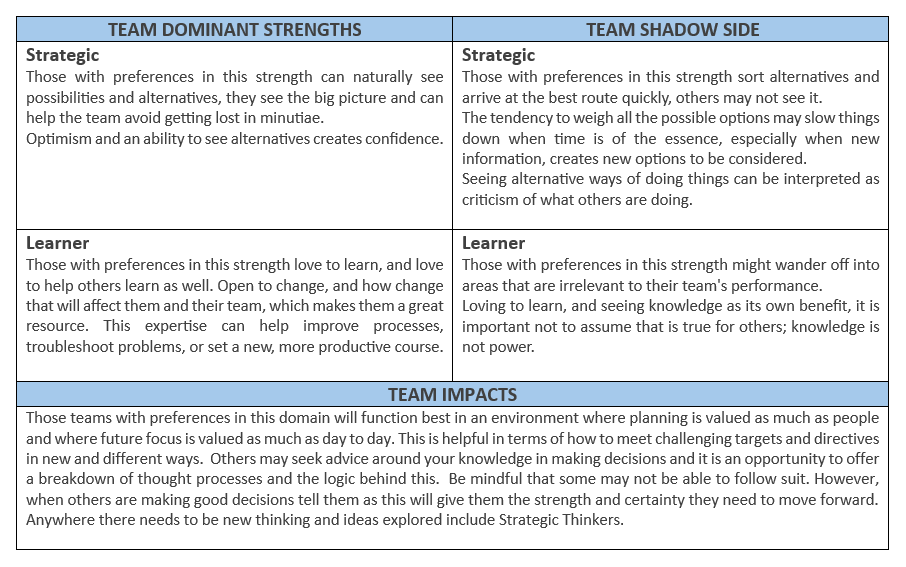
The team profile demonstrates some spread across this domain, with Strategic and Learner the dominant signature strengths.
Crime CST
6 people submitted their strengths to the accumulator for this team.
Overview
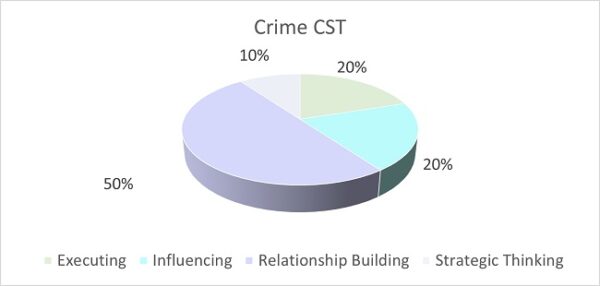
The team is dominant in Relationship Building, with Executing and Influencing featuring strongly with less dominance in Strategic Thinking. This team profile suggests that the members of the team pride themselves in building and maintaining healthy working relationships, with a particular emphasis on caring, compassion and avoiding conflict. The Influencing domain has an emphasis on getting important messages across and maximizing opportunities. Within the Executing domain there is strong emphasis on responsibility and discipline ensuring that there is order and structure whilst ensuring that the job is done.
EXECUTING DOMAIN
People with these signature strengths like to make things happen. They stay focussed on the goal and turn ideas into actions. 20% of the strengths reported are in this domain.
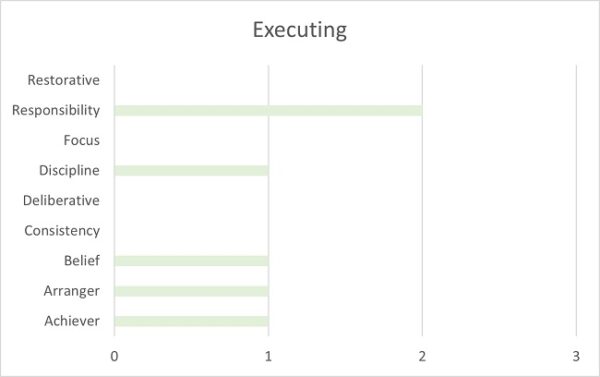
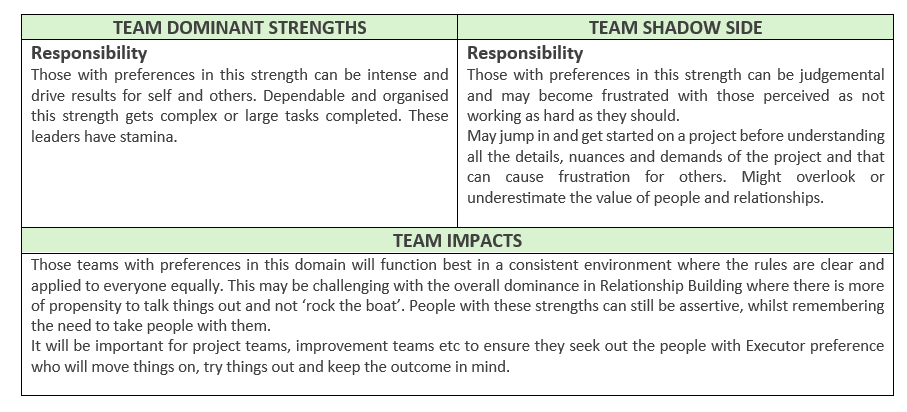
The team profile demonstrates a spread across the domain, Responsibility the dominant signature strength.
INFLUENCING DOMAIN
People with these signature strengths like to sell ideas and get people enthused and motivated. They are confident and will willingly take charge and speak up. They are generally creative and energetic and love to work with and through people. 20% of the strengths reported are in this domain.
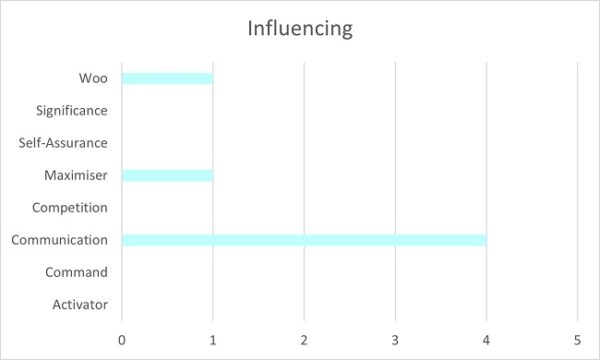
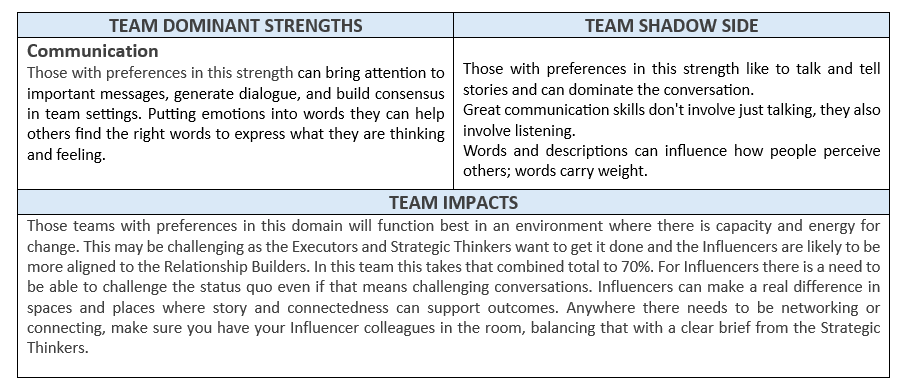
The team profile demonstrates a limited preference within this domain, Communication the dominant signature strength.
RELATIONSHIP BUILDING DOMAIN
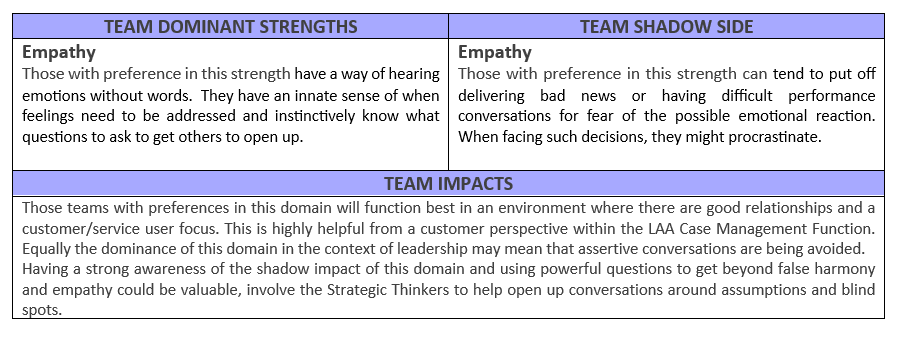
People with these signature strengths like to make sure the team is working and care about the team wellbeing. They are driven and people focussed and like to get others involved. 50% of the strengths reported are in this domain.
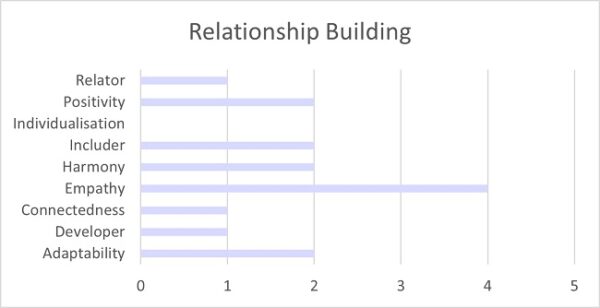
The team profile demonstrates a strong preference within this domain, Empathy being the dominant signature strength.
STRATEGIC THINKING DOMAIN
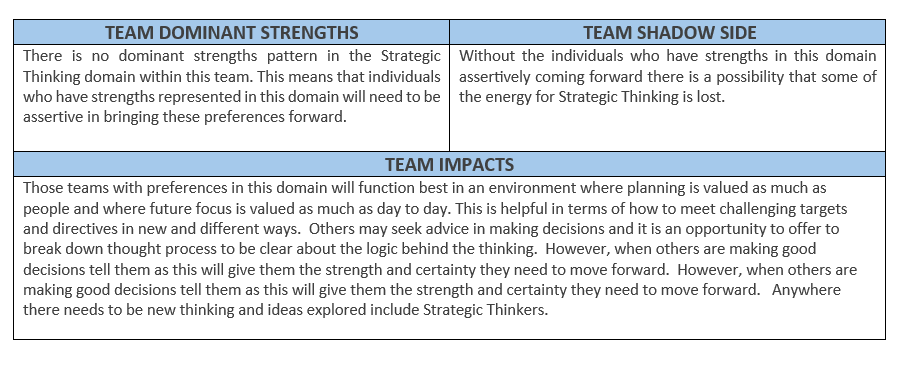
People strong in these signature strengths are future focussed, decision makers, and opportunists who are always reviewing information and data and applying what they learn. 10% of the strengths reported are in this domain.
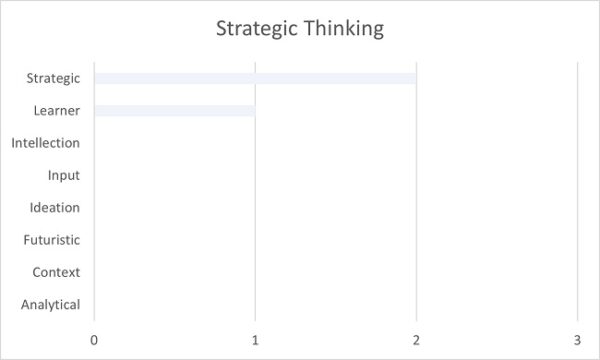
The team profile demonstrates a limited preference within this domain. The majority of influencing will be carried out from the other three domains.
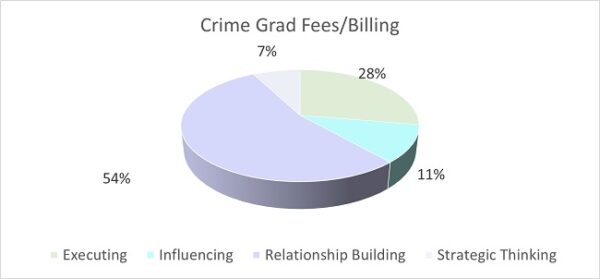
Crime Grad Fees/Billing
13 people submitted their strengths to the accumulator for this team.
Overview
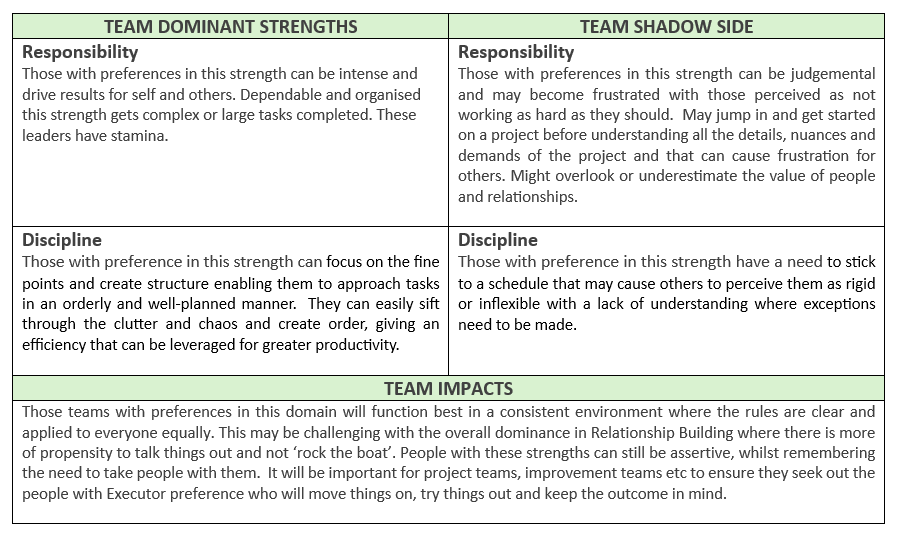
The team is dominant in Relationship Building and to a lesser extent, Executing. There is less dominance in Strategic Thinking and Influencing. This team profile suggests that the members of the team pride themselves in building and maintaining healthy working relationships, with a particular emphasis on caring, compassion and avoiding conflict. The Executing domain has an emphasis responsibility and discipline ensuring that there is order and structure whilst making sure everyone is treated the same. Within the Influencing domain strengths lie in natural connections and communication which can be utilised to enthuse others and bring consensus.
EXECUTING DOMAIN
People with these signature strengths like to make things happen. They stay focussed on the goal and turn ideas into actions. 28% of the strengths reported are in this domain.
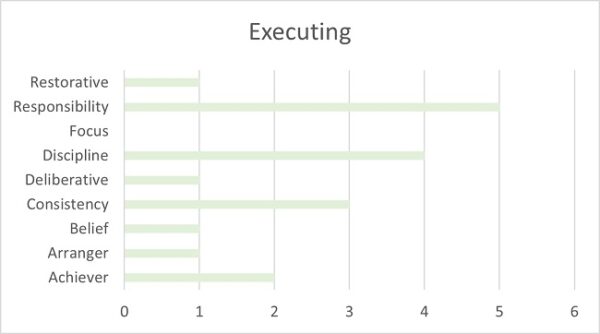
The team profile demonstrates a spread across the domain, Responsibility and Discipline the dominant signature strengths.
INFLUENCING DOMAIN
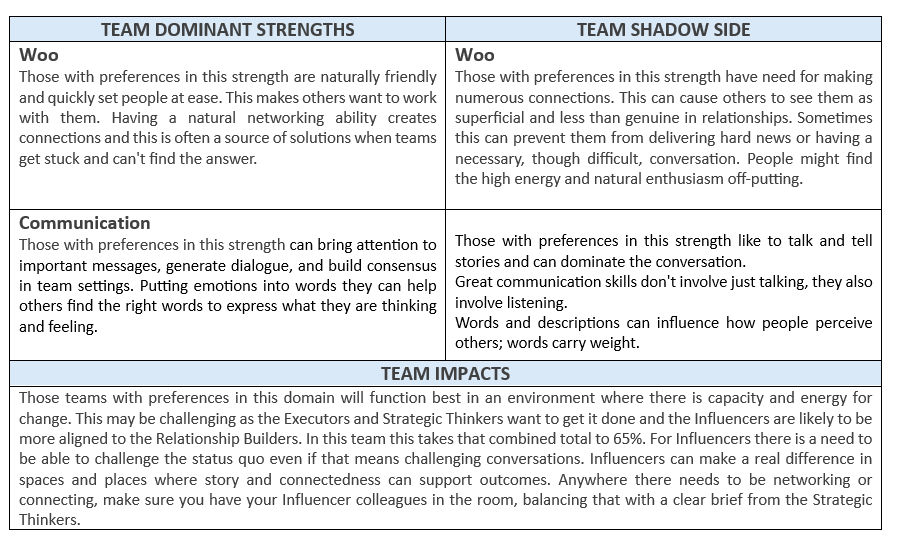
People with these signature strengths like to sell ideas and get people enthused and motivated. They are confident and will willingly take charge and speak up. They are generally creative and energetic and love to work with and through people. 11% of the strengths reported are in this domain.
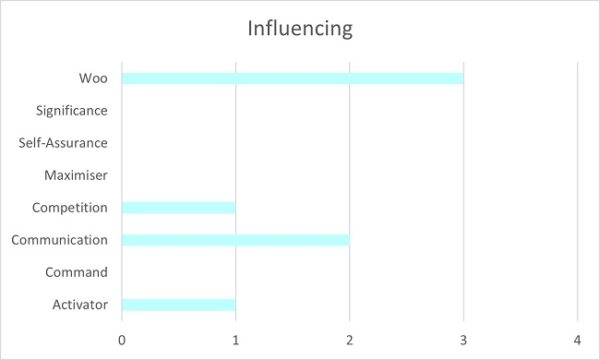
The team profile demonstrates a limited preference within this domain, with Woo and Communication being the dominant signature strengths. The majority of influencing will be carried out from Relationship Building and Executing domains.
RELATIONSHIP BUILDING DOMAIN
People with these signature strengths like to make sure the team is working and care about the team wellbeing. They are driven and people focussed and like to get others involved. 54% of the strengths reported are in this domain.
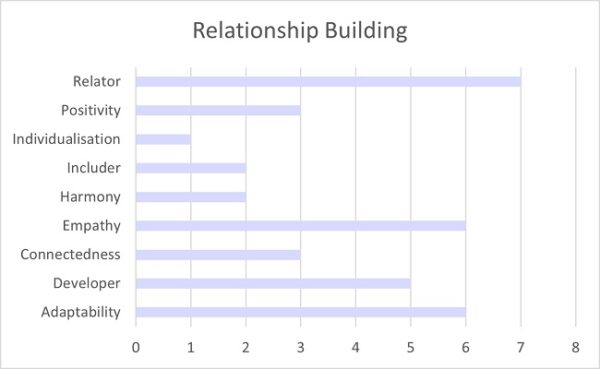
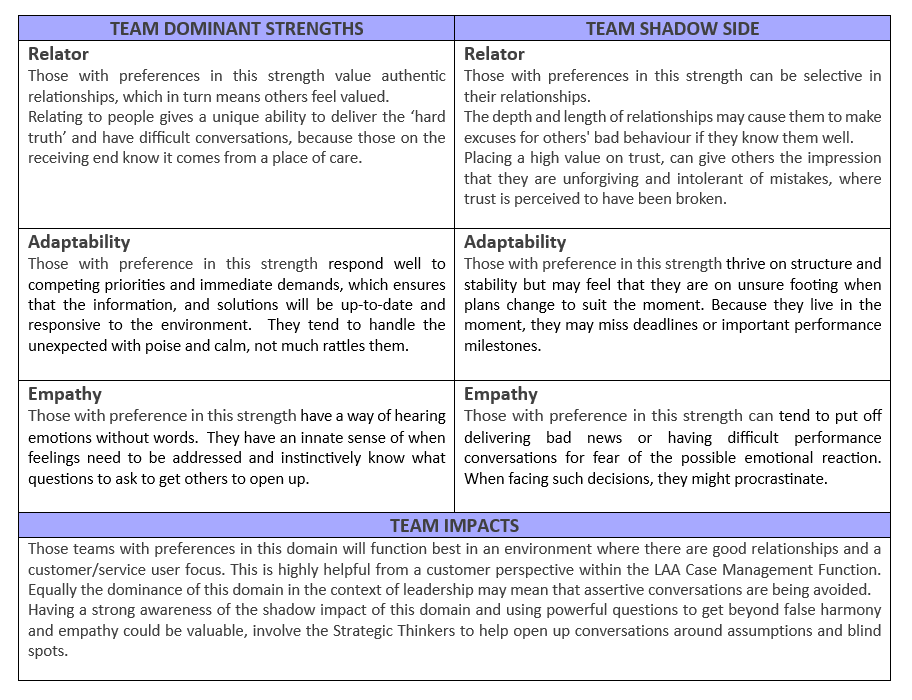
The team profile demonstrates a strong preference within this domain, with Relator, Adaptability and Empathy being the dominant signature strengths.
STRATEGIC THINKING DOMAIN
People strong in these signature strengths are future focussed, decision makers, and opportunists who are always reviewing information and data and applying what they learn. 7% of the strengths reported are in this domain.
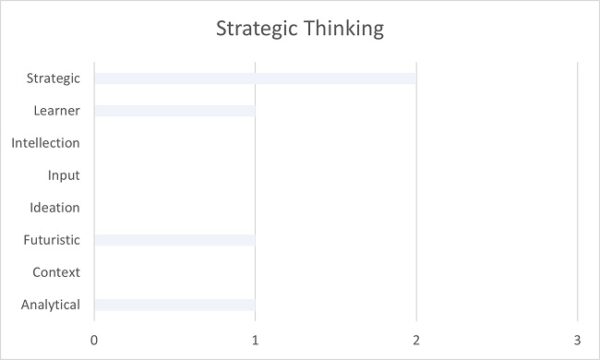
The team profile demonstrates a limited preference within this domain. The majority of influencing will be carried out from the other three domains.
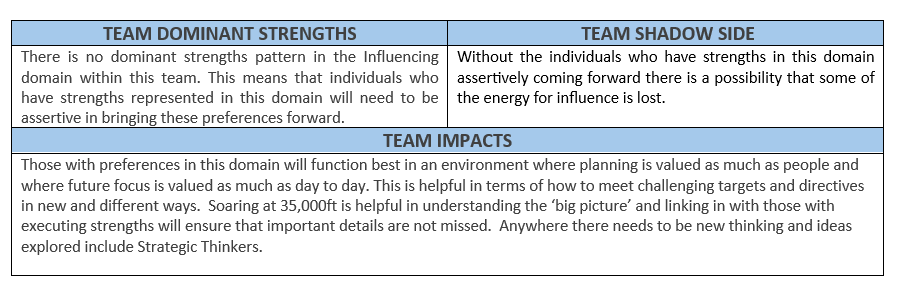
Criminal Cases Unit
8 people submitted their strengths to the accumulator for this team.
Overview
The team is dominant in Relationship Building, with Executing and Influencing featuring strongly with less dominance in Influencing. This team profile suggests that the members of the team pride themselves in building and maintaining healthy working relationships, with a particular emphasis on caring, compassion and avoiding conflict. The Executing domain has strong emphasis on supporting teams to get things done whilst ensuring that people are treated fairly. Within the Strategic Thinking domain there is a focus on using analysis and learning to understand the ‘big picture’.
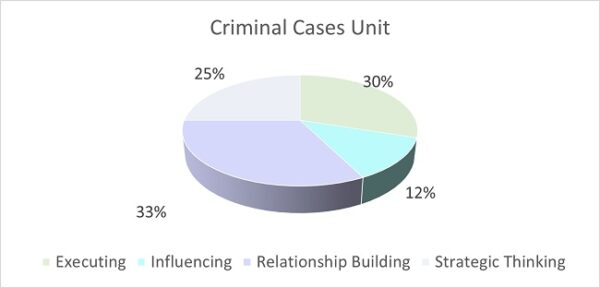
EXECUTING DOMAIN
People with these signature strengths like to make things happen. They stay focussed on the goal and turn ideas into actions. 25% of the strengths reported are in this domain.
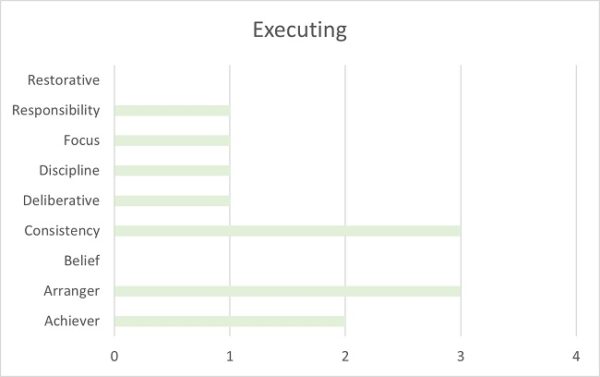
The team profile demonstrates a spread across the domain, Arranger and Consistency the dominant signature strengths.
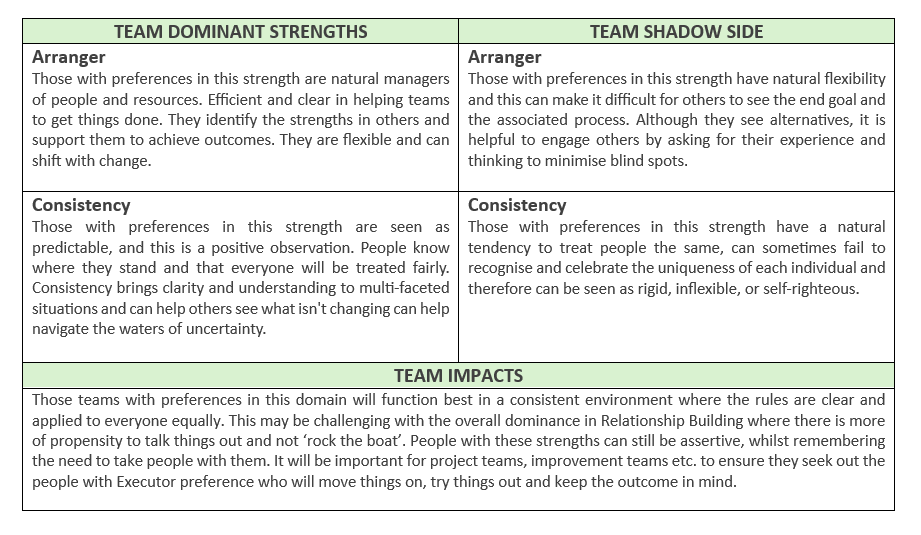
INFLUENCING DOMAIN
People with these signature strengths like to sell ideas and get people enthused and motivated. They are confident and will willingly take charge and speak up. They are generally creative and energetic and love to work with and through people. 12% of the strengths reported are in this domain.
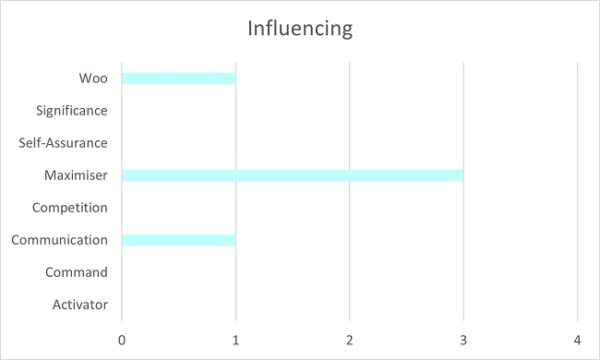
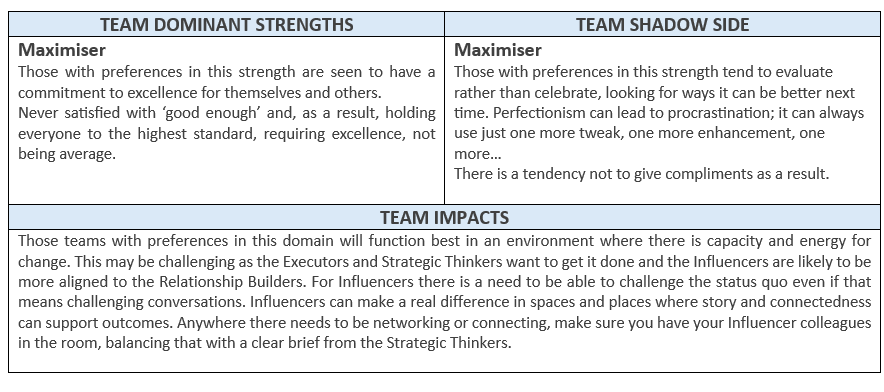
The team profile demonstrates a limited preference within this domain, Maximiser the dominant signature strength. The majority of influencing will be carried out from the other three domains.
RELATIONSHIP BUILDING DOMAIN
People with these signature strengths like to make sure the team is working and care about the team wellbeing. They are driven and people focussed and like to get others involved. 33% of the strengths reported are in this domain.
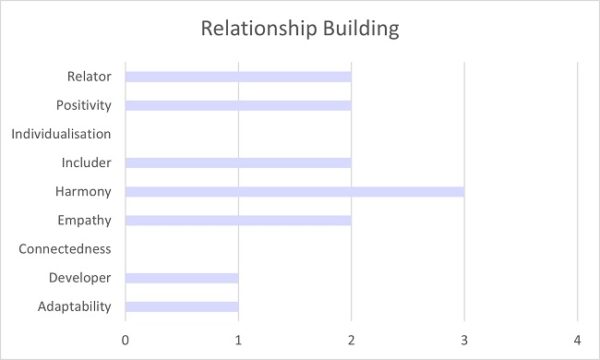
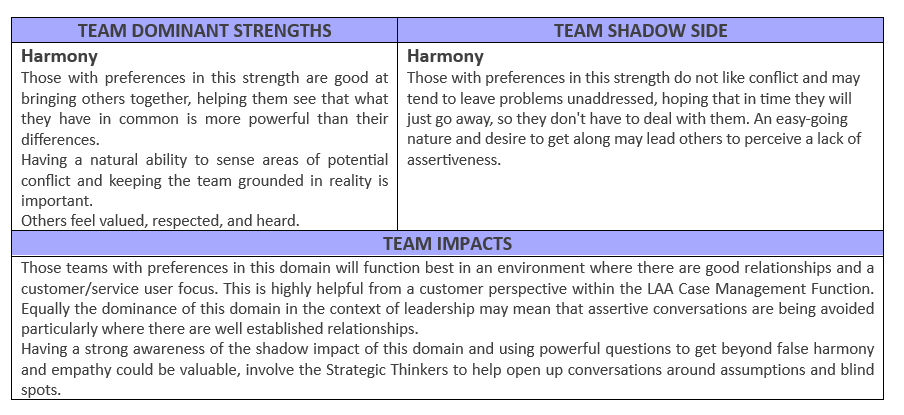
The team profile demonstrates a strong preference within this domain, Harmony the dominant signature strength.
STRATEGIC THINKING DOMAIN
People strong in these signature strengths are future focussed, decision makers, and opportunists who are always reviewing information and data and applying what they learn. 25% of the strengths reported are in this domain.
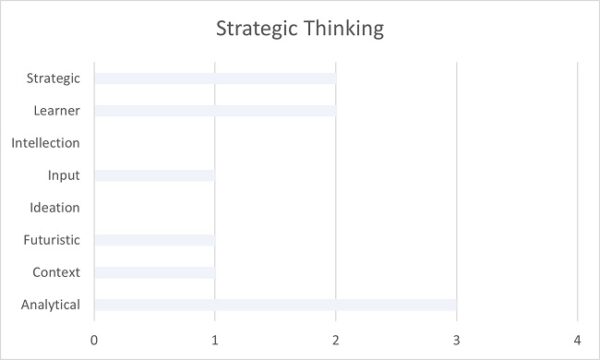
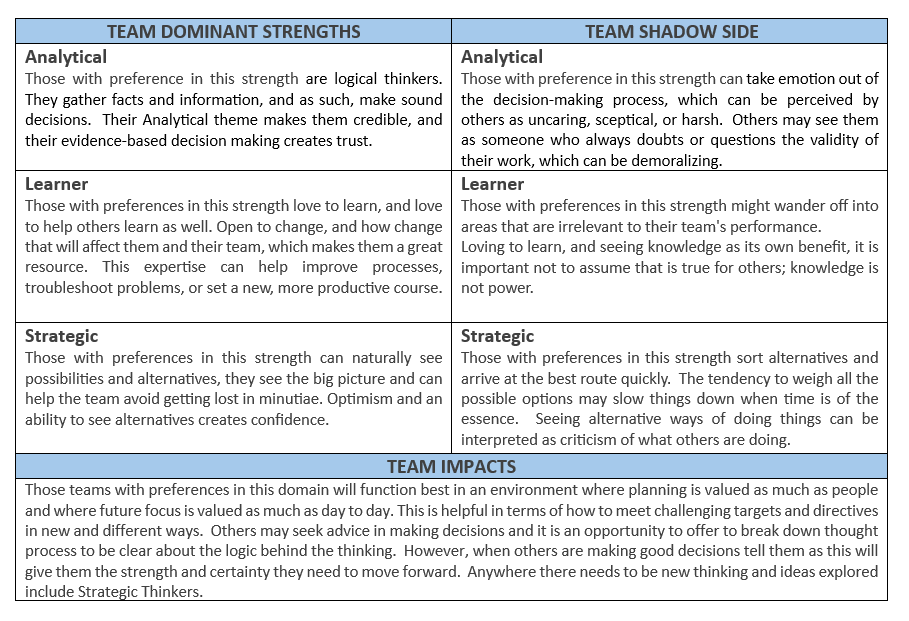
The team profile demonstrates a spread across this domain, with Analytical, Strategic and Learner being the dominant signature strengths.
Liverpool NCAT
6 people submitted their strengths to the accumulator for this team.
Overview
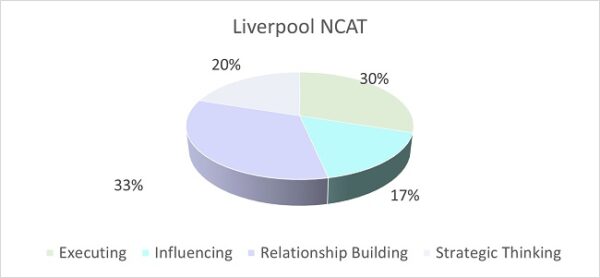
The team is dominant in Relationship Building and Executing. Strategic Thinking and Influencing having less dominance in this team. This team profile suggests that the members of the team pride themselves in building and maintaining healthy working relationships, with a particular emphasis on positive relationships and positivity. Within the Executing domain this team will take great responsibility managing work and getting things done. The Strategic Thinking domain has an emphasis on strategic thinking backup up with reflection and analysis of relevant data to ensure ideas are well thought out.
EXECUTING DOMAIN
People with these signature strengths like to make things happen. They stay focussed on the goal and turn ideas into actions. 30% of the strengths reported are in this domain.
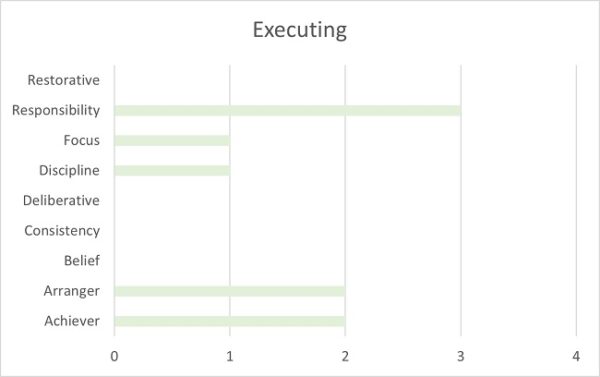
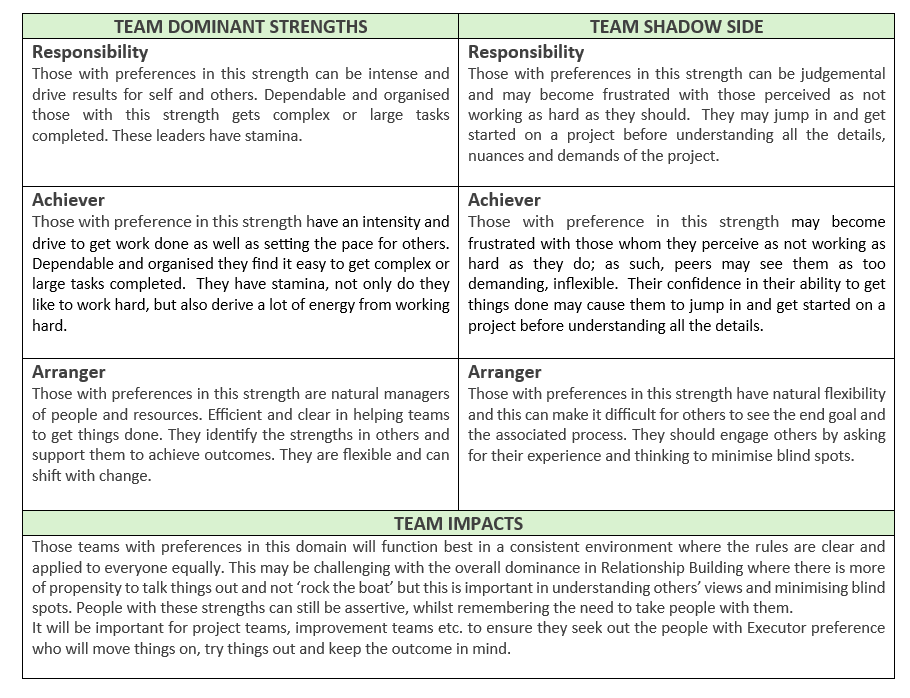
The team profile demonstrates some spread across the domain, with Responsibility, Achiever and Arranger the dominant signature strengths.
INFLUENCING DOMAIN
People with these signature strengths like to sell ideas and get people enthused and motivated. They are confident and will willingly take charge and speak up. They are generally creative and energetic and love to work with and through people. 17% of the strengths reported are in this domain.
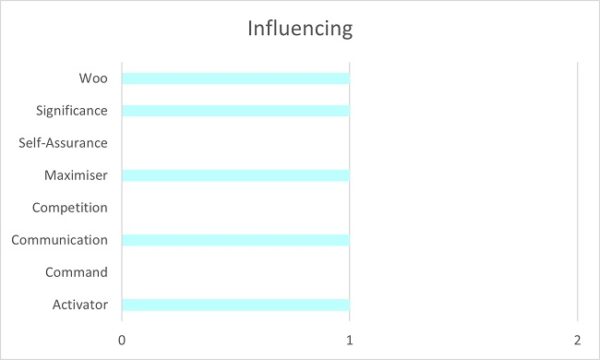
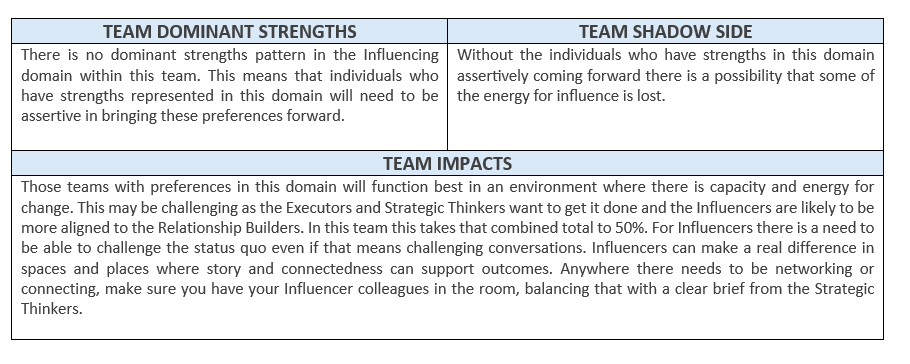
The team profile demonstrates a limited preference within this domain. The majority of influencing will be carried out from the other three domains.
RELATIONSHIP BUILDING DOMAIN
People with these signature strengths like to make sure the team is working and care about the team wellbeing. They are driven and people focussed and like to get others involved. 33% of the strengths reported are in this domain.
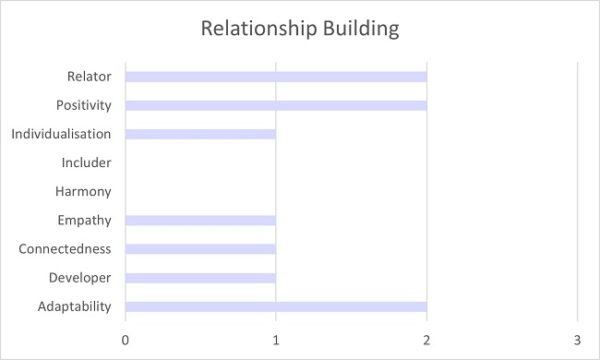
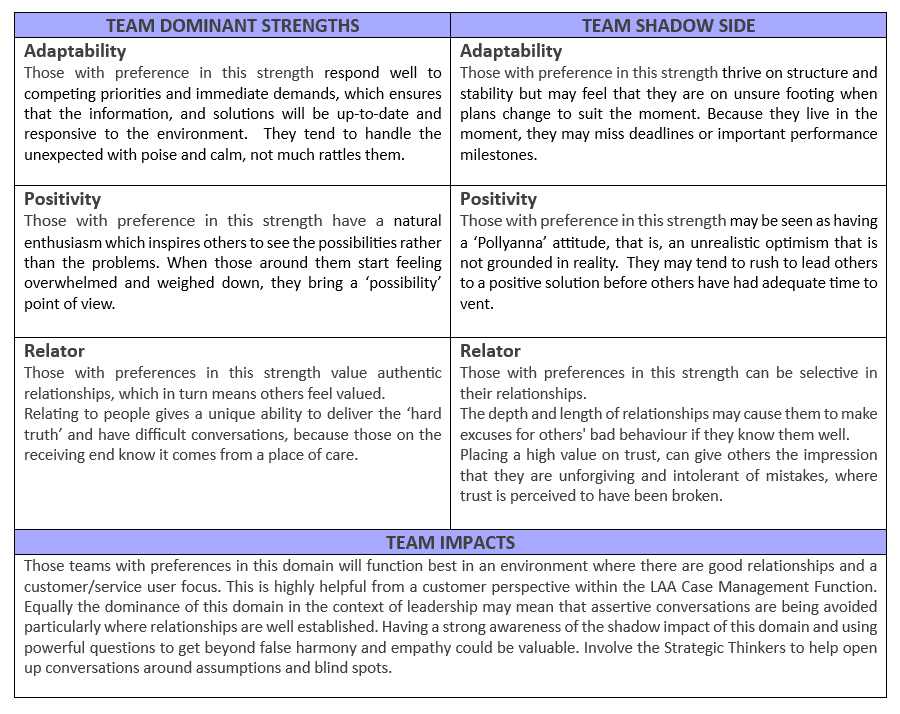
The team profile demonstrates some spread across the domain, with Relator, Positivity and Adaptability being the dominant signature strengths.
STRATEGIC THINKING DOMAIN
People strong in these signature strengths are future focussed, decision makers, and opportunists who are always reviewing information and data and applying what they learn. 20% of the strengths reported are in this domain.
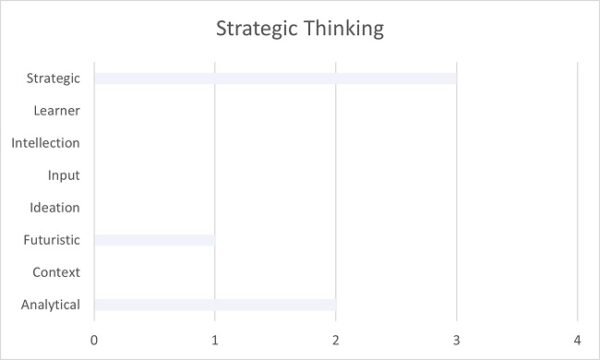
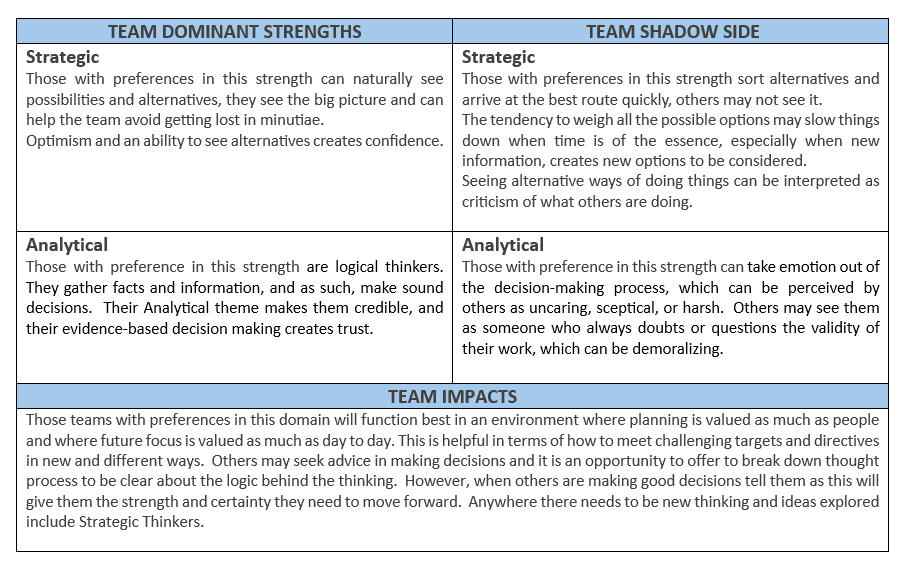
The team profile demonstrates some spread across this domain, with Strategic and Analytical the dominant signature strengths.
Nottingham NCAT
9 people submitted their strengths to the accumulator for this team.
Overview
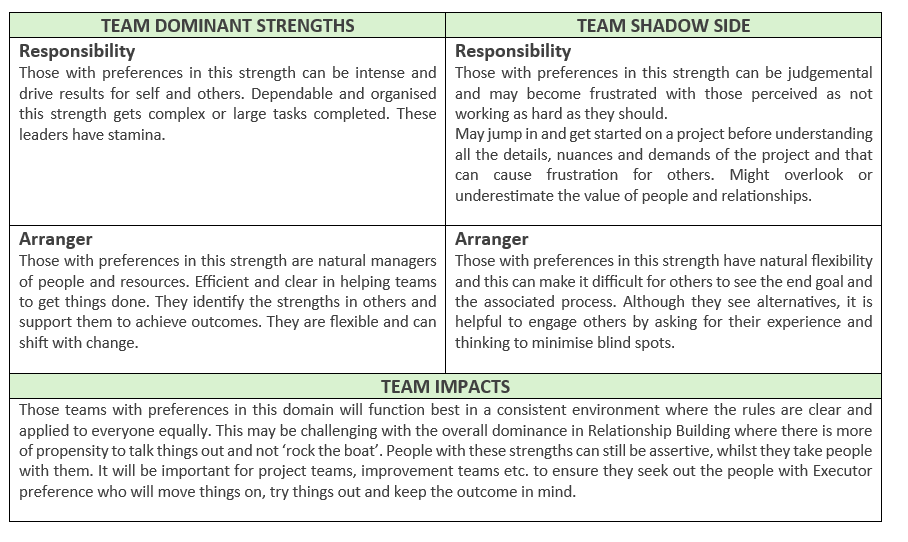
The team is dominant in Relationship Building and to a lesser extent, Executing and Strategic Thinking. There is less dominance in Influencing. This team profile suggests that the members of the team pride themselves in building and maintaining healthy working relationships, with a particular emphasis on individual growth, and positivity. The Executing domain has an emphasis on responsibility ensuring that there is order and structure whilst utilising the strengths of the team. Within the Strategic Thinking domain there is a focus on using analysis and learning to understand the ‘big picture’.
EXECUTING DOMAIN
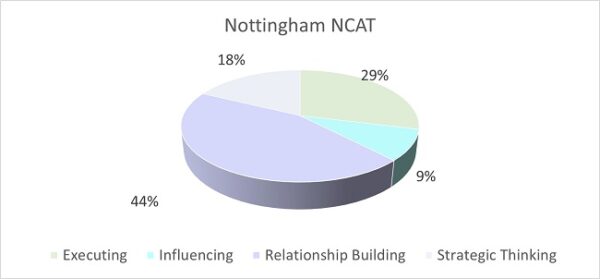
People with these signature strengths like to make things happen. They stay focussed on the goal and turn ideas into actions. 29% of the strengths reported are in this domain.
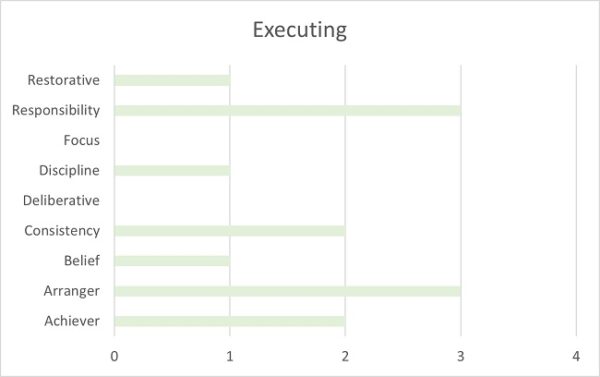
The team profile demonstrates a spread across the domain, Arranger and Responsibility the dominant signature strengths.
INFLUENCING DOMAIN
People with these signature strengths like to sell ideas and get people enthused and motivated. They are confident and will willingly take charge and speak up. They are generally creative and energetic and love to work with and through people. 9% of the strengths reported are in this domain.
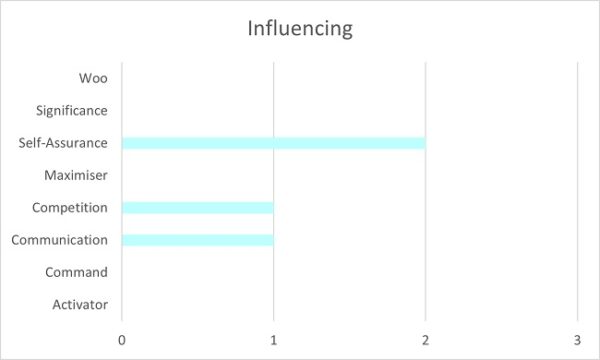
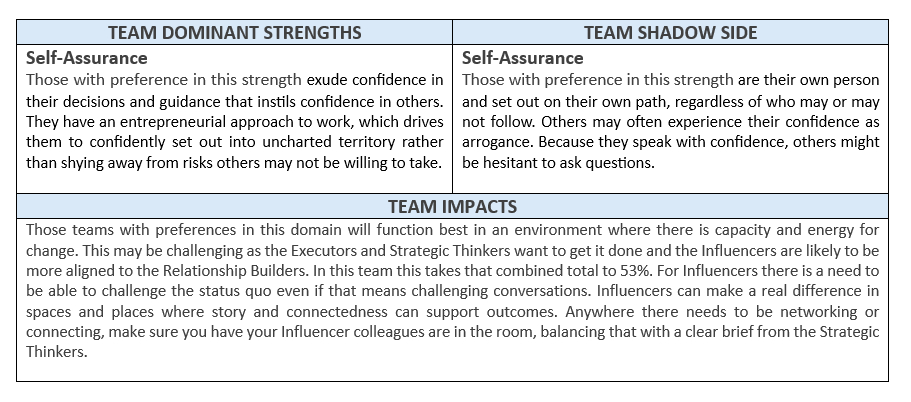
The team profile demonstrates some preference within this domain, with Self-Assurance the dominant signature strength.
RELATIONSHIP BUILDING DOMAIN
People with these signature strengths like to make sure the team is working and care about the team wellbeing. They are driven and people focussed and like to get others involved. 44% of the strengths reported are in this domain.
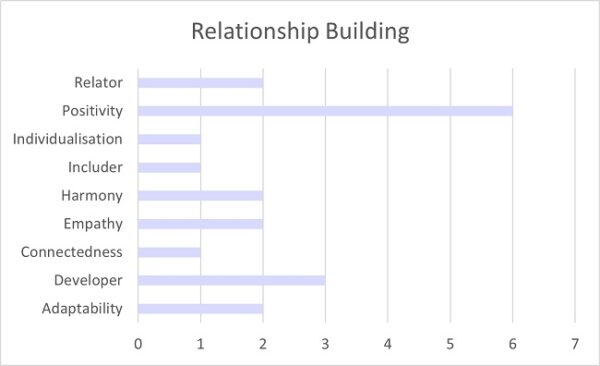
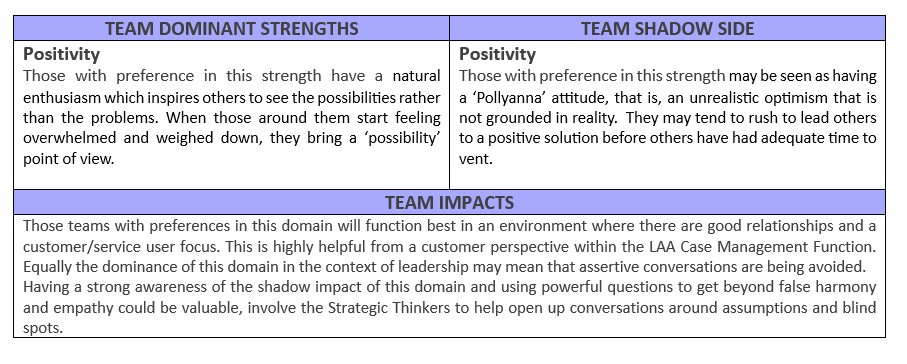
The team profile demonstrates a strong preference within this domain, with Positivity and Developer being the dominant signature strengths.
STRATEGIC THINKING DOMAIN
People strong in these signature strengths are future focussed, decision makers, and opportunists who are always reviewing information and data and applying what they learn. 18% of the strengths reported are in this domain.
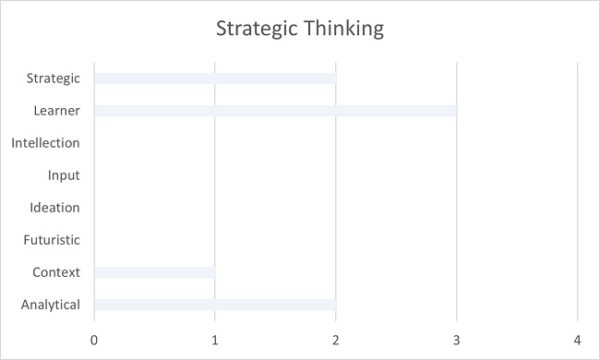
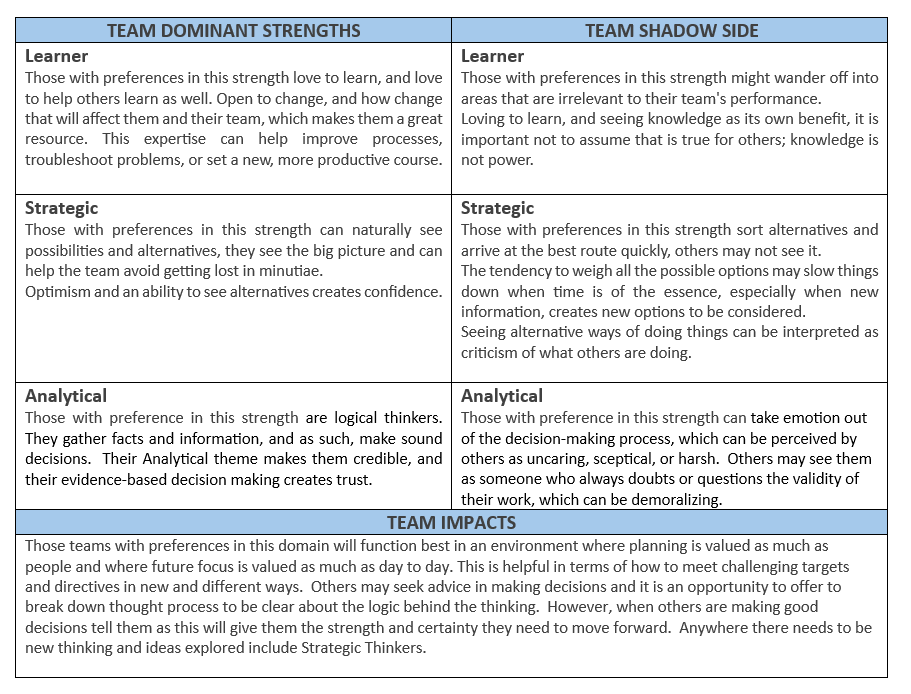
The team profile demonstrates a spread across this domain, Learner, Strategic and Analytical the dominant signature strengths.
Exceptional and Complex Cases Team
8 people submitted their strengths to the accumulator for this team.
Overview
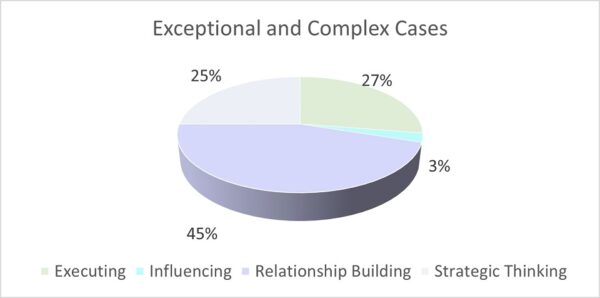
The team is dominant in Relationship Building and to a lesser extent, Executing and Strategic Thinking. There is less dominance in Influencing. This team profile suggests that the members of the team pride themselves in building and maintaining healthy working relationships, with a particular emphasis on individual growth, and positivity. The Executing domain has an emphasis on responsibility ensuring that there is order and structure whilst utilising the strengths of the team. Within the Strategic Thinking domain there is a focus on using analysis and learning to understand the ‘big picture’.
EXECUTING DOMAIN
People with these signature strengths like to make things happen. They stay focussed on the goal and turn ideas into actions. 27% of the strengths reported are in this domain.
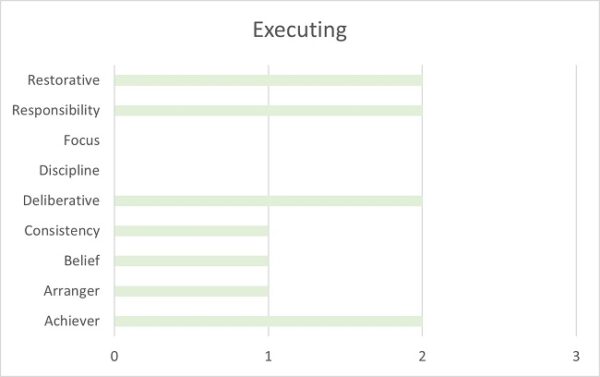
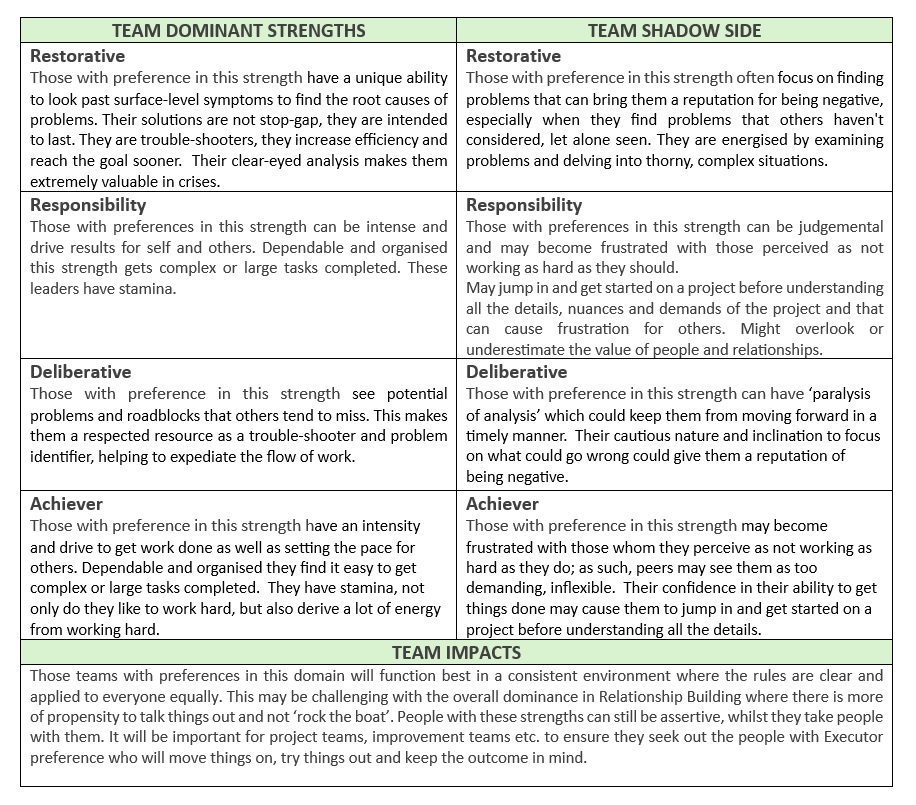
The team profile demonstrates a spread across the domain, Restorative, Responsibility, Arranger and Achiever the dominant signature strengths.
INFLUENCING DOMAIN
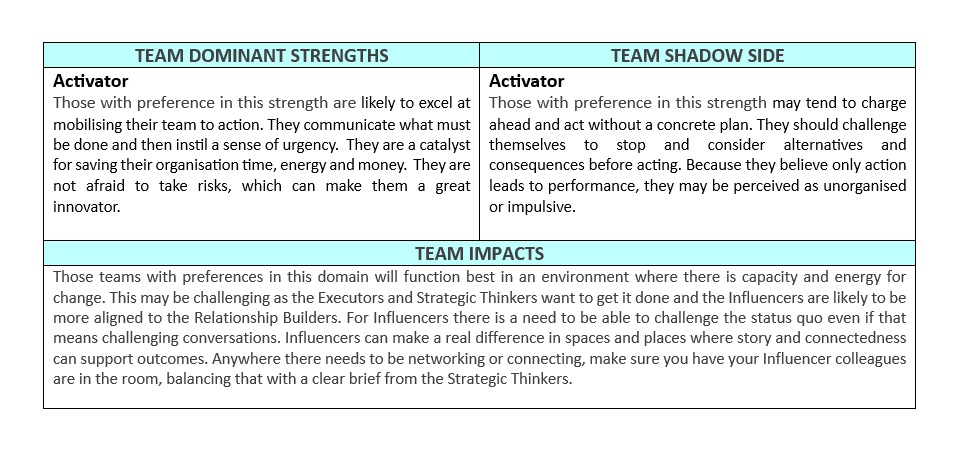
People with these signature strengths like to sell ideas and get people enthused and motivated. They are confident and will willingly take charge and speak up. They are generally creative and energetic and love to work with and through people. 3% of the strengths reported are in this domain.
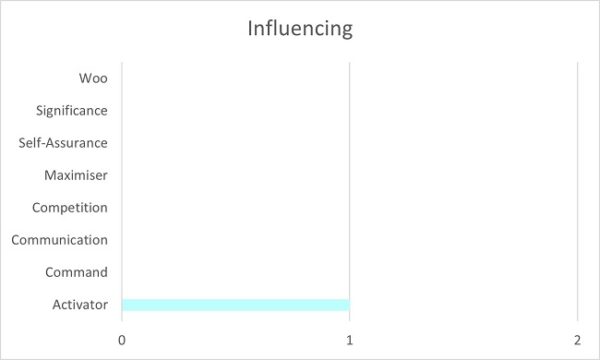
This is the least dominant of the four domains (3%), which implies that the influencing ability of the team will stem from the other three domains, and most likely Relationship Building.
RELATIONSHIP BUILDING DOMAIN
People with these signature strengths like to make sure the team is working and care about the team wellbeing. They are driven and people focussed and like to get others involved. 45% of the strengths reported are in this domain.
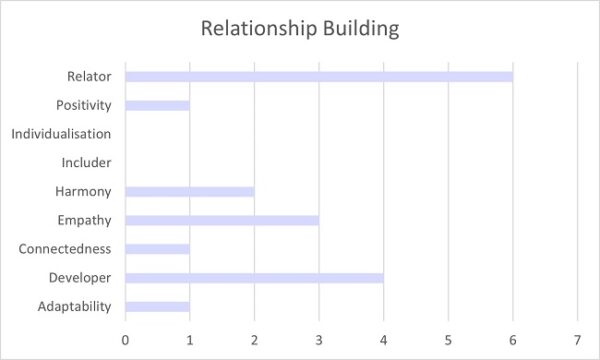
The team profile demonstrates a strong preference within this domain, with Relator and Developer being the dominant signature strengths.
STRATEGIC THINKING DOMAIN
People strong in these signature strengths are future focussed, decision makers, and opportunists who are always reviewing information and data and applying what they learn. 25% of the strengths reported are in this domain.
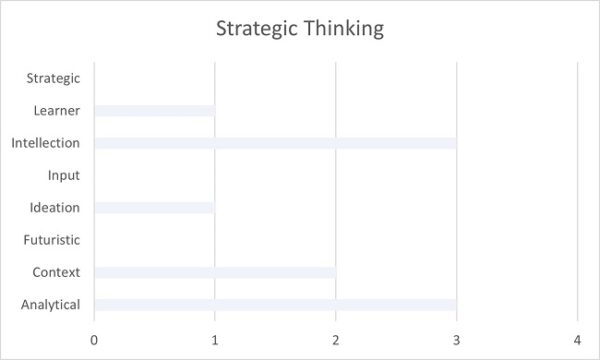
The team profile demonstrates a spread across this domain, Intellection and Analytical the dominant signature strengths.